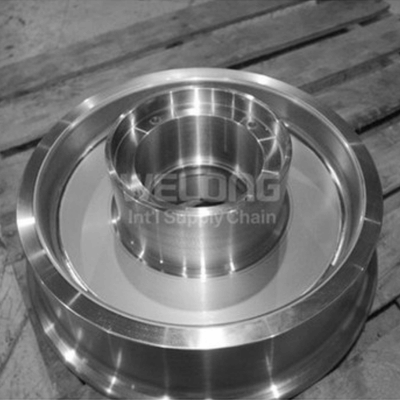

When sourcing furnace rolls from global suppliers, getting the material selection and thermal performance requirements right from the start is essential. A furnace roll that appears suitable on paper but is manufactured from an inappropriate alloy, or lacks adequate documentation of its thermal performance, may underperform or fail prematurely - resulting in costly downtime and replacement cycles. For procurement engineers and maintenance supervisors bringing in furnace rolls for continuous toughening lines, galvanizing furnaces, glass tempering furnaces, or other high-temperature handling gear, this article provides a practical framework for assessing material properties, thermal specifications, supplier compliance, and roll selection methodology. Getting these specifications right before placing an order is far less costly than dealing with the consequences of poor material or design choices after the rolls are installed.

Key Material Properties to Consider When Importing Furnace Rolls
Alloy Composition and Its Role in Roll Performance
A furnace roll's metal composition is the most important aspect in its operating temperature performance. Based on the furnace environment and temperature range, nickel-chromium and nickel-iron-chromium alloys like HK40, HP40, 310S, 314, and Alloy 330 are the most prevalent high-temperature furnace roll alloys. Chromium content forms a protective oxide layer on the roll surface, preventing oxidation and maintaining surface integrity at high temperatures. Nickel enhances austenitic phase stability, creep resistance, and ductility. Requesting a complete chemical composition certificate, not just the alloy trade name, when bringing in a furnace roll permits independent verification that the material fulfills the requirements.
Mechanical Properties at Operating Temperature
Room-temperature mechanical properties, while relevant for handling and installation, do not capture how a furnace roll will actually behave in service. The critical mechanical properties for furnace roll evaluation are high-temperature tensile strength, creep rupture strength at operating temperature, and stress rupture life. These values define the roll's ability to support its own weight and the strip load across the barrel length without deflecting over time. A furnace roll that meets room-temperature strength requirements but lacks creep resistance data for its service temperature range is an incomplete specification. Reputable furnace roll suppliers provide elevated-temperature mechanical property data - either from published alloy datasheets or from material test reports specific to the heat of metal used for roll casting or forging. China Welong's quality control process ensures that all supplied roll components are accompanied by verifiable material documentation.
Heat Resistance and Thermal Performance Requirements for Furnace Rolls
Operating Temperature Range and Thermal Cycling Resistance
Every furnace roll specification should clearly state the greatest persistent working temperature, the maximum short-term peak temperature, and the expected thermal cycling profile - how frequently and across what temperature range the roll heats up and cools down during ordinary operation. A furnace roll in a continuous annealing line for car steel strip, for example, operates at a relatively stable temperature with limited thermal cycling. A roll utilized in a batch heat-treatment furnace, by contrast, encounters repeated heating and cooling cycles that impose significant thermal fatigue stresses on the roll material. Alloys selected for thermally cyclic situations require greater thermal shock resistance and ductility than those utilized in steady-state high-temperature applications. Matching the alloy selection to the actual thermal cycling profile of the furnace is a detail that buyers often overlook when specifying furnace rolls from overseas suppliers.
Oxidation and Carburization Resistance in the Furnace Atmosphere
The furnace atmosphere - whether oxidizing, reducing, or neutral - determines which surface degradation mechanisms will be most active on the furnace roll over time. In oxidizing environments, Chromium-rich alloys perform well because their oxide scales help limit further metal loss. In reducing atmospheres - especially those containing hydrogen, carbon monoxide, or hydrocarbons - carburization and metal dusting become the primary concerns. Nickel-rich alloys with suitable chromium content give better resistance in these situations. Importing a furnace roll without specifying the furnace atmosphere conditions, or without confirming that the provider has matched the alloy to the furnace atmosphere, is a specification gap that will shorten roll service life. Always include the furnace atmosphere composition as part of the technical specification submitted to the supplier.
Industry data emphasizes the relevance of furnace roll material selection by operating environment. The National Science Data Center for Corrosion and Protection of Materials lists high-temperature oxidation, carburization, and thermal fatigue as the principal deterioration processes for industrial furnace heat-resistant alloys. If alloy composition is not suited to process requirements, harsh furnace environments might shorten component service life. Buyers should consider both the operation temperature and the furnace atmosphere's chemical properties when choosing a furnace roll to ensure corrosion resistance and long-term reliability.

Supplier Compliance and Certification Standards for Imported Furnace Rolls
Quality Management Systems and Material Traceability
The buyer's assurance that an overseas supplier's furnace roll quality control system would meet their commitment across several orders is crucial when importing. ISO 9001:2015 accreditation demonstrates that the supplier has documented and verified quality procedures for procurement, manufacturing, inspection, and delivery. Material traceability-the ability to connect the final roll to the alloy heat and test certificates-is essential for quality-critical mechanical components. ISO 9001:2015-certified China Welong provides comprehensive material traceability for all mechanical roll products, ensuring customers get rolls with complete documentation from raw material procurement to final product inspection.
Third-Party Inspection and Pre-Shipment Verification
For high-value or critical-path furnace roll orders, third-party inspection at the supplier's facility before shipment provides an independent verification layer that goes beyond supplier-issued documentation. Inspection activities typically include dimensional verification against drawing, visual surface inspection, hardness testing, and review of material test certificates. SGS and DNV reports are respected worldwide by procurement and quality teams. China Welong has helped clients schedule fast and thorough third-party inspections via SGS, DNV, and other authorized organizations to meet project delivery dates. This is especially useful for purchasers importing furnace rolls from a new source or for orders with stringent dimensional or metallurgical limitations.
Optimizing Furnace Efficiency Through Proper Roll Selection and Specification
Roll Diameter, Barrel Length, and Pass Line Design
The physical dimensions of a furnace roll - particularly its diameter and barrel length - have a direct bearing on furnace line efficiency and product quality. A roll that is undersized in diameter for its span will deflect under load, causing the strip or sheet to deviate from the intended pass line, come into contact with furnace walls or adjacent rolls, or develop tracking problems that result in strip breaks. A roll with an incorrectly specified barrel length will not cover the full strip width, leaving the edges unsupported and susceptible to edge cracking or shape defects in the processed material. When importing furnace rolls, providing the supplier with complete pass line drawings and load calculations - not just nominal diameter and length - ensures that the delivered rolls will function correctly in the actual furnace geometry.
Customized Roll Solutions for Non-Standard Furnace Configurations
Not all furnace roll requirements can be met from standard catalog products. Older furnaces with non-standard pass line dimensions, specialized high-temperature furnaces for glass or ceramics processing, and pilot or research furnaces often require rolls with dimensions or alloy specifications outside the normal commercial range. China Welong specializes in the manufacture and supply of customized industrial rolls, working from customer drawings and technical specifications to manufacture furnace rolls tailored to the exact requirements of each application. Our manufacturing team supports customers through the specification development process - reviewing alloy selections, dimensional requirements, and surface finish specifications - and applies the same rigorous quality control to custom orders as to standard products. Global logistics support, including sea, air, and rail freight options with flexible trade terms such as FOB, CIF, DDP, and DDU, ensures that custom furnace roll orders arrive on schedule regardless of the customer's location.

Conclusion
Importing furnace rolls successfully requires careful attention to alloy composition, elevated-temperature mechanical properties, atmosphere resistance, dimensional specifications, and supplier quality assurance. Cutting corners on any of these areas leads to premature roll failure and unplanned production downtime. China Welong combines ISO 9001:2015 certified quality management, full material traceability, third-party inspection capability, and two decades of industrial roll manufacturing experience to provide furnace roll solutions that meet demanding specifications and deliver reliable service life in high-temperature processing environments.
FAQ
Q1: What documentation should I request when importing furnace rolls?
Buyers of furnace rolls should request the alloy's material test certificate (MTC) to verify chemical composition and mechanical properties, a dimensional inspection report to verify drawing tolerances, and a supplier's certificate of conformance to verify that the roll was manufactured to specification. SGS or DNV inspection reports provide independent verification for sensitive applications. China Welong includes MTC, dimensional reports, and COC with every furnace roll order and may arrange third-party inspection.
Q2: How do I specify the correct alloy grade for my furnace roll application?
When selecting a furnace roll alloy, buyers should consider the maximum continuous operating temperature, furnace atmosphere composition, expected thermal cycling profile, and mechanical loading conditions. An experienced supplier may propose a nickel-chromium or nickel-iron-chromium alloy grade with these inputs. Higher-nickel grades for reducing or carburizing conditions and HK40 and HP40 for high-temperature oxidizing applications are common. If your application's specification is unclear, China Welong's technical staff can assess your furnace and offer an alloy and roll design.
Q3: What lead times should I expect for imported furnace rolls?
Casting, machining, and finishing imported furnace rolls to order or using supplier inventory for dimensions and alloy grade determines lead times. With two to four weeks' lead periods, inventories may provide standard alloy grades in typical diameters. Custom furnace rolls-non-standard alloys, odd dimensions, or rolls needing third-party inspection-take 8–16 weeks to deliver. China Welong's manufacturing team minimizes lead times, and our logistics network balances delivery speed against freight cost depending on each customer's project timetable using sea, air, and rail shipment.
Ready to Import High-Quality Furnace Rolls? Contact China Welong Today
Sourcing furnace rolls internationally does not have to mean compromising on quality or documentation. China Welong delivers precision-manufactured alloy furnace rolls with full material traceability, ISO 9001:2015 certified quality management, and third-party inspection capability through SGS and DNV. Whether you need standard alloy grades or fully customized roll solutions for a specialized furnace application, our team provides the technical support and supply chain reliability to get your order right the first time. Reach out today to discuss your furnace roll requirements: oiltools15@welongpost.com
References
1. Lai, G. Y. (2007). High-Temperature Corrosion and Materials Applications. ASM International.
2. Davis, J. R. (Ed.). (1997). Heat-Resistant Materials. ASM International.
3. Schütze, M. (Ed.). (2000). Corrosion and Environmental Degradation, Volume 1. Wiley-VCH.
4. Peckner, D., & Bernstein, I. M. (Eds.). (1977). Handbook of Stainless Steels. McGraw-Hill.
5. ASM International. (2002). ASM Handbook, Volume 13A: Corrosion: Fundamentals, Testing, and Protection. ASM International.
6. Ginzburg, V. B. (1989). Steel-Rolling Technology: Theory and Practice. Marcel Dekker.