


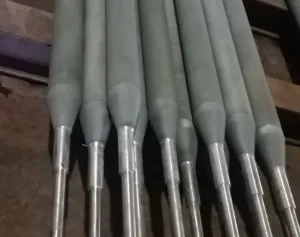
In continuous heat treatment and hot rolling operations, the furnace roll is one of the most critical components in the entire process line. Positioned inside or at the entry and exit ends of industrial furnaces, these rolls support and transport material - steel strip, aluminum sheet, glass, or other substrates - through zones of intense heat, often exceeding 1000°C. The material chosen for a furnace roll directly determines how long it lasts, how consistently it performs, and how much downtime it causes over its service life. Alloy furnace rolls, manufactured from heat-resistant metal alloys engineered for high-temperature stability, offer a compelling set of advantages over conventional roll materials. This article explores those benefits across heat resistance, operational efficiency, maintenance economics, and selection strategy.

How Alloy Furnace Rolls Enhance Heat Resistance in Industrial Furnaces
Thermal Stability at Elevated Operating Temperatures
Keeping furnace rolls structurally sound and dimensionally accurate under high temperatures is their greatest difficulty. Modern continuous furnace soaking and annealing zones cannot use standard carbon steel rollers because they soften and distort at 500°C. In contrast, alloy furnace rolls are made of nickel-chromium, nickel-iron-chromium, or heat-resistant cast alloys that remain strong and dimensionally stable at 900°C to 1100°C. These alloys' chromium component forms a deep, protective oxide coating on the roll surface, slowing oxidation and maintaining roll shape for thousands of running hours. This thermal resilience lets continuous annealing and galvanizing lines run at high rates without frequent roll changes due to heat-induced deformation.
Creep Resistance and Long-Term Dimensional Accuracy
Beyond short-term thermal strength, alloy furnace rolls must resist creep - the slow, permanent deformation that occurs when a material is held under mechanical load at elevated temperature over an extended period. A furnace roll that creeps will develop a deflection across its working length, causing the material it transports to track unevenly and potentially contact the furnace walls or adjacent equipment. Modern alloy compositions for furnace roll applications are specifically engineered to minimize creep rate at operating temperature, maintaining the roll's straight, cylindrical form throughout its intended service life. This dimensional stability translates directly into consistent strip tracking, uniform heat exposure across the material width, and predictable product quality - all of which are essential in precision heat treatment processes.

Improving Operational Efficiency with Durable Furnace Roll Materials
Reducing Strip Defects Caused by Roll Degradation
A degraded furnace roll - one that has developed surface scaling, oxidation nodules, or geometric distortion - can directly transfer these imperfections to the strip or sheet passing over it. In galvanizing and continuous annealing lines handling automotive-grade or appliance-grade steel, even minor surface marks from a worn furnace roll constitute product defects that trigger customer complaints or product rejection. High-alloy furnace rolls maintain a smooth, stable surface finish over much longer service intervals than lower-grade alternatives, decreasing the rate of roll-induced strip defects. The investment in superior alloy roll materials pays off through higher first-pass yield rates and fewer quality-related customer complaints over the roll's service life.
Higher Line Speed Capability Through Roll Reliability
Furnace line speed is an essential lever for production throughput in continuous processing operations. When furnace roll performance is unreliable - when operators must diminish speed to avoid strip breaks or roll damage - the whole line's capacity is compromised. Alloy furnace rolls, with their superior resistance to thermal deformation and surface degradation, enable line operators to run at rated speeds with confidence. China Welong supplies alloy roll components made to exact dimensional and metallurgical details, supporting clients who depend on reliable furnace roll performance to meet production plans. With over 20 years of industrial component manufacturing experience and ISO 9001:2015 certified quality management, Welong delivers rolls that perform at evaluated line speeds throughout their designed service life.
Reducing Maintenance Costs Through High-Performance Alloy Rolls
Extended Roll Change Intervals and Lower Labour Costs
Every furnace roll change requires the line to be stopped, cooled to a safe working temperature, and the rolls physically removed and replaced - a process that can take several hours and involves significant labor and crane time. The frequency of these roll changes is determined by how long each furnace roll endures in service. High-performance alloy furnace rolls, designed for extended service life at operating temperatures, significantly extend the interval between scheduled roll changes. Decreasing roll change frequency from every three months to every nine months on a high-output continuous tempering line represents significant savings in direct maintenance labor, crane utilization, and the indirect cost of production downtime. Over the long term, the economics of premium alloy rolls remain attractive even when the initial purchase price is higher.
Minimizing Unplanned Downtime from Premature Roll Failure
Unplanned furnace roll failures - caused by thermal shock cracking, accelerated oxidation, or mechanical damage - are among the most costly events in a continuous processing line. Unlike planned maintenance stops, unplanned failures occur without warning, often damage adjacent equipment, and may result in scrapped material currently being processed in the furnace. Alloy furnace rolls engineered with appropriate resistance to thermal shock and oxidation, along with sufficient ductility are far less susceptible to these failure modes than generic roll materials. China Welong's stringent quality control process - covering material verification, dimensional inspection, and final product testing - ensures that every furnace roll leaving our facility meets the metallurgical and dimensional standards required for reliable performance in demanding furnace environments.
Selecting the Right Alloy Furnace Roll for Longevity and Consistent Performance
Matching Alloy Composition to Furnace Atmosphere and Temperature
Not all alloy furnace rolls are the same. The correct alloy selection depends on the particular working temperature of the furnace zone, the furnace atmosphere (oxidizing, reducing, or neutral), the sort of material being handled, and the mechanical loads the roll must support. In bright annealing furnaces operating in a hydrogen-nitrogen reducing atmosphere, alloys with high nickel content provide excellent resistance to carburization and nitriding. For open-flame furnace zones with oxidizing environments, chromium-rich alloys with strong oxide-scale-forming capability are preferred. Consulting with an experienced furnace roll supplier who understands both the metallurgical options and the specific requirements of your furnace environment is the most reliable way to optimize alloy selection.
Custom Roll Geometry and Surface Specifications
Beyond alloy composition, the geometric plan of the furnace roll - diameter, barrel length, journal dimensions, and surface profile - must be coordinated to the particular pass line and strip width of the furnace. A roll that is undersized in diameter may experience excessive deflection under the combined weight of the roll body and the strip load. A roll with incorrect journal geometry will run with inadequate bearing clearance, causing vibration and uneven strip tracking. China Welong specialises in the supply of customized mechanical rolls, working from client drawings or details to make furnace rolls that fit the correct pass line geometry, load requirements, and temperature conditions of each application. Our adaptable material approach and worldwide logistics network - supporting ocean, air, and rail freight under FOB, CIF, DDP, and DDU terms - guarantee that custom roll orders reach clients dependably and on time.
Conclusion
Alloy furnace rolls deliver measurable benefits across heat resistance, operational efficiency, maintenance cost, and product quality in industrial furnace applications. The right alloy selection, combined with precise manufacturing and rigorous quality control, produces a furnace roll that performs reliably across its full service life with minimal disruption to production. China Welong, with ISO 9001:2015 certification and two decades of industrial component manufacturing expertise, offers the technical knowledge and supply chain capability to support customers in selecting and procuring high-performance alloy furnace rolls for any application.
FAQ
Q1: What alloy grades are most commonly used for furnace rolls in steel processing lines?
The most prevalent furnace roll alloys in steel manufacturing are nickel-chromium alloys like HK40, HP40, and their modified forms, as well as nickel-iron-chromium grades like 253MA and 330 alloy. Some low-temperature regions use heat-resistant stainless grades like 310S and 314. Alloy selection depends on furnace temperature, creep resistance, and operating temperature. China supplies metallurgical furnace rolls. Welong can assess your furnace and suggest a suitable alloy.
Q2: How often should furnace rolls be inspected and replaced?
Furnace roll inspection and replacement depend on temperature, line speed, strip tension, and roll condition. Continuous annealing line operators examine and replace rolls every three to six months, depending on surface quality, dimensional correctness, and service hours. Good alloy furnace rollers from dependable providers endure longer and need fewer replacements. Condition monitoring discovers roll issues before downtime by monitoring roll surface temperature and strip tracking.
Q3: Can China Welong supply furnace rolls for non-standard furnace configurations?
Yes, China Welong Engineering and Manufacturing can design and manufacture furnace rolls for non-standard furnace geometries, uncommon alloy requirements, or severe working conditions that are not catalogued. Welong develops and produces rolls from drawings, roll samples, or specifications. Every purchase includes dimensional inspection and material confirmation. Customers with strict procurement criteria might request SGS, DNV, or other qualified third-party inspection to verify quality.
Need High-Performance Alloy Furnace Rolls? Contact China Welong Today
Whether you need standard alloy furnace rolls for a continuous annealing line or custom-engineered rolls for a specialized heat treatment furnace, China Welong has the metallurgical knowledge, manufacturing precision, and supply chain capability to deliver. With ISO 9001:2015 certification, over 20 years of industrial component experience, and flexible global shipping options, we are equipped to support your furnace roll requirements from specification through to on-site delivery. Contact our technical team today to discuss your application:
References
1. Lai, G. Y. (2007). High-Temperature Corrosion and Materials Applications. ASM International.
2. Davis, J. R. (Ed.). (1997). Heat-Resistant Materials. ASM International.
3. Peckner, D., & Bernstein, I. M. (Eds.). (1977). Handbook of Stainless Steels. McGraw-Hill.
4. Schütze, M. (Ed.). (2000). Corrosion and Environmental Degradation, Volume 1. Wiley-VCH.
5. Roberts, W. L. (1983). Hot Rolling of Steel. Marcel Dekker.
6. Ginzburg, V. B. (1989). Steel-Rolling Technology: Theory and Practice. Marcel Dekker.


