


In metal forming and processing, flatness and dimensional accuracy are non-negotiable. Two types of equipment are most commonly used to achieve these goals: leveling rolls and straightening rolls. While both are used to correct shape imperfections in metal products, they operate on different principles, address different types of defects, and are suited to different production scenarios. Understanding the differences between the two - and knowing when each is appropriate - is essential for manufacturers working with sheet metal, plate, bar, or structural profiles. This article breaks down the key contrasts, common applications, operational considerations, and determination criteria for both roll types.

Key Differences Between Leveling Rolls and Straightening Rolls
Working Principle: Multi-Roll Bending vs. Direct Force Application
Leveling rolls pass the workpiece through alternating upper and lower rolls that over-bend the material and relieve residual stresses across its width. Each run through the roll set reverse-bends the metal slightly beyond its elastic limit, alleviating residual tensions and leveling the surface. Straightening rollers, on the other hand, provide extra horizontal or vertical force at specified spots along the material's length to correct camber, sweep, and bow without engaging the complete width. The roll arrangement, number of rolls, and drive system differ significantly between the two machine types, although rolls are their main operating component.
Material and Defect Type Suitability
Leveling rolls excel at correcting distributed flatness defects - coil set, edge wave, center buckle, and cross-bow - that arise from coiling, uncoiling, or thermal processing of sheet and plate material. The multi-roll configuration ensures that correction is applied uniformly across the full width of the strip. Straightening rolls are better matched to long products such as bars, rods, tubes, and structural sections where the primary defect is a deviation in the longitudinal axis rather than a flatness issue across the material cross-section. Choosing between leveling rolls and straightening rolls starts with identifying the geometry of the incoming material and the nature of the shape defect that needs correction.
Applications of Leveling Rolls in Sheet Metal and Plate Processing
Coil Preparation and Blanking Lines
One of the most widespread applications of leveling rolls is in coil-fed stamping and blanking lines. Sheet metal coiled at the mill develops a permanent set - a curvature that mirrors the coil radius - that must be removed before blanking or forming. Leveling rolls positioned between the coil cradle and the press correct this coil set by flexing the strip through a series of decreasing-amplitude bends. Without effective leveling, blanked parts will spring back unevenly after the press stroke, causing dimensional variation in the finished component. Properly configured leveling rolls produce flat, stress-relieved blanks that perform consistently in downstream forming operations, directly improving part quality and reducing scrap.
Heavy Plate Processing and Structural Fabrication
In heavy plate service facilities and structural fabrication yards, leveling rollers handle mill-delivered material from 6 mm to 100 mm or more with flatness errors due to differential cooling, rolling pressure variation, or handling. High-torque drive systems and configurable roll gap settings allow these large-format leveling rollers to suit a variety of plate thicknesses and yield strengths. Flatness is improved, and residual stresses are reduced when the plate exits the leveler, which is important for downstream cutting precision, weld joint fit-up, and assembly structural integrity. Precision roll components from China Welong are used in leveling systems in these harsh conditions.

How Straightening Rolls Improve Material Flatness and Quality
Correcting Camber and Sweep in Long Products
Straightening rolls address the longitudinal shape defects that affect bars, tubes, and sections leaving the rolling mill or heat treatment furnace. Camber - a lateral curvature along the length of the bar - and sweep - a vertical curvature - are the most common defects corrected by rotary or in-line straightening roll systems. The straightening rolls apply a sequence of alternating deflections that progressively reduce the amplitude of the longitudinal curve until the bar exits within the required straightness tolerance. This process is particularly important for precision engineering applications where straight, round, or profiled bar stock feeds directly into machining centers, reducing the amount of material that must be removed to achieve a dimensionally accurate finished part.
Surface Quality and Dimensional Consistency After Straightening
Beyond straightness, a well-designed straightening roll arrangement preserves the surface condition and cross-sectional integrity of the workpiece. The contact stress between the roll surface and the workpiece must be carefully managed - excessive pressure causes surface marking or ovality in round sections, while insufficient pressure fails to fully correct the shape defect. High-quality straightening rolls maintain their surface finish and geometric accuracy over extended service, ensuring that the material passing through them consistently meets dimensional specifications. Leveling rolls used in sheet and plate applications face similar demands: roll surface condition directly affects the surface quality of the leveled material, making roll material selection and surface treatment a key part of system performance.
Operational Efficiency and Production Benefits of Leveling Rolls
Throughput Rates and Integration with Processing Lines
Modern leveling rolls are designed for high-throughput integration into continuous processing lines. In automotive blanking lines, for example, leveling rolls operate at strip speeds exceeding 60 meters per minute, processing coil after coil without interruption. The roll gap is adjusted automatically between coils of different thickness or yield strength, minimizing setup time and keeping the line running productively. The ability of leveling rolls to deliver consistently flat material at these speeds directly reduces the incidence of press jams, misfeeds, and dimensional rejects - all of which carry significant cost implications in high-volume manufacturing environments. Efficient leveling rolls are a productivity multiplier, not merely a quality assurance step.
Maintenance and Service Life Considerations
Leveling rolls operate under high cyclic loads and are subject to wear at the roll surface, bearing journals, and drive components over time. Selecting roll materials with appropriate hardness, toughness, and surface finish for the specific material being leveled is the primary factor in maximizing service life. Bearing quality, lubrication systems, and drive coupling design also play important roles. China Welong's manufacturing expertise and stringent quality control processes - certified under ISO 9001:2015 - ensure that roll components meet the durability and dimensional accuracy requirements needed for reliable long-term performance in leveling and straightening applications.
Selecting the Right Roll Type for Specific Industrial Requirements
Material Form and Thickness as Primary Selection Criteria
The starting point for selecting between leveling rolls and straightening rolls is always the form factor of the incoming material. Sheet and strip products in coil form, or flat plate that has been thermally processed, almost always require leveling rolls to address cross-section flatness defects. Long products - round bars, square bars, tubes, channels, and angles - require straightening rolls to address longitudinal shape deviations. For plates that have both flatness and straightness issues, some installations use leveling rolls followed by a press straightening stage to address both defect types in sequence. Consulting a roll equipment specialist who understands both machine types and their interaction with specific material grades is advisable for complex applications.
Working with a Reliable Roll Component Supplier
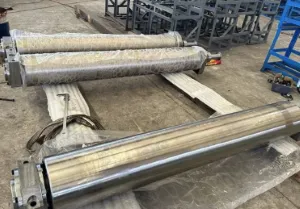
The performance of any leveling or straightening system ultimately depends on the quality of the rolls themselves. Roll geometry, surface hardness, internal stress state, and dimensional accuracy all affect how the system performs in production. China Welong has over 20 years of experience supplying precision-manufactured industrial components, including rolls and related equipment, to customers across multiple industries. Our approach combines expert engineering knowledge with a rigorous supply chain that sources high-quality materials and applies consistent manufacturing processes. Whether you need standard roll configurations or fully customized designs for a specific leveling rolls application, Welong provides the technical support and quality assurance to deliver components that perform.
Conclusion
Leveling rolls and straightening rolls each occupy a distinct and important role in metal processing. Leveling rolls correct flatness defects across the width of sheet and plate material, while straightening rolls address longitudinal shape deviations in long products. Selecting the right system - and sourcing high-quality roll components to keep it performing - directly affects product quality, throughput, and overall manufacturing economics. China Welong, with ISO 9001:2015 certification and two decades of industrial component manufacturing experience, is a trusted partner for roll supply across both application types.
FAQ
Q1: What is the typical number of rolls in a leveling roll system?
The number of rollers in a leveling system depends on material thickness and flatness fault severity. Most light-gauge sheet levelers employ 17 to 21 rolls, with more rolls enabling finer adjustment over a longer bending period. Because thick plate levelers cannot arrange roll diameters in the same close pitch as thin-strip machines, they need 5 to 9 rolls. The material's yield strength, thickness range, and downstream process flatness tolerance define the best roll count.
Q2: Can the same machine perform both leveling and straightening?
In most industrial installations, leveling rolls and straightening rolls are separate machines optimized for their respective tasks. However, some multi-function systems - particularly for medium-gauge strip and bar applications - incorporate both functions in a single pass-line. These combination systems are less common and involve engineering trade-offs, since the roll geometry and force requirements for leveling sheet differ from those for straightening long products. For most manufacturers, the best practice is to use purpose-built leveling rolls for sheet and plate, and dedicated straightening equipment for bars and sections.
Q3: How does China Welong support customers requiring customized roll configurations?
China Welong's engineering and production team manufactures customized roll components for leveling and straightening equipment according to customer requirements. The process begins with a technical analysis of application requirements, including material grade, thickness range, pass-line speed, and flatness tolerances. Welong then manufactures rolls with certified material grades, precise machining, and dimensional inspection and documentation before export. Customers with strict procurement criteria may request third-party inspection by SGS and DNV for independent quality verification.
Looking for Precision Leveling Roll Components? Contact China Welong Now
Whether you need standard roll sets or fully customized leveling rolls for a specialized processing line, China Welong has the manufacturing capability and supply chain expertise to deliver. With over 20 years of industrial component production experience, ISO 9001:2015 certification, and flexible global shipping options - including sea, air, and rail freight under FOB, CIF, DDP, and DDU terms - we are equipped to support your project from specification through to delivery. Contact our technical team today to discuss your requirements:metal@welongpost.com.
References
1. Ginzburg, V. B. (1989). Steel-Rolling Technology: Theory and Practice. Marcel Dekker.
2. Roberts, W. L. (1983). Hot Rolling of Steel. Marcel Dekker.
3. Lenard, J. G. (Ed.). (2007). Primer on Flat Rolling (1st ed.). Elsevier Science.
4. Beddoes, J., & Bibby, M. J. (1999). Principles of Metal Manufacturing Processes. Butterworth-Heinemann.
5. Wagoner, R. H., & Chenot, J. L. (1997). Fundamentals of Metal Forming. John Wiley & Sons.
6. Schey, J. A. (2000). Introduction to Manufacturing Processes (3rd ed.). McGraw-Hill.


