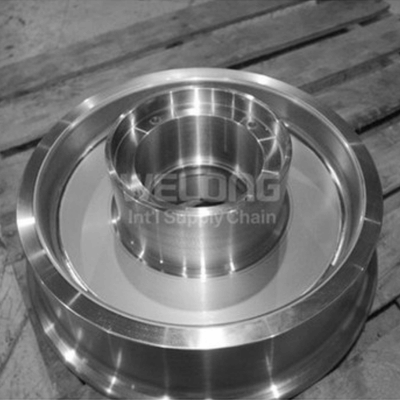


Rolls: The Core of Metal Rolling Processes
Introduction
Rolls are core components in metal rolling mills and are used in the forming and processing of various metals, including steel, aluminum, copper, and more. Rolls serve as the primary tools in rolling operations and are essential for reducing the thickness of metal sheets or billets and for achieving specific surface qualities. The performance, durability, and precision of rolls directly affect the productivity and quality of the final product.
What are Rolls?
Rolls, also known as mill rolls or work rolls, are cylindrical components that rotate under high pressure to compress and shape metal materials. Depending on the roll configuration, a pair or set of rolls are installed in a rolling stand to apply mechanical force and transform hot or cold metal into the desired shape, thickness, and surface condition.
These rolls operate under severe conditions: extreme temperatures, high loads, continuous contact with metal surfaces, and varying lubrication levels.
Therefore, their design and material selection are crucial for long life and high performance.
Types of Rolls
Rolls can be classified in different ways, mainly based on their position in the mill, material composition or intended use. The most common categories are:
1. Work Rolls
These are the rolls that make direct contact with the metal being processed. They are generally smaller in diameter and require high wear resistance.
2. Support Rolls
These are larger in diameter and support the work rolls to prevent deflection under load. They do not make direct contact with the metal, but are crucial to maintaining rolling accuracy.
3. Idler Rolls
These rolls are used in multi-layer mills (such as six- or twenty-layer mills) and help to distribute the load more evenly and reduce deflection.
4. Nipple Rolls, Leveling Rolls and Straightening Rolls
Specialized rolls used in downstream processes such as coiling, straightening and guiding the metal strip. Materials used in Rolling Rolls
Rolls are manufactured from a variety of materials, each chosen based on the rolling process (hot or cold), the type of metal being rolled, and the desired surface finish. Commonly used materials include:
• Cast Iron (e.g. Indefinite Cooling, Ductile Iron)
Known for their excellent wear resistance and thermal conductivity.
• Cast Steel and Forged Steel
Provides high toughness and strength, especially for heavy duty hot rolling applications.
• High Speed Steel (HSS)
Provides superior wear resistance and heat resistance, commonly used in cold rolling of high strength steels.
• Carbide and Ceramic Coated Rolls
Designed for very high performance applications, with extreme hardness and resistance to wear and corrosion.
Advanced manufacturing methods such as centrifugal casting, static casting, or forging are used to produce these rolls. Some rolls may also be surface treated or hardened to improve durability. Rolling applications
Rolls are essential for various rolling operations:
• Hot rolling
Used in the production of structural steel, wire rod, rails and plates.
• Cold rolling
Produce thin metal strips or plates with a high surface finish and dimensional accuracy, used in the automotive, appliance and packaging industries.
• Profile rolling
Produce complex profiles such as I-beams, channels or angles.
• Plate and strip rolling
Produce wide, flat products such as steel plates and coils.
The performance of the rolls influences the surface finish, thickness tolerance, mechanical properties and the total yield of the rolled products.
The Importance of High-Quality Rolls
Using high-quality rolls ensures:
• Longer service life and fewer roll changes
• Better surface quality of finished products
• Higher roll accuracy and dimensional control
• Reduced maintenance costs and downtime
• Increased roll efficiency and productivity
Roll failures or premature wear can lead to significant production delays and financial losses. Therefore, roll selection and maintenance are essential aspects of roll operation.
Conclusion
Rolls are more than just cylindrical tools – they are precision components that are essential to the metalworking industry. With the right material selection, manufacturing process, and maintenance practices, rolls can significantly improve the efficiency and quality of rolling operations. As industries continue to demand higher performance, especially when processing high-strength steels and alloys, development and innovation in rolling technologies is crucial.
If you are looking for reliable, high-quality rolls for your rolling operations, choosing a professional and experienced supplier can make all the difference in your production success.