




Furnace Rollers and Furnace Roller Assemblies for High-Temperature Furnace Lines

A furnace roller carries your product through the hot zone while losing strength to the same heat. When a roll sags, picks up oxide on its face, or loses a journal, the cost is rarely the roll - it is the unplanned stop, the scrapped coil, and the strip marks that come back as claims.
We are a furnace roller manufacturer in China producing centrifugal cast furnace rolls and complete furnace roller assemblies for roller hearth furnaces, continuous annealing lines (CAL), continuous galvanizing lines (CGL), bright annealing, heat treatment and sintering furnaces. We work from your drawing, or from a worn roll you send us for reverse engineering.
Send three things and we can start: operating temperature, roll load and span, and the drawing or a sample of the roll you are replacing.
Furnace Roll Sizes, Grades and Standards We Supply
| Material | HU, HT, HK, HP, HH, HW, 1.4848, 1.4849, 1.4852, 1.4855, 1.4865, 2.4879 |
| Dimension(L**W*H) | Per the customer's drawings
|
| Standard | ANSI, ASTM, ASME, DIN, EN, GB |
| OD | 50--2400mm |
| Wall Thickness | ≥6.5mm |
| Certification | ISO9001-2015 |
| Application industries | Continuous Annealing Lines (CAL); Continuous Galvanizing Lines (CGL); Roller Hearth Furnaces; Bright Annealing Furnaces; Heat Treatment Furnaces; Sintering Furnaces; Steel Strip Processing Lines; Non-Ferrous Metal Processing Furnaces |
Where Furnace Rollers Fit - and Where They Do Not
Furnace rolls are widely used in high-temperature thermal processing equipment where reliable material conveying and dimensional stability are critical.

Continuous Annealing Lines (CAL)

Continuous Galvanizing Lines (CGL)

Roller Hearth Furnaces

Heat Treatment Furnaces

Bright Annealing Furnaces

Sintering Furnaces

Steel Strip Processing Lines

Non-Ferrous Metal Heat Treatment Lines
What Your Worn Furnace Roll Is Telling You
How the old roll looks at removal identifies which variable to change. Five conditions cover most furnace rolls we are asked to replace.
Bent, no cracks - creep sag
Increasing wall thickness alone may not eliminate creep sag. Roll diameter, wall section, unsupported span, load distribution, metal temperature and the alloy's elevated-temperature creep strength must be evaluated together.Send span and load per roll.
01
Cracks at the journal transition - thermal fatigue
Journal-transition cracking can be associated with repeated thermal cycling, steep temperature gradients, rapid heating or cooling, geometric stress concentration, misalignment, or differences in thermal expansion across the assembly. Send start-stop frequency and cooling details.
02
Cracked cold, ran fine hot - sigma-phase embrittlement
Depends on hours in the 760–870 °C band. HK-type is susceptible; HP is reported as not. Send operating temperature and hours run.
03
Strip marking or slipping - surface pickup
A surface and atmosphere problem; a higher grade does not fix it. Send dew point, coating specification and roughness.
04
Bearing failures, worn journal - the bearing seat runs too hot or out of alignment
Send bearing arrangement and cooling data.
05
Send a photograph of the removed roll with your enquiry - for one heavy-duty furnace roller or a full set, we quote from the failure rather than from a catalogue.

Request a Quote for Furnace Rolls
To help us provide an accurate quotation, please share the following information: Drawing or sample photos, Roller diameter and length, Material requirement, Quantity.
Which Service Conditions Determine Furnace Roller Material Selection?

Four inputs decide the grade: peak metal temperature, load and unsupported span, furnace atmosphere, and whether the line cycles or runs continuously. Temperature sets the ceiling; the other three usually push the choice one grade higher.
Temperature alone is what customers send us most often, and it is the least sufficient input on its own. Two rolls at 950 °C need different grades if one is a short idler and the other carries full coil weight across a wide furnace.
EN 10295 cast grades
| Grade | Designation | Cr | Ni | Other | Max application temp. in air | Typical furnace roll use |
|---|---|---|---|---|---|---|
| 1.4848 | GX40CrNiSi25-20 | 24–27 | 19–22 | - | 900–1000 °C | General-purpose rolls; cast counterpart of the 25/20 family |
| 1.4849 | GX40NiCrSiNb38-19 | 18–21 | 36–39 | Nb 1.2–1.8 | up to 1000 °C | Higher nickel for carburizing conditions |
| 1.4852 | GX40NiCrSiNb35-26 | 24–27 | 33–36 | Nb 0.8–1.8 | 900–1100 °C | Higher temperature with creep strength |
| 1.4855 | GX40CrNiSiNb24-24 | 23–25 | 23–25 | Nb 0.8–1.8 | 900–1050 °C | Nb-stabilized balance of strength and oxidation resistance |
| 1.4865 | GX40NiCrSi38-19 | 18–21 | 36–39 | - | up to 1050 °C | High-nickel, carburization-resistant service |
| 2.4879 | G-NiCr28W | ~28 | ~48 | W ~5 | up to 1150 °C | The top of our range, for the hottest roll positions |
ASTM A297 cast grades
| Grade | C % | Cr | Ni | Max service temp, oxidizing | Note |
| HH | 0.20–0.50 | 24–28 | 11–14 | 2000 °F / 1093 °C | In its partially ferritic (Type I) form, well adapted to changing temperature levels; susceptible to sigma-phase embrittlement near 870 °C |
| HK | 0.20–0.60 | 24–28 | 18–22 | 2100 °F / 1149 °C | Strong creep-rupture behaviour; the workhorse grade |
| HT | 0.35–0.75 | 15–19 | 33–37 | 2100 °F / 1149 °C | Superior thermal shock resistance; carburization resistance improves above 1.6 % Si |
| HU | 0.35–0.75 | 17–21 | 37–41 | see note | Similar to HT with improved ductility |
| HP | 0.35–0.75 | 24–28 | 33–37 | see note | Resists oxidizing and carburizing atmospheres; not susceptible to sigma-phase formation |
HU and HP have no temperature figure because our cited source does not state one. We quote those against your atmosphere, load and cycle rather than fill in a number we cannot attribute.
01
Read all these temperatures conservatively. Sources differ by up to 100 °C on the same grade, and every figure is measured in air - your roll also carries load over a span and cycles, so the usable temperature is lower.
02
AISI 310 is not 1.4855. 310 is a wrought 25Cr-20Ni grade; its nearest cast equivalents are 1.4848 and ASTM A297 HK, while 1.4855 is a Nb-stabilized 24Cr-24Ni casting. Even HK is not a drop-in for 310 - it carries far more carbon (0.20–0.60 % against 0.25 % max), which is what gives a casting its creep strength. If your drawing names a wrought grade for a cast roll, we confirm the cast grade with you before quoting.
03
Where the extra nickel starts to pay. As a stainless steel furnace roller manufacturer in China we cast the full 25/20 and 25/35 range, which suits most roller hearth and CAL positions. Higher-nickel and nickel-base grades earn their cost above roughly 1050 °C or in strongly carburizing atmospheres - below that, more nickel mostly adds price.
04
Furnace Roller Assembly: Body, Journals, Bearings and Cooling
The barrel and the ends of a furnace roll fail in different ways, and the ends are the part most often left underspecified at the drawing stage. The barrel sits at a fairly uniform temperature and loses straightness slowly through creep. The journals do something harder: they cross the furnace wall into a steep thermal gradient, carry the full bearing load, and absorb every misalignment in the line. Two different problems, two different design responses - which is why we quote the roll as one engineered assembly rather than a barrel with hardware attached.
One-piece cast roll
Barrel and integral ends cast together. Fewest joints; best for short rolls at uniform temperature.
Assembled roll
Cast barrel joined to separately produced journals. Standard for long rolls, and it allows the barrel and ends to be different materials, each chosen for its own temperature.
Hollow/cooled roll
A bore carrying cooling medium where the bearing seat temperature is the limiting factor.

Journals are where drawings go wrong most often. Before quoting we review journal diameter and length, seat tolerances, keyway or coupling type, the furnace wall seal position relative to the bearing, and the drive-end connection. If no drawing survives, send us the worn roll - we measure the mating features, reconstruct the drawing, and confirm it with you before cutting metal. Interchangeability with your existing bearing blocks and drive is something we design to, not something you adapt to.
Cooling is not free. It introduces a thermal gradient through the wall, and that gradient is itself a thermal-fatigue source at the transition between cooled and hot sections. Send us your cooling medium, flow, and inlet temperature so the transition geometry is designed for it.
Sizing a heavy-duty furnace roller. The controlling number is usually not temperature but deflection over span under sustained load at temperature. Span, wall section, and grade creep strength drive it; the failure it controls is permanent sag - the roll does not break, it slowly stops being straight, and the pass line goes with it. Send span, load per roll, and metal temperature, and we size the section against your deflection limit rather than quoting a catalogue diameter.
Why choose us
With over 30 years of experience in centrifugal cast heat-resistant alloy components, Welong has built extensive expertise in manufacturing centrifugal cast rolls, furnace rolls, radiant tubes, sink rolls, stabilizer rolls, and other critical high-temperature components. Our products are engineered for durability, reliability, and safety, helping customers achieve stable performance and longer service life in demanding operating environments.
Advanced Centrifugal Casting Expertise
Our expertise ensures superior metallurgical structure, improved creep resistance, and extended service life.
Comprehensive Manufacturing Capabilities
Complete in-house production capabilities covering casting, machining, welding, assembly, balancing, inspection, and quality control.
Custom Engineering Solutions
Support for custom manufacturing based on customer drawings, samples, or reverse engineering requirements to meet specific application needs.
Professional Technical Support
Experienced engineering team providing assistance with material selection, structural optimization, and service life improvement.
Strict Quality Assurance
ISO 9001 certified quality management system with rigorous inspection procedures throughout the entire production process.
Warranty and After-Sales Support
One-year warranty for all products except normal wearing parts, backed by responsive technical and after-sales support.
Quality Control
As a professional furnace roller manufacturer, Welong applies comprehensive quality control procedures to ensure consistent product quality, reliability, and performance of every furnace roll. Our inspection capabilities include a Spectrometer, Metallographic Microscope, Universal Testing Machine, Rockwell Hardness Tester, Roughness Tester, and Digital Temperature Controller, enabling rigorous material verification and dimensional control throughout the production process.
Raw Material Verification
Chemical Composition Analysis
Dimensional Inspection
Visual Inspection
Dye Penetrant Testing (PT)
Hardness Testing upon request
Metallographic Examination upon request
Mechanical Property Testing upon request
Our Cases
Secure packaging with iron stands, heavy-duty wooden crates, or customized solutions, reliable lead times, and successful project delivery worldwide.


Our Factory

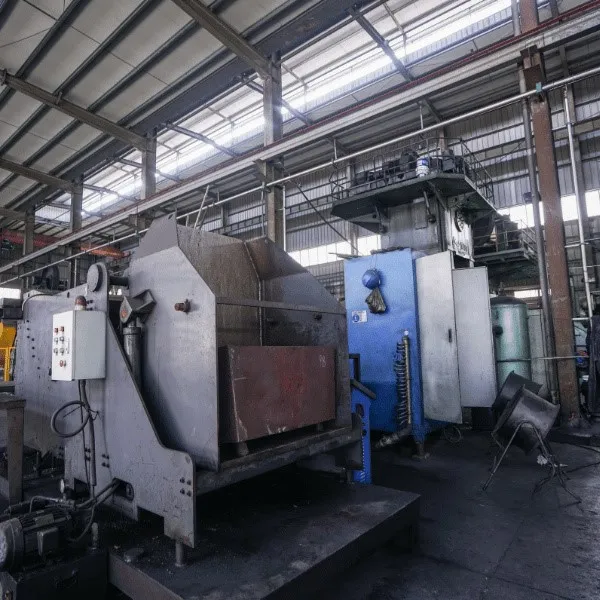
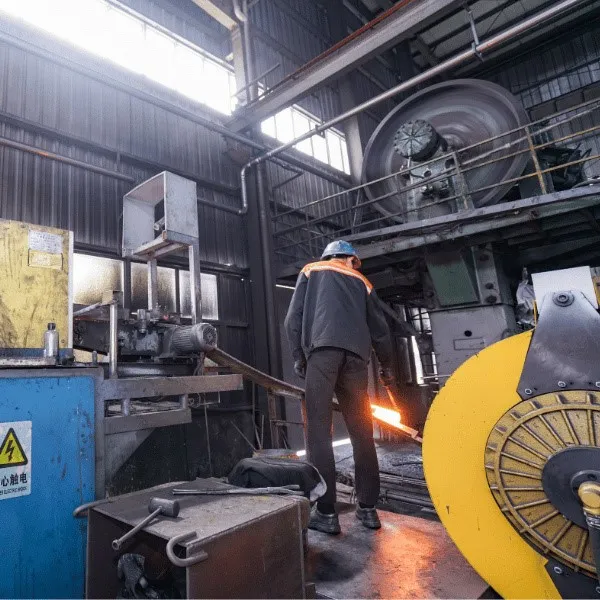

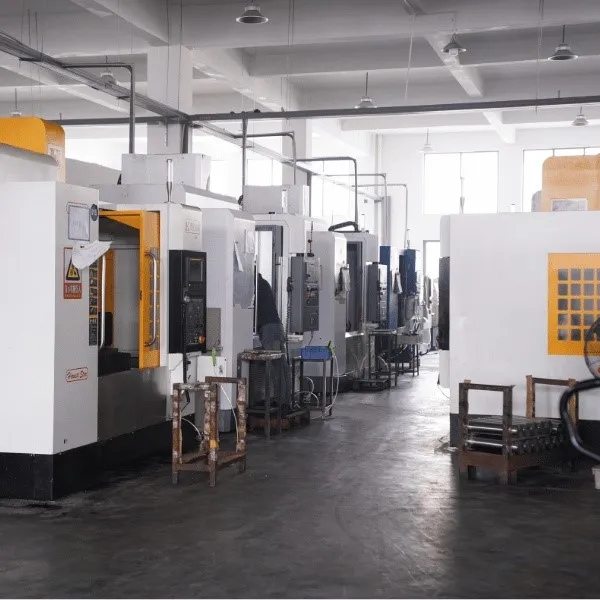
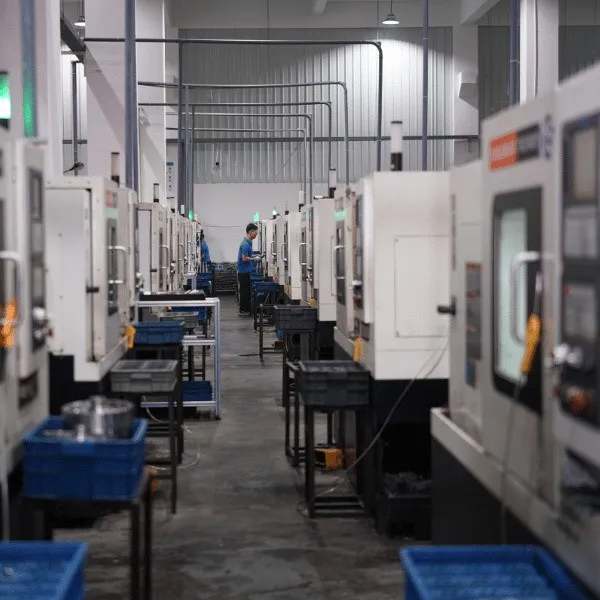


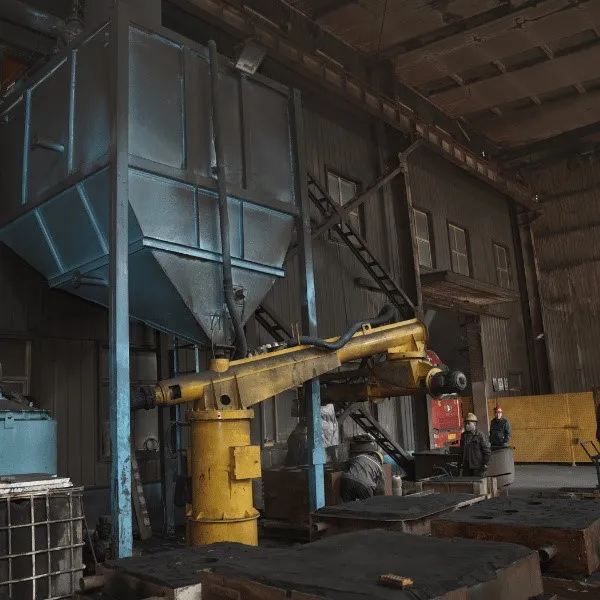
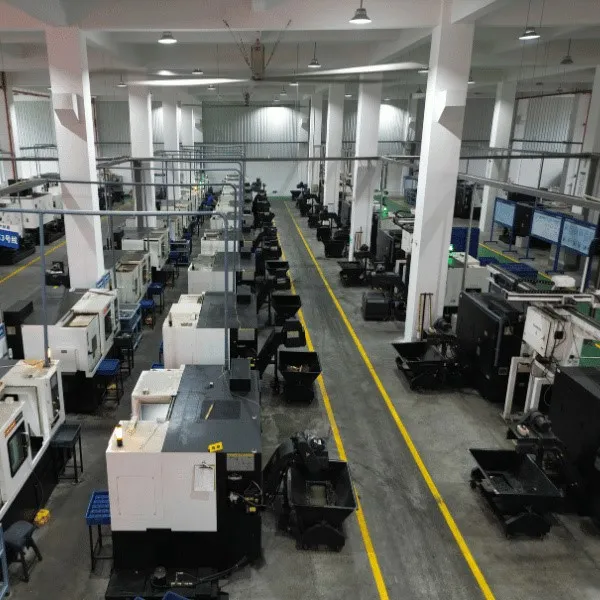
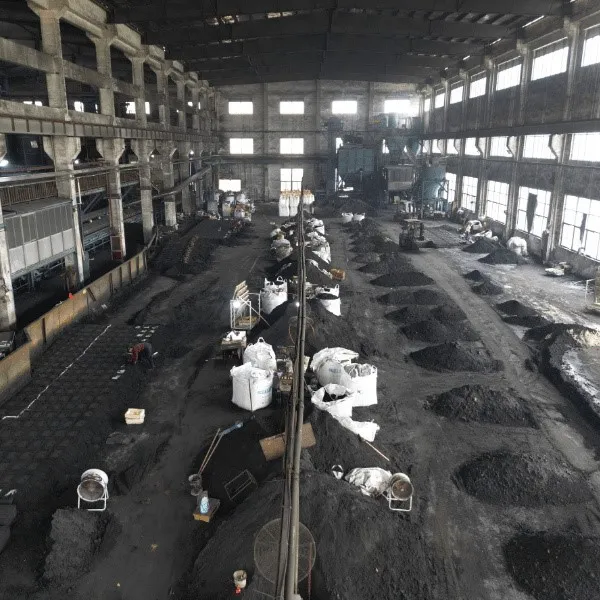

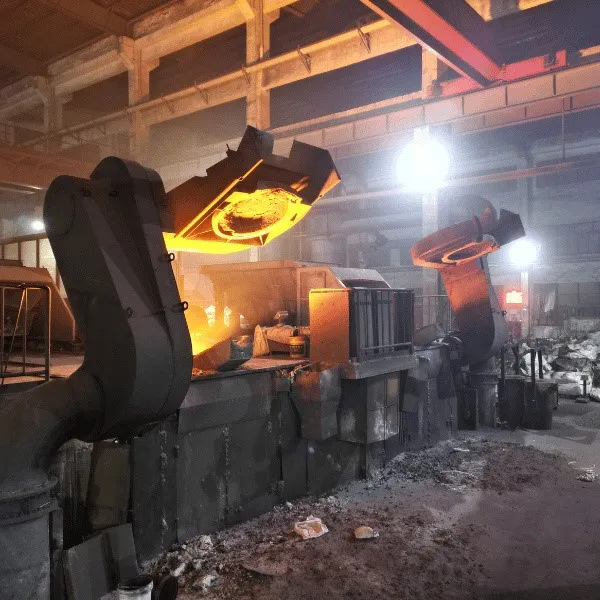


Certifications

ISO 9001:2015

ISO 9001:2015
Certificate name
Certificate name
Certificate name
Certificate name
FAQ
Q: How do I choose the right furnace roller material?
A: Start from peak metal temperature, then apply load and span, atmosphere, and thermal cycling. Send us those four values and we will recommend a grade and explain the reasoning rather than just naming one.
Q: Is AISI 310 the same as 1.4855?
A: No. AISI 310 is a wrought 25Cr-20Ni grade whose nearest cast equivalents are 1.4848 and ASTM A297 HK. 1.4855 is a niobium-stabilized 24Cr-24Ni cast grade. And even HK is not a drop-in substitute for wrought 310 - it carries much higher carbon, which is what provides the creep strength a cast roll needs. If your drawing specifies a wrought grade for a cast part, we confirm the intended cast grade before quoting.
Q: My roll came out bent. Should I order a thicker wall?
A: Only if product load is what bent it. For a thin-walled tube, deflection under the roll's own weight is governed by outside diameter rather than wall thickness, so a thicker wall can add cost and mass without buying much against self-weight sag. Send us span and load per roll separately and we will tell you which case you are in.
Q: My roll lasted less than the previous one from another supplier. Why?
A: Roll life follows from the combination of grade, section, span, atmosphere and cycle - not from grade alone. If you can send the removed roll or photographs of it, the failure appearance usually identifies which variable changed. That is a more reliable answer than comparing two suppliers' grade names.
Q: Will a higher alloy grade solve my strip marking problem?
A: Usually not. Published research lists the controlling limitations of annealing-line rolls as oxide build-up, thermal cycling damage, manganese oxide accumulation and loss of surface roughness causing strip slippage - all surface and atmosphere effects. Grade governs creep, oxidation and carburization resistance, not what your strip picks up.
Q: Can you supply a complete furnace roller assembly rather than just the barrel?
A: Yes. We cast barrels, machine and join journals, and supply assembled rolls. Send the bearing arrangement and drive-end details so the assembly is interchangeable with your line.
Q: Can you make a replacement roll without a drawing?
A: Yes. Send the worn roll or detailed photographs with mating dimensions. We measure, reconstruct the drawing, and send it for approval before manufacturing.
References
Technical statements on this page draw on the sources below. Published temperature limits are properties of the material measured under the stated conditions and are not a service-life prediction for any specific furnace.
- Steel Founders' Society of America. Steel Castings Handbook, Supplement 9: High Alloy Data Sheets - Heat Series. PDFCompositions and maximum service temperatures for ASTM H-series grades; sigma-phase behaviour.
- ASTM International. ASTM A297/A297M, Standard Specification for Steel Castings, Iron-Chromium and Iron-Chromium-Nickel, Heat Resistant, for General Application. Standard record · CEN. EN 10295, Heat resistant steel castings.Grade designations and composition limits for the cast grades listed on this page.
- Zheng, X.-F., Kang, Y.-L. & Zhou, J. "Influence of coating and dew point on hearth roll pickup." Journal of Iron and Steel Research International, 26 (2019) 647–652. doi:10.1007/s42243-019-00231-zCoated hearth rolls in continuous annealing lines: manganese oxide reacting with the roll surface coating, three-stage pickup development, and the effect of furnace dew point.
- Singh, S., Berndt, C. C., Singh Raman, R. K., Singh, H. & Ang, A. S. M. "Applications and Developments of Thermal Spray Coatings for the Iron and Steel Industry." Materials, 16(2) (2023) 516. doi:10.3390/ma16020516Annealing-line roll operating conditions of 730–830 °C in reducing atmosphere; oxide build-up, manganese oxide accumulation and loss of surface roughness causing strip slippage.
- "Creep fracture of the centrifugally-cast superaustenitic steels, HK40 and HP40." Materials Science and Engineering: A (2013). AbstractCreep fracture behaviour of the centrifugally cast grade families used for long, loaded furnace rolls.
Hot Tags: furnace roll, China furnace roll manufacturers, suppliers, factory, Forging and Heat treatments and Machining, Assembly and Welding and Machining, Assembled Support Rolls, Centrifugal casting and machining Company, Arms for continuous galvanizing line, Work Roll


