


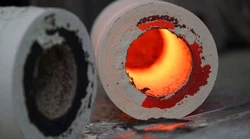
Centrifugal casting is different from other casting methods because it uses rotational force to spread liquid metal evenly across the mold walls. This makes dense, defect-free parts with better mechanical stability. Unlike static methods like sand or gravity casting, this process makes parts that are cylinder- or tube-shaped and naturally hollow on the inside. This means that no cores are needed, and the material is very pure because centrifugal force pushes impurities inside, making them easy to remove during machining. Because of this basic difference, the method is especially useful for fields that need high-performance parts but can't risk the structural dependability.
Introduction to Centrifugal Casting and Its Role in Modern Manufacturing
Leaders in manufacturing are under more and more pressure to deliver parts that meet strict quality standards while also keeping costs and lead times under control. Because the choice of casting method has a direct effect on these results, it is not just a technical decision but also a strategic one. We've seen how hard it is for procurement teams to meet both quality standards and price limits, especially when they have to buy from foreign suppliers.
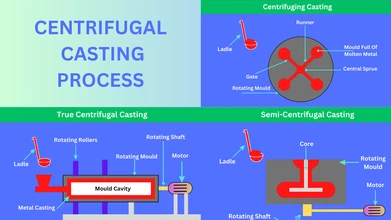
For Centrifugal casting, liquid metal is poured into a hot spinning mold. The material is then spread out against the inside of the mold by centrifugal forces that are close to 100 times the force of gravity. This managed solidification moves inward from the outside circle, making a special structure in the metal. The process works with different kinds of metals, like stainless steels, carbon steels, nickel alloys, aluminum, and copper-based metals based on copper. It is used in many fields, from making cars to making oil drilling tools.
It's important to understand these differences because each casting method has different effects on the performance of the part, the cost of production, and the stability of the supply chain. When purchasing managers look at different providers, they need to know which method fits their technical needs, volume needs, and quality standards. One-size-fits-all solutions are no longer the norm in manufacturing. Instead, specialized methods are used to meet the needs of each application.
Core Differences Between Centrifugal Casting and Other Casting Methods
Comparison with Sand Casting
Sand casting is still the most common way to shape metal around the world. It uses disposable sand models to make complex shapes. The main difference is between making molds and putting materials together. Centrifugal casting is best for making cylinder shapes, while sand molds can handle complicated forms with undercuts and internal openings. Material density is very different. For example, sand-cast parts often have holes and other imperfections all the way through their cross-section, while Centrifugal casting parts cluster flaws around the hole so they can be cut out. For low-volume, physically complex parts, sand casting is the most cost-effective method of production. On the other hand, Centrifugal casting becomes more cost-effective for intermediate to high-volume tubular parts.
Investment Casting Considerations
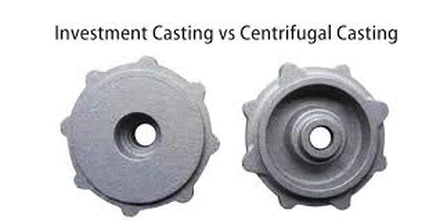
Investment casting, which is sometimes called "lost-wax casting," makes complex parts with a smooth surface and close limits on their dimensions. With this method, a wax image is surrounded by a clay shell, which is then melted away before the metal is poured in. This method is better for making rotor blades, medical implants, and precision fittings because it can work with complicated shapes that Centrifugal casting can't. Investment casting, on the other hand, has longer wait times and costs more for tools. Investment-cast parts are more accurate than most other methods because they can achieve limits of within ±0.005 inches. Centrifugal casting parts, on the other hand, usually need to be machined after casting to reach the same level of accuracy.
Die Casting Distinctions
High-pressure liquid metal is poured into steel dies that can be used again and again. This makes it possible to quickly make parts with thin walls and small features. This is the most common way to make a lot of small parts out of combinations of aluminum, zinc, and magnesium. The scale of output and the suitability of materials are the main things that set them apart. Die casting equipment needs a lot of money to buy, so it should only be used for large production runs of more than a thousand units. Centrifugal casting can work with bigger parts and a wider range of alloys, even high-temperature ones that can't be cast in a die. When die casting, the surface finish quality is better, so extra cutting is often not needed. But when Centrifugal casting parts are made, they need to be bored out and finished on the outside.
Gravity and Continuous Casting Analysis
In gravity casting, metal is poured into permanent molds without any movement or pressure being applied. The form is filled only by gravity. This simple method works well for parts that aren't too complicated and don't need high-quality standards. Gravity casting makes parts with a less uniform grain structure and higher porosity levels, so the soundness of the material can't match that of Centrifugal casting parts. On the other hand, continuous casting makes long pieces with the same cross-section by pouring liquid metal into a mold that has already cooled. This method is great for making stock materials that can be used in other processes, but it's not as flexible for creation as other methods. In a sense, Centrifugal casting is in the middle. They offer better material qualities than gravity casting while still being able to make more shapes than continuous processes.If you need custom centrifugal casting parts, feel free to contact us for a quick quotation.
Benefits of Centrifugal Casting for B2B Manufacturing Clients
People who make manufacturing decisions prefer casting methods that offer consistent quality, predictable prices, and manageable wait times. Centrifugal casting has clear benefits that solve these main issues, especially in situations where structural soundness and material purity are important. We've worked with procurement teams in the oil drilling, aircraft, and automobile industries, and they always say that parts work better after switching from other casting methods.
Centrifugal casting uses physical forces that make it possible to get mechanical benefits that are hard to get with steady casting. More than 60 to 100 G's of centrifugal force push heavier material toward the mold wall and lighter impurities, gas pockets, and non-metallic elements toward the mold wall. This natural separation makes the outside structure clean, which is important for mechanical qualities. As the solidification pattern moves from the outside to the inside, it gets rid of the shrinking holes and porosity that weaken the structure of gravity-poured casts. Compared to parts cast using traditional methods, those made with this method have a finer grain structure and better mechanical qualities, such as higher tensile strength and wear resistance.
Another useful benefit is that the material can be used in many different ways. A lot of different metals can be used in this process, from gray and ductile iron to special types of stainless steel and nickel-based superalloys. Because of this, engineering teams can choose the best materials based on the needs of the product rather than the limitations of the manufacturing process. Automakers use this skill to make cylinder liners with surfaces that don't wear down easily, and oil drilling providers ask for corrosion-resistant metals for parts that go deep underground and are exposed to harsh conditions.
Cost efficiency shows up in a number of ways that have good effects on procurement costs. Because the natural hollow shape uses less raw material than solid casts that need a lot of machining, material efficiency goes up. The scrap metal that is made during hole machining can be burned down and used again, which cuts down on waste. Since there are no cores, there are no costs or quality problems tied to making cores, like core shifts or gas flaws. Setup costs are still lower than die casting because the investment in tools is much lower. This makes the process cost-effective for middle production rates where die casting's high capital needs can't be justified. Because melting and casting are done in-house, there is less reliance on mill sources for special metal heats, which cuts down on lead times.
Potential Challenges and Solutions in Centrifugal Casting
Understanding Common Defects
Quality-conscious buying teams should ask sellers about possible failure modes before committing. Even though the Centrifugal casting process makes better parts, it can show certain flaws when process factors move out of their ideal ranges. Most of the time, people are worried about segregation. The same centrifugal force that removes impurities can also separate alloying elements with different densities, making composition differences across the wall width. Modern foundries keep this under control by carefully choosing the alloys they use and making sure the spinning speeds are just right so that they remove impurities without causing too much segregation. Porosity can happen if the pouring temperature or spinning speed drops below key levels, but it doesn't happen as often as in static casting. Leading providers use tracking systems that work in real time to keep an eye on these factors and take corrective steps before problems happen.
Mold Design and Equipment Considerations
Thermal control has a big effect on the quality of the casting. The temperature of the mold changes the rate of solidification, the structure of the grains, and the finish on the outside. If it's too cold, the metal might freeze before it can spread out evenly. If it's too hot, it will form large grains or other flaws on the surface. Foundries with a lot of experience use complex preheating methods and refractory coats that are made to fit the metal family. Reliability of all equipment is important. For example, bearing problems or changes in speed can have a direct effect on the quality of the product that rotates. These risks are greatly reduced when you work with sellers who stick to strict preventative maintenance plans and buy new equipment.
Supplier Selection Criteria
To lower output risks, suppliers must be carefully looked at. Foundries that have ISO 9001:2015 certification have shown that they are committed to quality management systems that stop mistakes before they happen through process control instead of inspecting the finished product after it's been made. Because they have to deal with different customer needs and regulatory settings, global providers that serve many countries usually keep higher standards. Our supply chain management is based on these principles. We do regular checks of our partner foundries and keep open lines of contact that let clients know about any problems before they affect delivery times.
Decision-Making Guide: Choosing Centrifugal Casting Over Alternatives
Aligning Technology with Application Requirements
To choose the best casting method, you must first look at the part's shape and performance needs. Centrifugal casting works best on cylindrical or tube parts whose length-to-diameter ratios are between 2:1 and 10:1. The dense, radially oriented grain structure that this method makes is good for applications that need high mechanical strength in the radial direction. These benefits are often used in parts like bearing rings, hydraulic cylinders, pipe fittings, and gear flats. On the other hand, parts with complicated internal tunnels, deep undercuts, or non-symmetrical shapes need different methods, such as investment casting or sand casting.
Economic Evaluation Framework
To compare costs, you need to look at the total landing cost, not just the price. Centrifugal casting usually has affordable prices for making between 50 and 5,000 units per year, but this can change depending on the size and complexity of the part. The study takes into account prices linked to quality, material output, machining allowances, and tooling amortization. To make fair comparisons, procurement teams should ask for specific quotes that break down these factors. Lead time is also important. The process usually produces prototype casts in 4–6 weeks and production quantities in 8–12 weeks. This puts it in the middle of fast testing methods and high-volume processes that need a lot of tooling development.
Performance Metrics That Matter
Setting clear standards for success helps procurement managers rate the skills of suppliers in an unbiased way. Dimensional uniformity (often shown by Cpk values above 1.33), mechanical property compliance rates, on-time delivery percentages, and defect rates per thousand castings are some of the most important success metrics. Suppliers you can trust will be happy to share these measurements with you and give you test records for each production lot that show the material composition, mechanical qualities, and dimensions. We've built our quality control procedures around these measures, checking the goods as they come in, keeping an eye on them while they're being made, and doing one last check before sending them out to make sure they always meet customer requirements.If you need custom centrifugal casting parts, feel free to contact us for a quick quotation.
Conclusion
When choosing casting methods, it's important to think about technical needs, cost, and the dependability of the supply chain. Centrifugal casting is a tried-and-true method for making cylinder-shaped parts with high-quality materials and good mechanical features. It is a solution that matches performance with low cost. Centrifugal force gets rid of common flaws in the process while giving the material freedom across a wide range of metal families. By knowing these comparative benefits, as well as possible problems and ways to solve them, factory decision-makers can make sure that production methods are in line with business goals. For implementation to go well, you need to work with skilled suppliers who keep up with quality systems, buy new tools, and talk to you openly throughout the production cycle.
FAQ
What materials work best with rotational casting methods?
Different types of ferrous and non-ferrous alloys can be used in Centrifugal casting, such as gray iron, ductile iron, carbon steels, stainless steel grades (304, 316, duplex), nickel alloys, aluminum bronzes, and copper-nickel alloys. What kind of material is used depends on things like how resistant it is to rust, how hot or cold it will be, and how much force it will have to handle.
How do lead times compare to alternative casting approaches?
After an order is confirmed, the typical production wait time is between 8 and 12 weeks. This puts the process in the middle of high-volume methods that need a lot of tools and fast prototyping methods. Timelines may be longer for parts made of complex metals or that need special heat processes, but most standard production parts ship within 6 to 8 weeks.
What defects should quality inspections target?
In order to make sure that inspection methods are followed correctly, it is important to check for porosity using ultrasonic or radiographic tests, make sure that measurements are accurate and within acceptable ranges, and make sure that the mechanical properties meet the requirements. Reliable sellers do these checks and include certified test records with every shipment.
When does this method offer the best value compared to alternatives?
There are economic benefits to making cylinder-shaped parts in batches of 50 to 5,000 each year, especially when the application needs high material integrity and modest geometric complexity. This method works best for parts that need a thick microstructure and radial strength.
Partner with Welong for Your Centrifugal Casting Requirements
Welong is an ISO 9001:2015 certified Centrifugal casting provider that has been in business for more than 20 years and works with procurement teams in the aircraft, automobile, oil drilling, and medical device industries. Our engineering staff uses AutoCAD, Pro-Engineering, and SolidWorks to make designs easier to make while still meeting your requirements. They work straight from your sketches or samples. We take care of the whole supply chain, from finding new suppliers to doing the final check. This way, we can guarantee consistent quality and on-time delivery to customers in North America, Europe, and the Asia-Pacific region. You can email our team at info@welongpost.com to talk about your unique needs, get technical advice, or get competitive quotes that come with clear communication and reliable delivery.
References
1. Davis, J.R. (Ed.). (2008). Casting Engineering Handbook. ASM International, Materials Park, Ohio.
2. Campbell, J. (2015). Complete Casting Handbook: Metal Casting Processes, Metallurgy, Techniques and Design (2nd ed.). Butterworth-Heinemann, Oxford.
3. Brown, J.R. (Ed.). (1999). Foseco Ferrous Foundryman's Handbook (11th ed.). Butterworth-Heinemann, Oxford.
4. Beeley, P.R., & Smart, R.F. (1995). Investment Casting. The Institute of Materials, London.
5. American Foundry Society. (2016). Centrifugal Casting Process Guidelines and Quality Standards. AFS Technical Publications, Schaumburg, Illinois.
6. Stefanescu, D.M. (Ed.). (2017). ASM Handbook Volume 15: Casting. ASM International, Materials Park, Ohio.


