


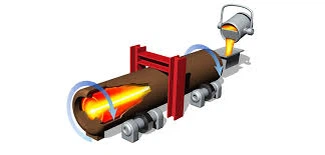
Centrifugal casting generates a wide range of high-performance metal parts, mostly circular and tube parts. Seamless pipes, bushings, bearing races, cylinder liners, brake drums, pump cases, gear blanks, and valve bodies are all common items that they make. This method is used to make parts for industries like oil and gas, aircraft, automotive, and heavy machinery that need parts with good mechanical properties, good wear resistance, and good structural stability. The rotating mold method makes parts that are dense and free of flaws, and they work better than many regularly made options.
Understanding Centrifugal Casting and Its Product Range
In order for rotary casting to work, accuracy and science must work together. A hot cylinder-shaped mold is filled with molten metal that runs into it at high speeds, creating forces up to 100 times those of gravity. As the metal rotates, pressure builds up, pushing heavier metal compounds away and lighter impurities, gases, and slag toward the center. The managed solidification starts on the outside and works its way in, making parts that are very dense and don't have many holes in them.
Core Materials and Alloys Used
Choosing the right materials is a very important part of figuring out how well an end component works. Cast iron is still widely used in situations where it needs to be highly resistant to wear and have good dampening qualities. Structures are made stronger with steel alloys, which come in carbon and low-alloy forms. In places where metals can rust, stainless steel types are used. For specific heat and mechanical needs, bronze, aluminum, and nickel-based superalloys are used. When you work with these types of materials, Welong has a lot of experience in the field of metallurgy, so we can suggest the best alloy compositions for your needs.
Primary Product Categories
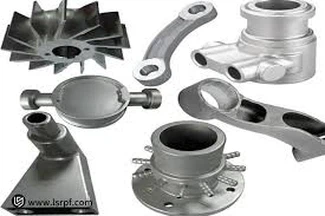
The range of products covers a lot of different industries. The base of oil and gas infrastructure is made up of seamless lines and tubes that move fluids. In diesel engines for cars and boats, cylinder covers protect the engine blocks. Heavy machinery uses bearing housings and bushings to hold parts that move. In chemical processes, aggressive fluids are moved through pump cases. Kinetic energy is controlled in transportation systems by brake drums and flywheels. Power transmission systems will be made from gear blocks that have been carefully machined. Additionally, the centrifugal casting process improves the mechanical qualities of all of these categories, making them last longer than other ways of making things.
Customization Capabilities for OEMs
This way of making things is great for making custom parts from technical drawings or real samples, as well as regular product lines. Engineering teams can make parts with specific limits for dimensions, changes in wall thickness, and changes to the metal. The process can handle both small amounts for prototypes and large amounts for production, so it can be used for both new product lines and growth projects. We use AutoCAD, Pro-technical, and Solidworks to work together with your design teams and provide technical help that makes products easier to make while still meeting performance standards.
Advantages of Centrifugal Casting Products Over Traditional Casting
Manufacturing methods compete in three areas: quality, cost, and fit for the job. Rotational casting methods have benefits that are important to buying workers who are looking at the skills of suppliers and the total cost of ownership.
Superior Structural Integrity
The main scientific benefit is getting rid of defects. In traditional sand casting, holes are often trapped inside the walls of the parts, which makes them weak and threatens the structure's stability. Gas pockets, shrinking holes, and inclusions are naturally pushed toward the bore by the spinning process. This material is machined away during the finishing steps. The load-bearing parts have almost perfect material density as a result. When compared to gravity-poured options, testing methods such as ultrasound examination and radiographic inspection always show fewer gaps. This means that there are more safety margins and longer component lifecycles, which is especially helpful in important applications like pressure tank fittings and aircraft structural components.
Enhanced Metallurgical Properties
The directed solidification pattern makes grain structures that are more polished and have better mechanical properties. When metal hardens under centrifugal pressure, the grains get smaller than when it hardens in steady casting settings. This small change to the structure makes the tensile strength, yield strength, and wear resistance better. It also does secondary refining, which is when heavier metallic phases move to the edges while lighter oxide films and sulfide spots gather on the inside. After cutting, this dirty layer is taken off, leaving behind chemically cleaner material. Metallographic research shows that the wall's composition is the same all the way through, so it will work as expected when it's under operating stress.
Economic and Production Benefits
From a purchasing point of view, these are the main benefits of this way of making things:
Material efficiency: The hollow-core shape needs 20% to 40% less raw material than solid forgings, which lowers the cost of materials by 20 to 40 percent based on the size of the part. It is possible to remelt and use material that has been machined from the hole in other production runs. This creates a sustainable material loop.
Tooling economics: Molds are still much cheaper than die-casting tools. Simple cylindrical molds are easier to make than multi-cavity permanent molds, which means you don't have to pay as much up front. This is especially helpful for medium production rates where the economics of die casting don't support the cost of tools.
Rapid lead times: Once the mold is ready, production can begin right away, without having to wait for the mill to send the specific forgings. This ability to quickly respond is useful when problems in the supply chain threaten production plans or when technical changes need to be put into action right away.
Scalable batch sizes: The method can handle both small sample amounts and bigger production runs, without the need for the multi-ton minimum orders that are common for special metal melts. This gives companies the freedom to introduce new products and adapt to changing demand patterns.
These economic factors work together to make piece-part prices cheap while still meeting the quality standards needed by supply chains that are ISO-certified. We've worked with more than 100 companies in the automobile, aircraft, and industrial sectors, and when we look at the total lifecycle costs, we've seen savings of 25% or more compared to other ways of making things using centrifugal casting.
Comparison of Centrifugal Casting Products with Alternative Casting Methods
Knowing the pros and cons of different technologies is important for choosing the right manufacturing process. Based on geometry needs, output numbers, and performance standards, each casting method fills a different niche.
Centrifugal Casting versus Sand Casting
The level of the surface finish is very different between these methods. Sand casting makes surfaces that are rougher and need a lot of machining to be precise in terms of dimensions. Rotational methods, on the other hand, make surfaces that are smoother as-cast and have smaller limits for dimensions. The centrifugal casting method is also better when it comes to internal soundness, since sand casts often have mid-wall shrinking and gas porosity that make it harder to hold pressure. Costs change depending on how much is being made. Sand casting is best for very small amounts because the tools are cheap, while spinning methods become more cost-effective when the higher quality makes the mold investment worthwhile.
Centrifugal Casting versus Investment Casting
The main thing that sets them apart is their geometric complexity. For example, turbine blades with cooling lines inside them are a great example of a detailed shape that can be made with investment casting. Rotational casting only lets creators make shapes that are cylinder-shaped or slightly cone-shaped, with no interior complexity. Centrifugal methods, on the other hand, give better material qualities at a lower cost per kilogram for parts that fit this geometric area. Different methods can also make walls of different thicknesses. Investment casting can make thinner parts, while centrifugal processes can make walls that are heavier and more common in structural uses more cheaply.
Centrifugal Casting versus Die Casting
Die casting is a way to make a lot of small parts, usually out of non-ferrous metals like zinc and aluminum. The process has very accurate measurements and short cycle times, but it needs a lot of expensive tools that are only worth it when making more than tens of thousands of pieces. Centrifugal ways work better for bigger parts and metallic alloys that don't work well with die casting. The way the pressure changes is also different. Centrifugal methods use circular forces, while die casting uses pressure from the outside to introduce metal.
Supplier Selection Criteria
When picking factory partners, you need to look at more than just price. Your volume needs and size standards should be met by the production skills. Shipping prices and wait times are affected by geography. The locations of our facilities make it easy to send goods to markets in Europe, North America, and Asia-Pacific. Certification shows that a quality system is mature. ISO 9001:2015 certification gives basic peace of mind, while industry-specific certifications like AS9100 for aircraft or API standards for oil and gas show that the company has specific knowledge.If you need custom centrifugal cast parts, feel free to contact us for a quick quotation.
Design Tips and Quality Assurance for Procuring Centrifugal Cast Products
It takes a lot more than just buy orders to make procurement work well. During the blueprint phase, design optimization and quality planning keep problems from happening that cost a lot of money to fix during production and service.
Design Optimization Guidelines
Wall thickness consistency affects both how easy it is to make things and how well they work. Keeping the width the same all the way around stops uneven cooling rates that cause leftover stresses. Gradual changes between layers keep stress from building up in one place. Dimensional tolerances should take into account both the function and the process capabilities. Usually, doable tolerances run from ±0.5mm for small sizes to ±2mm for bigger parts, though tighter tolerances raise the cost of machining. Draft angles make it easier to remove the mold, but the cylinder shape makes extraction easier than with complicated sand casting designs.
Material Selection Strategies
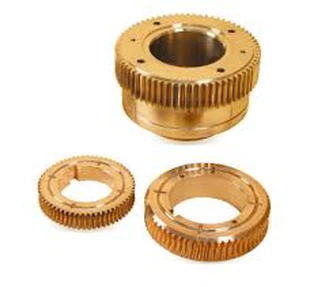
Matching the qualities of an alloy to its use conditions increases the duration of a component. Gray cast iron is great for cylinder seals and brake parts because it doesn't wear down easily and doesn't make noise when it moves. For building uses, ductile iron is better at resisting impacts. Pressure tanks and pipe fittings are made strong with low-alloy steels. Chemical manufacturing equipment made of certain types of stainless steel doesn't rust. Bronze alloys are used in bearing situations where the edges need to be oiled. Our research team looks at working temperatures, corrosive exposure, mechanical loads, and wear conditions to come up with the best material specs that balance performance with cost.
Quality Control Protocols
Standards compliance gives us clear ways to measure what is acceptable. The compositions and mechanical qualities of materials are spelled out in ISO standards. ASTM guidelines set the rules for quality and how tests should be done. Important uses are controlled by standards that are specific to the industry, such as API 5L for pipeline goods or ASME pressure tank codes. Our quality control system at Welong keeps full records of all steps, from certifying the raw materials to the final review, as required by ISO 9001:2015. Over the course of our 20 years, this methodical approach has helped us keep the quality high for over 100 customers in a wide range of industries using centrifugal casting.
How to Procure Centrifugal Cast Products: A B2B Buyer's Guide
To successfully navigate foreign sourcing, you need organized methods that lower risk while improving quality and lowering costs. Knowing how buying works helps you build good relationships with suppliers.
Supplier Qualification Process
The first step in assessing capability is evaluating output capacity. Is the provider able to meet your volume needs and meet your wait times? The level of quality that can be achieved depends on how advanced the equipment is. For example, current computer-controlled molds can hold tighter tolerances than systems that are run by hand. Expertise in the material is important, especially when working with special metals or heat treatment needs. Accessibility in terms of geography affects both the cost of shipping and the speed of conversation. Language skills and time zone alignment also have an effect on how well people can work together.
Procurement Workflow Stages
Usually, the buying process is broken up into several separate steps. Technical advice sets the needs, making sure that the details of the specs, material grades, tolerances for size, surface finish requirements, and testing needs are clear. Our engineering team looks over your drawings or models and makes design optimization ideas that make the product easier to make while keeping its functionality.
Why Partner with Experienced Suppliers
Picking the right manufacturing partner has a big effect on how the buying works out. Welong has been helping OEMs and technical firms in the automobile, aircraft, oil and gas, and medical device industries for 20 years. Our quality control system, which is ISO 9001:2015 approved, makes sure that everything is done the same way from the quote to the delivery. Technical skills include choosing the right materials, making sure designs work best, managing production, and making sure quality is always high.
Conclusion
Centrifugal casting makes metal parts with high integrity that are needed for tough industry uses. When compared to other casting methods, this one makes seamless lines, cylinder cores, bearing housings, and other parts with better mechanical features. By knowing which goods gain the most from this method of production, you can make smart purchasing choices that balance quality, cost, and the reliability of the supply chain.
To do good buying, you need to look at the skills, certifications, and track records of potential suppliers, as well as technical issues like choosing the right materials and following quality control rules. Working with manufacturing partners who have a lot of experience, are ISO certified, and have recorded quality systems lowers the risk of buying while giving you access to cost-effective production. This process is perfect for making important parts for cars, planes, oil and gas equipment, and factories because it has improved mechanical qualities, is cost-effective, and allows for flexible design.Looking for custom centrifugal casting components? We can provide you with a fast quote.
FAQ
What materials work best for centrifugal casting applications?
Depending on the needs of the product, the method can handle more than one type of alloy. Gray and ductile cast iron is great for making parts for cars and factories because it doesn't break down easily. Carbon and low-alloy steels are strong enough for use in structures and pressure tanks. Stainless steel types don't rust in places where chemicals are used. Bronze and aluminum metals are used in specific ways that require certain electrical or thermal qualities.
How does durability compare between centrifugal castings and sand castings?
Due to their better metallurgical properties, centrifugal casting typically outlasts sand casting versions. The finer grain structure that forms when pressure is applied in a certain way makes the power and resistance to fatigue better. Getting rid of defects makes the material's features more consistent across load-bearing areas. The secondary polishing effect gets rid of impurities that make standard casts less stable.
What lead times should procurement teams expect?
Production times depend on how complicated the parts are and how many are ordered. After an order is confirmed, simple circular parts that already have the right tools usually ship within 3 to 4 weeks. When making custom parts that need new molds, it takes an extra two to three weeks to make the tools. Complex metal requirements or specialized heat processes may cause plans to be pushed back. Lead times depend on how much is being made-small prototypes move faster than big batches that need more than one casting run.
Source Reliable Centrifugal Casting Components with Welong
Your purchasing goals should be met by a production partner with a global reach and a track record of success. Welong has been working with OEMs and Tier 1 providers in a wide range of industries for more than 20 years. We are a provider of centrifugal casting that is ISO 9001:2015 approved. We use cutting-edge production technology and strict quality control procedures that meet international standards. Our engineering team works closely with your design team to make sure that parts are manufactured as efficiently as possible while still meeting your performance requirements. We make custom metal parts from drawings or samples and keep you informed throughout the whole project, whether you're making new products or trying to make current supply lines work better. Email us at info@welongpost.com to talk about your particular needs and find out how our knowledge of the supply chain can lower your buying risk while still ensuring stable quality and on-time delivery.
References
1. American Foundry Society. (2019). Centrifugal Casting Handbook: Principles and Applications. Des Plaines: AFS Technical Publications.
2. Campbell, J. (2015). Complete Casting Handbook: Metal Casting Processes, Metallurgy, Techniques and Design (2nd ed.). Oxford: Butterworth-Heinemann.
3. Davis, J.R. (Ed.). (2008). ASM Specialty Handbook: Cast Irons. Materials Park: ASM International.
4. Beeley, P.R. & Smart, R.F. (1995). Investment Casting. London: The Institute of Materials.
5. Stefanescu, D.M. (2015). ASM Handbook Volume 15: Casting. Materials Park: ASM International.
6. Kurz, W. & Fisher, D.J. (1998). Fundamentals of Solidification (4th ed.). Aedermannsdorf: Trans Tech Publications.


