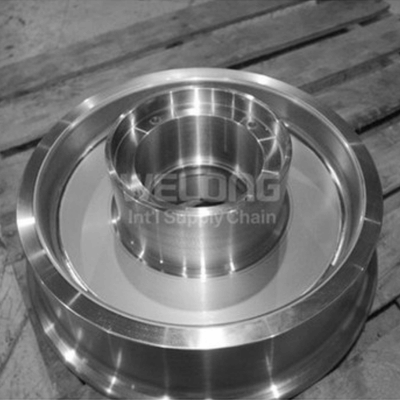

When engineers and procurement managers evaluate manufacturing processes for critical metal parts, closed die forging consistently rises to the top of the list. Unlike casting or machining from bar stock, closed die forging shapes heated metal under high compressive force within a precision die set &mdash producing components with exceptional structural integrity, tight dimensional tolerances, and repeatable geometry. For complex parts used in demanding applications like oil drilling, aerospace, automotive, and heavy industrial equipment, this process delivers a combination of strength, accuracy, and material efficiency that alternative methods struggle to match. This article explains why closed die forging is the preferred choice for manufacturers who cannot afford to compromise on part quality.
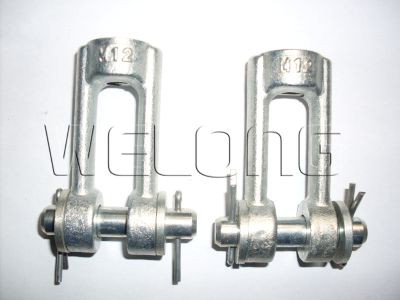
How Does Closed Die Forging Improve Component Strength and Precision?
Grain Flow Alignment Enhances Mechanical Properties
One of the most significant metallurgical advantages of closed die forging is its effect on grain structure. When metal is forged in a closed die under pressure, the grain flow of the metal follows the shape of the part instead of being stopped by machining. When compared to cast or machined parts of the same metal, this continuous grain flow makes the fatigue strength, impact resistance, and tensile performance much better. A closed die forging method makes parts that are loaded and unloaded over and over, like connecting rods, flanges, or gear blanks. These parts last longer and break more regularly, which is very important in safety-sensitive applications.
Dimensional Consistency Across Production Runs
Precision is not just about hitting a tolerance on one part - it's about hitting it on every part, batch after batch. Closed die forging excels here because the die geometry controls the finished shape of each component. Once the tooling is proven, dimensional variation is minimal and highly repeatable. This consistency reduces the need for extensive post-forge inspection and simplifies downstream assembly processes. Manufacturers supplying high-volume industrial customers - such as those in the automotive or oil equipment sectors - rely on closed die forging to maintain part interchangeability across large production runs without sacrificing quality.
Benefits of Closed Die Forging for Complex Metal Parts
Superior Strength-to-Weight Ratio for Demanding Applications
In aircraft, oil drilling, and heavy transport, complex metal parts need to be as light as possible without losing their ability to hold weight. Closed die forging has a great strength-to-weight ratio because it smooths out the metal's microstructure and gets rid of internal porosity, which is a common flaw in casts. This makes a part that can handle more stress at a given cross-section than a cast part of the same size. This means that design engineers can find the best shape for structural parts like axle shafts, valve bodies, and crane hooks so that they are lighter while still meeting the safety standards required by the industry.
Design Flexibility for Complex Geometries
A widespread misunderstanding is that forging can only be used for simple shapes. CAD and simulation software like AutoCAD, Pro-Engineering, and SolidWorks are used to create modern closed die forging tools that can make very complicated three-dimensional shapes in a single forging operation. It is often possible to add ribbed sections, undercuts, flanges, and integrated bosses to a forged form instead of having to machine them. This design flexibility makes closed die forging the right choice for component families with intricate profiles - particularly when those profiles must be reproduced identically across thousands of parts.
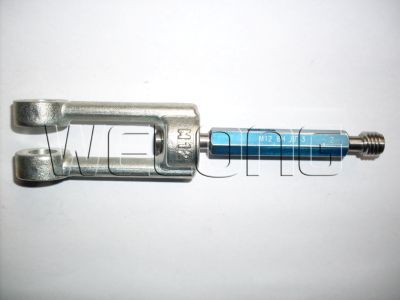
Can Closed Die Forging Reduce Machining and Material Waste?
Near-Net Shape Production Minimizes Machining Time
One of the most practical economic arguments for closed die forging is the reduction in machining time it enables. Starting with a near-net shape forging rather than a rectangular billet means significantly less material needs to be removed to reach the finished geometry. Less machining translates directly into shorter cycle times on CNC equipment, reduced tool wear, and lower energy consumption per part. For manufacturers running high volumes, these savings compound quickly. A closed die forging that requires only finishing passes on critical surfaces is inherently more efficient than a machined-from-billet part that requires heavy roughing before any precision work can begin.
Reduced Material Input and Scrap Generation
The cost of materials is a big factor in making metal parts, and closed die forging uses less material than subtractive methods by nature. The form of the die forces the metal into the shape of the part instead of letting it be cut away as chips. Even though some flash is made at the parting line and removed after forging, the general buy-to-fly ratio is much better than when the solid is machined. This ratio shows how much raw material was used to make a part and how much the finished part weighed. When using premium alloys, the cost of the raw materials is high. This efficiency benefit of closed die forging has a direct and measurable effect on the cost of the part.
Closed Die Forging vs. Open Die Forging for Industrial Components
Process Differences and Their Practical Implications
Open die forging is a way to shape metal between flat or simple-profile dies without enclosing the piece being worked on. It works well for big, simple shapes like shafts, discs, and rough blanks. Closed die forging, on the other hand, keeps the metal inside a set of matched dies that outline the shape of the finished part. Because of this basic difference, closed die forging is the best method for making parts with complicated shapes that need to be accurately reproduced in many pieces. For industrial parts where shape is very important for function, like pipe fittings, connecting rods, closed die forging, or turbine discs, closed die forging gives you more control over the dimensions than open die forging can.
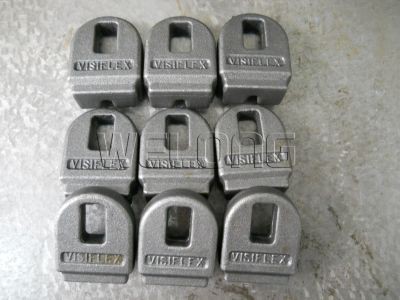
When Each Process Makes More Sense
Open die forging is still useful for making very big parts, one-of-a-kind custom parts, or to improve the material before a closed die operation. If you need to make a lot of parts, you should use closed die forging instead of open die forging. This is especially true if the part shapes are complicated or if you need very tight specs and a smooth surface. In reality, a lot of production processes use both. First, open die forging is used to smooth out a big billet, and then closed die forging is used to make the final shape of the part. It takes both metallurgical knowledge and manufacturing experience to figure out which process (or mix of processes) is best for a given job.
Conclusion
Closed die forging offers a well-proven combination of mechanical performance, dimensional precision, material efficiency, and production scalability that makes it the logical choice for complex metal components across demanding industries. From grain flow alignment that improves fatigue life to near-net shape capability that reduces machining cost, the process delivers measurable advantages at every stage of the production lifecycle. Partnering with an experienced, ISO-certified forging supplier - one with strong engineering support and a track record across global industrial markets - ensures these advantages are fully realized in your components.As an ISO-certified supply chain leader established in 2001, Welong combines precision manufacturing with strict engineering control to produce mission-critical, customized forged solutions tailored to demanding global applications.
FAQ
Q1: What types of metals are commonly used in closed die forging?
A: Closed die forging is compatible with a wide range of metals, including carbon steel, alloy steel, stainless steel, aluminum alloys, titanium, and nickel-based superalloys. The choice of material depends on the mechanical properties required for the application, such as strength, corrosion resistance, or high-temperature performance.
Q2: How does closed die forging compare to casting in terms of part strength?
A: Forged parts are generally stronger than cast equivalents of the same alloy because forging refines the grain structure and eliminates the internal porosity that is common in castings. This makes closed die forging the preferred process for safety-critical or high-stress components.
Q3: What is the minimum production volume that justifies closed die forging tooling investment?
A: This varies by part complexity and material, but closed die forging typically becomes cost-effective at volumes of several hundred pieces per production run. For high-value alloys or complex geometries where machining from solid would be very expensive, the break-even volume may be lower.
Q4: Can closed die forging produce parts to tight tolerances without secondary machining?
A: Precision and warm forging techniques can achieve very close tolerances, but most closed die forgings still require some finish machining on critical surfaces such as bores, mating faces, and threads. The forging establishes the near-net shape, and light finishing operations bring the part to final specification.
Partner With an Experienced Closed Die Forging Supplier - Get in Touch Today
If your next project demands precision, strength, closed die forging, and production efficiency, China Welong is ready to be your closed die forging partner. Founded in 2001 and ISO 9001-2015 certified, we have supplied customized forged metal components to clients across the UK, USA, Germany, Australia, and more than 15 other countries. Our engineering team works directly from your drawings or samples - using AutoCAD, Pro-Engineering, and SolidWorks - to deliver components that meet your exact specifications. Contact us today and let's discuss how we can support your production goals. Contact us: info@welongpost.com
References
1. Altan, T., Oh, S., & Gegel, H. (1983). Metal Forming: Fundamentals and Applications. ASM International.
2. ASM International. (2005). ASM Handbook, Volume 14A: Metalworking - Bulk Forming. ASM International.
3. Lange, K. (Ed.). (1985). Handbook of Metal Forming. McGraw-Hill.
4. Society of Automotive Engineers. (2004). SAE AMS2750: Pyrometry - Temperature Uniformity Survey Requirements for Forging and Heat Treatment. SAE International.
5. Groover, M. P. (2020). Fundamentals of Modern Manufacturing: Materials, Processes, and Systems (6th ed.). Wiley.
6. Kalpakjian, S., & Schmid, S. R. (2014). Manufacturing Engineering and Technology (7th ed.). Pearson.