


It is necessary to have a well-coordinated set of mechanical equipment that works together to exact tolerances in order to produce steel tubing that is of a constant and high-quality size. When buyers and engineers have a thorough understanding of each rolling mill machine component, from roll stands to sizing sections, they are better able to assess the operation of the equipment and make educated judgements about purchases. In this article, the major components of a steel tube rolling mill are dissected, and the article also discusses how each component contributes to the overall quality of the tube.
How Do Roll Stands and Rollers Shape Steel Tubes?
Forming Roll Stands
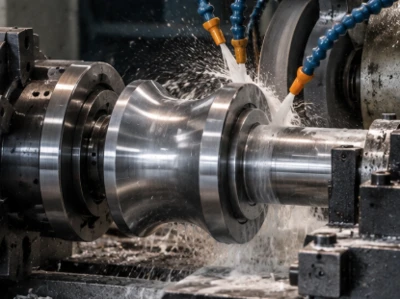
A rolling mill machine is comprised of a number of components, one of the most essential of which is the forming roll stand. This stand is responsible for progressively bending flat steel strip into the shape of a circular tube prior to welding. Each stand applies a controlled amount of pressure via a series of curved rollers, gradually bending the material without causing it to become twisted or fractured. This is accomplished without adding any surface flaws or making the material more distorted. There is a direct connection between the degree of uniformity that the final tube diameter develops and the accurate alignment and calibration of these supports. This association is quite evident.
Roller Material and Design
For the rollers themselves to be created, it is essential that they be made from materials that are durable, resistant to wear, and capable of withstanding frequent contact with steel strip while being exposed to significant pressure. The roller design, which is a crucial component of the rolling mill machine, also has an influence on the speed at which the material is formed as well as the quality of the surface finish. The tube product that is finished may be subject to scratches, dimensional irregularities, or uneven wall thickness if the rollers are worn out or improperly constructed. This is because the rollers have the capacity to impart these characteristics.
Stand Spacing and Sequencing
There is a relationship between the distance between roll stands and the order in which they are organised along the production line. This relationship has an effect on the pace at which the steel strip transitions from being flat to round. In the event that you hurry through this transition by using an inadequate number of stands, it is likely that stress concentrations and surface cracking may occur. In order to achieve maximum throughput without compromising tube integrity, the manufacturers that are responsible for developing this rolling mill machine component sequence maintain a careful balance between the pace of production and the quality of the forming process.
How Do Sizing and Welding Components Affect Tube Quality?
Welding Section Functionality
After the forming process is complete, the welding section will fuse the edges of the strip together to make a tube that is continuous and sealed. This will occur as soon as the edges of the strip overlap. In order to weld this component of the rolling mill machine, it is customary to use either high-frequency induction or resistance welding processes. A careful application of heat and pressure is one of the approaches that are used in this process. Because welds that are weak or incomplete might potentially result in the collapse of the structure when it is exposed to further stress or pressure, it is essential that the quality of the welds be constant in this scenario.
Sizing Rolls and Diameter Control
Once the welding process has been finished, sizing rollers are used to make adjustments to the outer diameter and roundness of the tube in order to ensure that it is in accordance with certain criteria. The rolling mill machine component is equipped with this component, which is responsible for providing pressure that has been measured throughout the tube's circumference. In this way, any tiny deviations that may have been introduced during the process of forming or welding might be corrected, which would be beneficial. Accurate measurement is of the highest significance when it comes to tubes that are going to be used in industrial or automotive applications, which are characterised by dimensional tolerances that are rather strict.
Bead Removal and Surface Finishing
It is common for an extra material known as a weld bead to develop along the seam during the welding process. This bead has to be removed in order to obtain a clean surface. The trimming of this superfluous material, both inside and outside, is accomplished by bead removal tools, which are another essential component of rolling mill machines. The removal of clean beads enhances not only the aesthetic look of the completed tube but also its mechanical performance. This is especially true for components that need further machining or an additional coating.
How Can Buyers Select the Right Rolling Mill Machine Component?
Matching Components to Production Volume
Because the capacity of the equipment varies greatly from manufacturer to manufacturer, purchasers should first determine the amount of output they anticipate doing. It is possible to generate bottlenecks by selecting an undersized rolling mill machine component for high-volume demands. On the other hand, using large equipment for short runs requires a waste of capital investment. A buyer's ability to narrow down appropriate equipment configurations before assessing individual vendors is facilitated by an understanding of actual throughput needs.
Evaluating Material and Build Quality
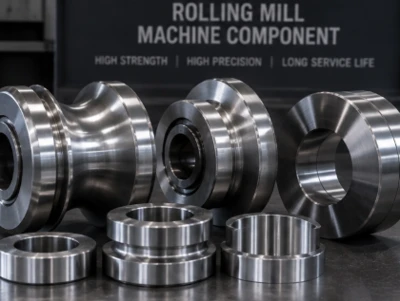
The materials and manufacturing accuracy that are employed in the manufacture of every rolling mill machine component are a significant factor in determining how long that component will last. When purchasing rollers and stands, purchasers should enquire with providers about the steel grades that are used, as well as the hardness treatments that are given to worn surfaces. Construction of a higher quality often results in a longer service life and a more constant tube quality throughout the course of lengthy manufacturing runs.
Considering Supplier Engineering Support
Clients get advantages that go beyond the equipment itself when they collaborate with suppliers that provide technical help throughout the many phases of the development process, including the specification and design stages. For the goal of selecting the appropriate component configuration for the rolling mill machine, it is essential to take into account a number of factors. These criteria include the range of tube diameters, the requirements for wall thickness, and the kind of material. This process might be simplified with the assistance of a capable partner. It is possible to reduce the likelihood of picking machinery that does not perform as expected once it has been put on the production floor by using this method of working together.
Conclusion
In the course of its operation, a steel tube rolling mill is comprised of a number of components, such as rolling mill machine components, that have an effect on the effectiveness of the mill. These components include roll stands, welding sections, size rolls, and supporting equipment of various kinds. To ensure that the proportions of these components are appropriate for the circumstances, it is essential to make the appropriate choices. China has been able to Over the course of the last twenty years, Welong has been providing reliable supply chain services and technical knowledge to companies situated all over the world. This has been made possible by the fact that the company was established in the year 2001 and subsequently certified to the ISO 9001:2015 standard. Have you come to the conclusion that it is prudent to assess the requirements for the rolling mill equipment that you now possess? My request is that you grant me permission to get in contact with you and discuss your proposal as soon as possible.
FAQ
What is the primary function of forming roll stands in a tube mill?
The process of forming roll stands involves gradually bending flat steel strip into a circular shape before the edges are welded together via the use of welding.
Why is sizing important after the welding stage?
Through the process of sizing, slight irregularities in diameter and roundness are corrected, ensuring that the completed tube satisfies exact dimensional criteria.
What causes surface defects during tube forming?
Worn or misaligned rollers, incorrect stand spacing, or rushed forming transitions commonly cause scratches and surface inconsistencies.
How does weld bead removal affect final tube quality?
Removing excess weld material improves surface finish and mechanical performance, especially for tubes requiring further machining.
What should buyers prioritize when selecting rolling mill equipment?
Production volume needs, component material quality, and available supplier engineering support are key selection factors.
Find the Right Rolling Mill Machine Component for Your Operation
If you're sourcing reliable rolling mill equipment or components, China Welong's engineering team can help identify the right solution for your production needs. With 20 years of experience and ISO 9001:2015 certification, we support manufacturers across automotive and industrial sectors worldwide using AutoCAD, Pro-Engineering, and SolidWorks design capabilities. Contact us today at metal@welongpost.com to discuss your requirements.
References
1. American Iron and Steel Institute (AISI), Steel Tube and Pipe Manufacturing Handbook, AISI Technical Publications.
2. ASM International, ASM Handbook, Volume 14B: Metalworking - Sheet Forming, ASM International Publications.
3. Roberts, W.L., Cold Rolling of Steel, Marcel Dekker Inc.
4. Ginzburg, V.B., and Ballas, R., Flat Rolling Fundamentals, Marcel Dekker Inc.
5. International Organization for Standardization, ISO 9001:2015 Quality Management Systems Requirements.
6. Society of Manufacturing Engineers (SME), Tube and Pipe Manufacturing Technology Handbook, SME Technical Series.


