


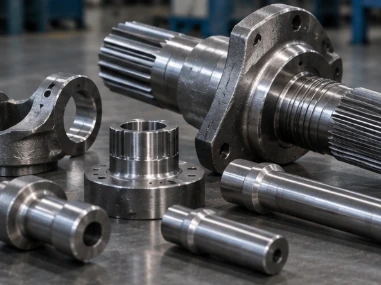
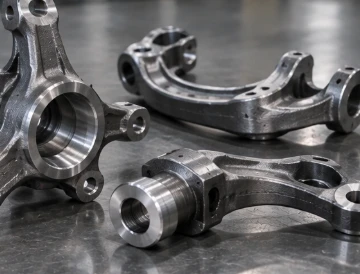
The challenge that hot die forged parts manufacturers usually have is figuring out how to keep the cost of production low without compromising the quality of their products in terms of meeting the stringent mechanical and dimensional requirements. When using a hot die forging process, the grain flow is enhanced, and the strength-to-weight ratio is increased. Nevertheless, in order to exploit these benefits in a cost-effective manner, careful preparation is required in the selection of materials, tooling, temperature control, and the design of the operational process. For the purpose of assisting buyers and engineers in maximising the value that can be derived from each and every hot die forging project, we have broken down the key cost drivers and practical solutions in this article.
What Are the Main Cost Drivers in Hot Die Forging?
Raw Material Selection
When it comes to hot die forging, the choice of material for the billet has a direct impact on the whole production cost. Both the price points and the machinability characteristics of alloy steels, stainless grades, and speciality metals may differ significantly from one another. You will be able to save a significant amount of money on the end result if you choose the appropriate grade for the task at hand rather than relying only on the premium materials. Additionally, it is possible that you still possess the strength and resistance to corrosion that are necessary for applications such as oil drilling and aeroplanes.
Tooling and Die Design
There is a significant relationship between the complexity of the die design and the total cost of a hot die forging program. Tools that are more difficult and require a greater initial investment are required when dealing with complex geometries, several forming processes, and tight tolerances. It is common practice to reduce the number of trial runs, scrap rates, and rework when working with a professional engineering team that is able to enhance the die layout by employing CAD and simulation tools. This, in turn, results in a reduction in the total cost per component.
Labor and Equipment Utilization
Forging using a hot die requires a significant amount of manpower and a press, which contributes to the overall cost. The reduction of changeover time between production runs, effective scheduling, and the use of the appropriate press size are all factors that contribute to improved utilisation rates. Facilities that reduce the amount of time that the press is idle, enhance flow, and disperse fixed costs over a greater number of units have the potential to improve the economics of the project without compromising the quality of the forging.
How Does Die Life Affect Hot Die Forging Costs?
Die Material and Hardness
The number of cycles that a die can withstand before it fails or experiences significant wear is impacted by the quality of the die steel as well as the heat treatment. Due to the fact that hot die forging requires dies to be subjected to high temperatures and mechanical stress on a regular basis, it is essential to use premium tool steels that have the appropriate level of hardness in order to extend their service life. Due to the fact that tooling expenditures are spread out over a greater number of parts, the cost per unit of production is reduced when the die life is extended.
Wear and Thermal Fatigue
Forging dies are susceptible to microcracking and surface degradation over time when they are subjected to repeated heat cycles. The phenomenon of thermal fatigue is one of the primary factors that leads to the premature replacement of dies in hot die forging procedures. In order to avoid this degradation, protective coatings, the management of die preheat temperature, and the implementation of appropriate lubrication regimes are all helpful. These measures help to preserve dimensional accuracy and reduce the costs of unexpected tooling replacement.
Maintenance and Refurbishment Practices
In the context of hot die forging projects, preventative die maintenance, which includes inspection, resurfacing, and the timely repair of minor damage, has the potential to significantly extend the usable life of the die. Manufacturers that plan preventive maintenance minimise costly production stoppages and maintain continuous part quality over extended production runs, so protecting both their budget and their delivery deadlines. This is accomplished by avoiding the need to wait for a catastrophic failure.
How Can Temperature Control Improve Hot Die Forging Efficiency?
Billet Heating Uniformity
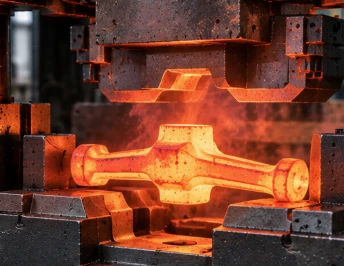
In order to provide a predictable flow of material, it is necessary to ensure that the billet is heated in a uniform and consistent manner prior to the forming process. Forging using a heated die might result in insufficient die filling, internal defects, or excessive force if the heating cannot be distributed evenly. Every heating system, whether it be an induction furnace or a furnace, is fitted with close temperature monitoring. This ensures that every billet is at the ideal temperature for forging, which in turn increases the yield of the first pass and decreases the amount of scrap.
Die Preheating Strategies
Preheating the dies before manufacturing decreases thermal shock and prevents premature cracking. In hot die forging, a properly prepared die also helps material flow more easily into intricate cavities, leading to finer details and more constant wall thickness. This upfront effort frequently pays for itself in terms of reduced rejected parts and tool life.
Real-Time Process Monitoring
Modern sensors and infrared monitoring systems enable operators to monitor temperature throughout the hot die forging cycle in real time. That visibility allows deviations to be seen before problems are created so that remedial action may be taken more quickly. Facilities that have invested in monitoring technologies tend to observe greater repeatability, reduced quality escapes, and enhanced overall equipment efficacy across shifts.
How Can Process Optimization Reduce Costs Without Sacrificing Quality?
Simulation-Based Die Design
With tools such as AutoCAD, Pro-Engineering, and SolidWorks, engineers can model the flow of metal before a single piece of steel is cut, allowing them to see possible flaws early. This hot die forging design technique decreases the number of physical trial forgings, reducing time and tooling cost, and increasing the confidence level in the quality of first-run production.
Standardized Quality Control Procedures
Having uniform inspection processes, from dimensional inspections to material certification, helps identify problems before components travel downstream. The use of robust quality control measures, especially in the case of ISO 9001 standards, may greatly reduce the chances of expensive rework or field failures of hot die forging components that are intended for demanding sectors such as automotive or aerospace manufacturing.
Supply Chain and Supplier Management
You may help prevent delays, misunderstandings, and quality discrepancies by working closely with skilled vendors that know hot die forging procedures. We have strong supplier development and purchasing oversight to make sure that raw materials, tooling, and production schedules are all in alignment. This keeps projects on budget and on time and still maintains the performance standards customers expect.
Conclusion
Balancing cost and performance in hot die forging comes down to smart material choices, well-maintained tooling, precise temperature control, and disciplined process optimization. China Welong, founded in 2001, has spent over two decades helping global manufacturers in automotive, oil drilling, aerospace, and medical industries achieve exactly this balance through ISO 9001-certified supply chain services. Ready to optimize your next forging project? Partner with a team that understands both engineering precision and cost efficiency.
FAQ
What industries commonly use hot die forging components?
Hot die forging is widely used in automotive, oil drilling, aerospace, and high-end medical equipment manufacturing due to its strength and reliability.
How long do forging dies typically last?
Die life varies by material and application, but proper heat treatment, coatings, and maintenance can significantly extend the number of production cycles.
Can hot die forging produce complex geometries?
Yes, with proper die design and simulation software, hot die forging can achieve intricate shapes while maintaining tight dimensional tolerances.
Does hot die forging cost more than casting?
Initial tooling costs may be higher, but hot die forging often delivers superior mechanical properties and longer part life, improving long-term value.
How can I reduce lead times for hot die forging projects?
Working with an experienced supply chain partner who manages sourcing, quality control, and production scheduling helps shorten overall lead times.
Let's Optimize Your Hot Die Forging Project Together
If you're looking for a reliable partner to balance cost and performance in your next hot die forging project, China Welong is ready to help. With 20 years of experience serving customers across the UK, Germany, the USA, Australia, and beyond, our engineering and quality control teams deliver precision-driven, cost-effective solutions. Reach out today at metal@welongpost.com and let's discuss how we can support your production goals.
References
1. American Society for Metals (ASM International), Forging Handbook, ASM International Publications.
2. Altan, T., Ngaile, G., and Shen, G., Cold and Hot Forging: Fundamentals and Applications, ASM International.
3. Society of Manufacturing Engineers (SME), Fundamentals of Metal Forming Processes, SME Technical Papers.
4. Kobayashi, S., Oh, S.I., and Altan, T., Metal Forming and the Finite-Element Method, Oxford University Press.
5. Forging Industry Association (FIA), Forging Design Handbook, Industry Technical Publication.
6. International Organization for Standardization, ISO 9001:2015 Quality Management Systems Requirements.


