


Internal channels, cavities, and hollow sections are features that are often found in a wide variety of machinery components, ranging from engine blocks to hydraulic manifolds. When it comes to sand casting components, the successful implementation of these characteristics is strongly dependent on the use of cores. Cores are inserted into the mould prior to pouring in order to generate voids that cannot be created by solid tooling alone. The purpose of this article is to investigate the operation of cores, the many kinds that are available, and the design factors that assist manufacturers in producing interior geometries that are accurate and free of defects.
How Do Cores Create Internal Passages in Sand Casting Components?
The Basic Function of a Core
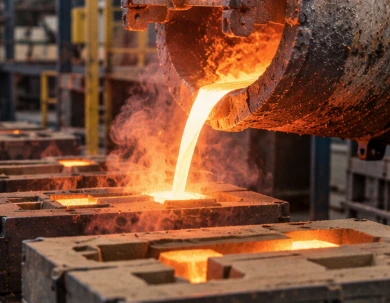
Before molten metal is injected into the mould cavity, a core is positioned within the mould cavity. A core is a prefabricated shape that is commonly created from sand and binder. Following the solidification of the metal and the removal of the mould, the core material is extracted, resulting in the formation of a hollow tunnel or cavity. Via the use of this method, sand casting components are able to include intricate interior elements that would be hard to manufacture via machining alone without resulting in a large amount of material loss.
Core Placement and Mold Assembly
In order to achieve precise internal geometry, it is essential to ensure that the core is positioned correctly inside the mould. Core prints, which are extensions of the core that sit in matching grooves in the mould, are often used to stabilise cores. Core prints are also known as core prints. The technicians are responsible for ensuring that the core stays centred and stable during the assembly process. This is because even a little displacement might result in uneven wall thickness in the completed sand casting components, which can jeopardise the structural integrity of the components.
Achieving Complex Internal Geometry
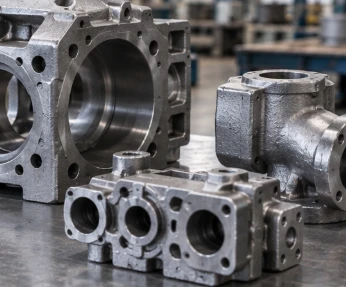
It is possible to create sophisticated internal passages, such as cooling channels or fluid conduits, that follow curved or branched courses through a component thanks to cores, which make it feasible to manufacture such passageways. Foundries have the ability to construct very intricate internal architecture; this is accomplished by combining numerous core parts together prior to pouring. As a result of this capacity, cores are particularly important for sand casting components, which are used in fluid handling equipment for industrial purposes and in automobile engine parts.
What Types of Cores Are Used for Complex Internal Geometries?
Green Sand Cores
Cores composed of green sand are produced using the same wet sand mixture that is used for the mould itself. This provides a cost-effective alternative for more straightforward interior forms. Even though they are cost-effective, green sand cores often lack the strength that is required for passages that are long and narrow or for sophisticated geometry. In less demanding sand casting components, where the requirements for dimensional accuracy are generally small, they function most effectively for uncomplicated interior cavities.
Dry Sand and Shell Cores
Through the process of baking, dry sand cores are given an increase in strength and hardness, which enables them to be used for more intricate or wider interior channels. Shell cores, which are created by applying resin-coated sand to a heated pattern and allowing it to dry, provide exceptional dimensional precision and a clean surface finish upon construction. When sand casting components need finer tolerances or more sophisticated internal channel geometry than green sand alone can safely handle, both approaches are often selected as the best course of action.
Chemically Bonded Cores
In order to obtain high strength and great dimensional stability, modern foundries commonly utilise chemically bonded sand cores that have been cured by methods like as cold-box or no-bake systems. In addition to producing cleaner interior surfaces, these cores are able to maintain their form effectively even when subjected to the pressure of molten metal. The use of chemically bonded cores enables sand casting components to attain constant internal geometry throughout large production runs, which is beneficial for applications that need high levels of performance.
Core Strength, Venting, and Dimensional Stability in Sand Casting
Balancing Core Strength and Collapsibility
It is necessary for cores to be robust enough to endure the pressure of molten metal during the pouring process, while also being collapsable enough to be readily broken down during the shakeout process without causing any damage to the casting. For this equilibrium to be achieved, it is necessary to pick the sand particle size, the kind of binder, and the curing technique with great care. When it comes to sand casting components, having cores that are well-engineered helps to preserve dimensional precision while yet allowing for clean and damage-free removal following the solidification process.
Managing Gas Venting from Cores
When molten metal comes into contact with the core surface, gases are produced from the binder. These gases need to be able to escape effectively in order to prevent porosity from being trapped inside the casting. The safe release of these gases is made possible by the correct positioning of vents, which often include the use of tiny tubes that link to the core print. Within sand casting components, inadequate venting is a typical source of internal faults; thus, this is an essential factor to take into account throughout the core design process.
Maintaining Dimensional Stability Under Heat
When cores are surrounded by molten metal, they are subjected to a large amount of thermal stress. Any dimensional change that occurs during this exposure has a direct impact on the extent to which internal channels are accurate. It is possible for cores to keep their form under these circumstances if they are cured properly and binders of high quality are used. In order to obtain a constant wall thickness around each and every internal cavity, manufacturers that produce precision sand casting components depend on cores that are stable and have seen enough curing.
How Should Sand Casting Components Be Designed for Easy Core Removal?
Designing Adequate Core Print Support
It is essential to ensure that core prints are of the appropriate size in order to provide robust support without limiting core removal after casting. During the pouring process, core movement may occur when prints are undersized, whereas excessive prints might make mould assembly more difficult. Engineers who design components for sand casting need to carefully balance these parameters in order to guarantee that the core will stay in the correct location during the pouring process while yet allowing for easy extraction after the component has cooled.
Planning Access for Sand Removal
It is necessary to remove leftover core sand from internal channels once the solidification process has been completed. This is often accomplished using vibration, water blasting, or mechanical agitation. It is the responsibility of the designers to provide sufficient access ports or route geometries that will enable this cleaning procedure to make contact with every inside surface. In the absence of adequate planning, components made from sand casting have the potential to retain trapped core material, which may result in obstructions or contamination in functional passages.
Simplifying Geometry to Reduce Core Complexity
Whenever it is feasible, reducing the geometry of the internal passages decreases the amount of core pieces that are required, which in turn lessens the likelihood of assembly problems occurring. While sharp, branching networks are more difficult to core and clean, routes that are straight or softly curved are often simpler to do so. When engineers collaborate with experienced foundry partners, they are often able to change designs at an early stage of development. This assists sand casting components in achieving functional performance with core configurations that are more easily manufactured.
Conclusion
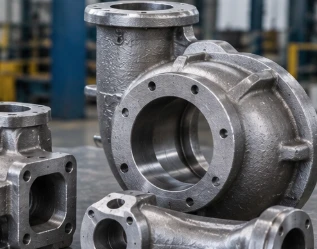
Cores continue to be a key component in the production of sand casting components that have intricate internal passages. The success of the process is contingent on the correct selection of core type, venting, and design for removal. Over the course of twenty years, China Welong, which was established in 2001 and is accredited to the ISO 9001:2015 standard, has provided technical and quality control expertise to businesses all over the world, particularly in the automotive and industrial sectors. Are you prepared to bring your design for the internal passage to life? Allow me to initiate the discussion right now.
FAQ
What is the purpose of a core in sand casting?
Cores create internal cavities or passageways within a casting that cannot be formed by the outer mold alone.
Why do cores need proper venting?
Venting allows gases generated during pouring to escape, preventing trapped porosity within the internal casting surfaces.
What determines which core type to use for a project?
Factors include passage complexity, required dimensional accuracy, part size, and production volume expectations.
How is core sand removed after casting is complete?
Techniques such as vibration, water blasting, or mechanical shakeout are used to clear residual sand from internal passages.
Can complex branching internal geometry be achieved with cores?
Yes, by assembling multiple core sections together, foundries can produce intricate branching or curved internal passageways.
Get Expert Support for Your Sand Casting Components
If your project requires precise internal passageways, China Welong's engineering team can help design and produce reliable sand casting components using AutoCAD, Pro-Engineering, and SolidWorks. With 20 years of experience serving automotive and industrial customers worldwide, we understand what it takes to get complex geometry right. Contact us at metal@welongpost.com to discuss your requirements and get started.
References
1. American Foundry Society (AFS), Sand Casting Core Making Handbook, AFS Technical Publications.
2. ASM International, ASM Handbook, Volume 15: Casting, ASM International Publications.
3. Beeley, P., Foundry Technology, Butterworth-Heinemann.
4. Campbell, J., Complete Casting Handbook: Metal Casting Processes, Techniques and Design, Butterworth-Heinemann.
5. International Organization for Standardization, ISO 9001:2015 Quality Management Systems Requirements.
6. Society of Automotive Engineers (SAE International), Sand Casting Design Guidelines for Internal Cooling Passages.


