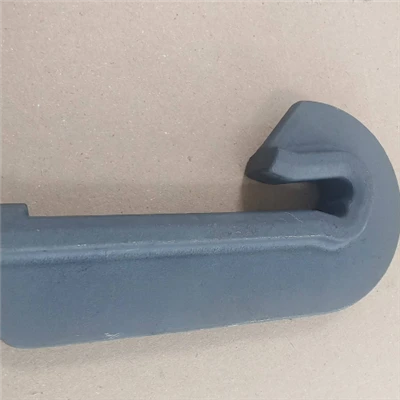
Spike puller claws are developed as a work head attachment that is used in conjunction with railroad spike pulling machines.
Send Inquiry
Description
Send Inquiry
Why Choose Us?
Wide Sales Market
Our products are sold to the UK, Germany, France, Italy, Poland, the United States, Canada, the Netherlands, Sweden, Austria, New Zealand, Singapore and India, serving more than 100 customers in the automotive industry.
Guaranteed Quality
China Welong was founded in 2001 and is certified by ISO 9001:2015 and the API-7-1 quality system. We are dedicated to the development and supply of customized metal parts used in various industries.
Rich Product Variety
Our main businesses include forging, sand casting, investment casting, centrifugal casting and machining. The materials we handle include cast iron, steel, stainless steel, aluminum, copper, zinc and various alloys.
Leading Service
We have many years of industry experience and a complete production management, quality supervision, sales service operation system. Whether you want to buy forging or stainless steel, just send your requirements by email and we can customize the product for you.
Spike puller claws are developed as a work head attachment that is used in conjunction with railroad spike pulling machines. The durability of this forged alloy steel spike puller claw makes them excellent for high-production spike pulling.
Types of Spike Puller Claw
Self-Propelled Spike Pullers
Spike pullers are self-propelled by a diesel engine and travel along the railroad tracks. A typical spike puller is a small, two axle machine. Most spike pullers are designed only to remove spikes on one side of the tracks, meaning that two machines must be used together to remove all the spikes from both rails. Some larger spike pullers are designed to pull spikes on both rails at the same time, these are known as two rail or dual spike pullers.
Hand-Operated Spike Pullers
When not very many spikes need to be removed, or where there is not enough clearance for a self-propelled spike puller, smaller and cheaper manually operated spike pullers may be used. These may ride along the tracks on wheels, or may be small and light enough to be carried and moved by hand.
How to Choose Spike Puller Claw
01/
Spike Diameter
Make sure the spike extractor jaws are the right size for the spikes you are working on. Different jaws are designed to accommodate different sized spikes.
02/
Spike Material and Hardness
Consider the material and hardness of the spike as this will affect the type of jaws needed to extract the spike without causing damage.
03/
Claw Design
Look for a design that can firmly grip the spike head without damaging it. The jaws should fit snugly around the spike to ensure effective leverage.
04/
Materials
The tool should be made of durable, high-quality materials that can withstand the rigors of rail maintenance work. Steel is a common choice due to its strength and wear resistance.
05/
Handle
The handle should be comfortable and provide a secure grip. A long handle can provide better leverage, making spike extraction easier and less physically demanding.
06/
Non-Slip Handle
A secure grip on the handle is essential for safety. Look for tools with a non-slip coating or handle.
Frequently Asked Questions
Q: What is a Spike Puller Claw?
A: A Spike Puller Claw is a specialized tool designed to remove spikes from railway ties (or sleepers) during maintenance and repair work. It features a long handle for leverage and a claw that fits securely around the head of the spike to facilitate its removal.
Q: How does a Spike Puller Claw work?
A: The claw is placed over the spike head, and the operator applies upward force using the handle. The leverage provided by the long handle makes it easier to lift the spike out of the tie. Rocking the tool can also help loosen stubborn spikes.
Q: What are the safety precautions when using a Spike Puller Claw?
A: Safety gear such as gloves, safety glasses, and steel-toed boots should be worn. The work area must be secured against passing trains, and the tool should be inspected for damage before use. It's also important to avoid excessive force and to work with a partner.
Q: What is the proper way to position the Spike Puller Claw?
A: The claw should be aligned and securely fitted over the spike head. Ensure it is properly seated to avoid slippage during removal, which could cause injury or damage the tool.
Q: How do you remove a stubborn spike?
A: Rock the Spike Puller Claw back and forth to help loosen the spike from the tie. This motion breaks the friction and grip, making the spike easier to remove.
Q: Can a Spike Puller Claw be used on any type of spike?
A: While most are designed for standard railway spikes, some specialized models might be required for specific types or sizes of spikes. Check the tool specifications to ensure compatibility.
Q: What maintenance is required for a Spike Puller Claw?
A: Regular cleaning and inspection are necessary to remove dirt, grease, and debris. Store the tool in a dry area to prevent rust. Damaged or worn parts should be repaired or replaced promptly.
Q: How often should a Spike Puller Claw be inspected?
A: Before each use, a quick visual inspection should be carried out. Check for any obvious signs of damage or wear such as cracks, bent or broken parts, or excessive wear on the claw or handle. Beyond the pre-use checks, a more detailed inspection should be conducted on a regular schedule, which can vary depending on the manufacturer's recommendations and the frequency and intensity of tool usage. A detailed inspection might be required every month, quarter, or year, depending on usage conditions.
Q: What should you do if the Spike Puller Claw malfunctions?
A: The first and most important step is to stop using the Spike Puller Claw. Continuing to use a malfunctioning tool can result in accidents, injuries, or additional damage to the tool or the work area. Try to identify the source of the malfunction. Check for obvious issues such as broken parts, loose components, or signs of wear that may have contributed to the malfunction.
Q: Is training required to use a Spike Puller Claw?
A: Yes, operators should receive proper training to understand the tool's operation, safety protocols, and maintenance requirements. This ensures safe and effective use.
Q: What are the risks of improper use of a Spike Puller Claw?
A: Improper use can lead to injuries, damage to the tool or railway infrastructure, and potential derailments if spikes are not properly removed and replaced.
Q: Can a Spike Puller Claw be used for purposes other than removing railway spikes?
A: The Spike Puller Claw is specifically designed for removing railway spikes. Using it for other purposes could void warranties, damage the tool, or cause accidents.
Q: What is the typical lifespan of a Spike Puller Claw?
A: Lifespan can vary based on usage, maintenance, and storage. Regular maintenance and proper use can extend the tool's life, but it will eventually wear out and need replacement.
Q: How do you store a Spike Puller Claw?
A: Store in a secure, dry area to protect it from moisture and damage. Ensure it is out of reach of unauthorized personnel to prevent misuse.
Q: Is there a specific way to dispose of old or damaged Spike Puller Claws?
A: Dispose of tools according to local regulations for metal and industrial waste. Recycling may be an option for metal parts.
Q: What are the environmental considerations when using a Spike Puller Claw?
A: Ensure that the work area is cleaned up after use to avoid littering. Proper disposal of removed spikes and waste is essential to prevent environmental damage.
Q: How does a Spike Puller Claw contribute to railway maintenance?
A: By efficiently removing old or damaged spikes, the tool facilitates the replacement process, which is crucial for maintaining track integrity and safety.
Q: Are there different types of Spike Puller Claws?
A: Yes, there are various models designed for different sizes of spikes and specific conditions. Some may be manually operated, while others might be pneumatic or hydraulic for heavy-duty applications.
Q: Can a Spike Puller Claw cause damage to the railway ties?
A: If used incorrectly, excessive force or misuse can damage the ties. It's important to apply force evenly and not to use the tool as a lever against the tie.
Q: How does a Spike Puller Claw compare to other spike removal tools?
A: Compared to hammers or crowbars, the Spike Puller Claw is safer and more efficient, requiring less physical effort due to its leveraged design. It also reduces the risk of damage to surrounding infrastructure.