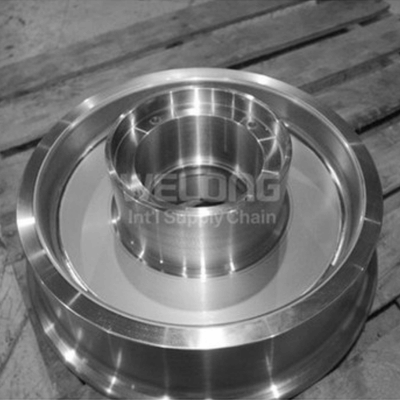


Investment casting is a precision manufacturing process where molten metal fills a ceramic mold cavity to create highly accurate metal components. Also known as lost-wax casting, this technique begins with creating wax patterns that are coated with ceramic material. Once the ceramic hardens, the wax melts away, leaving a precise cavity for metal pouring. This investment casting method produces parts with exceptional dimensional accuracy and complex geometries, making it essential for aerospace, automotive, and medical device industries requiring tight tolerances and superior surface finishes.
Understanding Investment Casting: Definition and Core Process
Investment casting is one of the most advanced ways to shape metal that can be used in modern industry. This method, which has roots in ancient Egypt and China and was created more than 5,500 years ago, has become a very exact way to make parts that meet strict industry requirements.
The Six-Step Manufacturing Process
The steps in the lost-wax process are carefully planned out so that initial design ideas can be turned into finished metal components. Getting to know each step helps buying teams understand how complicated and useful this way of making things is. Wax Pattern Creation: The first step in making something is making a wax copy of the part that is needed. This can be done with metal tools or advanced 3D printing technology. These models need to show every part of the finished product, including its surface shapes and exact sizes. The accuracy of the finished part is directly affected by the quality of the patterns, so this first step is very important for getting the results you want.
Assembly Formation: Multiple wax models are attached to runner systems called "trees" through gates that control the flow of metal during casting. This way of putting things together makes production more efficient by casting multiple parts at the same time and making sure that each part gets the same amount of metal. When gates are placed correctly, they stop movement and make sure that the whole space is filled.
Shell Building: The designs are put together and then dipped in a clay slurry several times. They are then covered with fine sand particles. Multiple layers gradually increase the shell's thickness, making it strong enough to handle the pressure of liquid metal while keeping the exact dimensions. The makeup of the shell changes depending on the metal and the temperature. Dewaxing and Firing: Once the shells are finished, they are put into autoclaves, where controlled heating takes away the wax patterns, leaving exact holes that match the original designs. Firing ceramic shells at high temperatures makes them stronger and gets rid of any biological materials that might get into the final casts and make them dirty.
Metal Pouring: Molten metal can fill empty shell spaces in several ways, such as by gravity pouring, pressure help, or centrifugal force. How fast you pour and how you control the temperature affect the structure of the grains and the mechanical features of the final parts. Finishing Operations: Once the casts are cool, the shell is removed using vibration or water blasting. Next, the gate is removed, and the surface is finished. Final checking makes sure that the quality of the surface and the accuracy of the measurements meet the criteria.
Material Versatility and Applications
Investment casting can be used with almost any alloy that can be cast, from standard carbon steels to rare superalloys used in aircraft. Medical devices and food handling tools made of certain grades of stainless steel don't rust. Titanium alloys are very strong for their weight when used to make aircraft parts. For car uses, aluminum alloys offer lightweight options. Because the material is flexible, makers can make sure that parts work best in certain situations while still keeping costs low. Parts include complicated jewelry and dental fixtures, as well as important turbine blades and aircraft parts that need to be controlled in exact dimensions.
Advantages of Investment Casting for Global B2B Clients
Investment casting has special advantages that directly help global production companies with problems they often have with buying things. These benefits can be turned into real value offers that support process choices and partnerships with suppliers.
Superior Dimensional Accuracy and Surface Quality
These days, investment casting can get as accurate as ±0.003 inches (±0.076mm) on important measurements, so extra machining is often not needed. This level of accuracy lowers the overall cost of production while making parts more consistent across production runs. Surface finishes usually fall between 63 and 125 microinches Ra, which is close to the quality of machined parts made straight from casting.
The following core advantages of investment casting are particularly attractive for demanding industrial applications:
• Complex Geometry Capability: Investment casting can make parts with complex internal passages, undercuts, and thin-wall sections that can't be made with other casting methods. This feature lets you optimize the design, which cuts down on the number of parts needed and the difficulty of the setup.
• Material Efficiency: Compared to cutting from solid stock, near-net-shape production wastes less material. Most of the time, material usage rates are higher than 90%, which helps reach goals for cost savings and sustainability.
• No Flash or Parting Lines: Unlike sand casting or die casting, investment casting doesn't leave behind flash that needs to be removed or parting lines that lower the quality of the surface. This feature cuts down on finishing work and makes the product look better.
• Broad Alloy Compatibility: The process can work with a lot of different materials, from aluminum and stainless steel to rare superalloys and precious metals. This adaptability helps meet different application needs within the same supply lines.
All of these benefits make it easier for buying teams to work with fewer suppliers while still being able to use production skills that help with new designs and lowering costs. When companies switch from made parts to investment castings for the right uses, they say the total cost of the parts goes down a lot.
Production Volume Flexibility
Investment casting works well for both small trial runs and large production runs. In contrast to die casting, low-volume needs benefit from lower tooling costs. High-volume production, on the other hand, benefits from economies of scale through automatic processes. This ability to grow helps with managing a product's journey, from the planning stages to the finished production stages.
Investment Casting vs Other Manufacturing Methods: Informed Decision-Making
To choose the best suppliers and keep costs down, procurement pros need to know a lot about the different ways that products can be made. When compared to other popular production methods, investment casting has clear pros and cons.
Comparative Analysis with Alternative Processes
Sand Casting Comparison: Sand casting uses cheaper tools to make big parts, but the results are less accurate in size and have a rougher surface. Investment casting is more accurate than sand casting because the tolerances are 5–10 times tighter, and it can handle more complicated shapes. Sand casting, on the other hand, is still a cheap way to make simple, big parts with loose tolerance standards. Die Casting Evaluation: Die casting is the best way to make a lot of metal and copper parts that are all the same size. When it comes to alloys, investment casting is better than die casting, especially for metal materials and high-temperature alloys. For some uses, investment casting is better because of the better surface finish and more complicated geometry, while die casting is faster. Forging Considerations: Forged parts have great mechanical qualities because the grain flow is optimized, but they need a lot of machining to make complicated forms. Investment casting makes parts that are almost net-shaped and have good mechanical qualities. It can also handle complex shapes that can't be made with forging. Investment casting is usually better for making complicated parts because it reduces waste and the need for cutting.
Design Optimization and Defect Prevention
To do investment casting well, you need to know the design rules that keep common flaws from happening and make the most of the process's benefits. To keep things from shrinking and to help them cool evenly, the wall thickness should stay pretty constant. Usually, the minimum hole diameter is bigger than 1.6 mm (1/16 inch), and the maximum depth is about 1.5 times the width. Porosity Prevention: Using the right gates and keeping an eye on the cooling rate can help keep porosity from forming, which could damage the mechanical properties. Simulation software that is very advanced helps improve ideas before they are committed to production. Dimensional Stability: Knowing how certain metals shrink makes it possible to build accurate tools and get consistent dimensional results. Thermal models can predict patterns of warping and help with coming up with ways to fix them. Surface Quality Control: The makeup of the shell and the way it is fired have a direct effect on the quality of the finish on the surface. For important uses, specialized clay systems create better surface conditions. These design factors help buying teams work well with sellers during the development stages, making sure the best results while lowering the risks of overruns and higher costs.If you need custom investment cast parts, feel free to contact us for a quick quotation.

How to Procure Investment Casting Services Efficiently?
To successfully buy investment castings, you need to carefully consider what the suppliers can do, make sure you have all the necessary paperwork, and be clear about what you need. Technology and uniform processes are used in modern buying practices to improve relationships with suppliers and the results of projects.
Supplier Evaluation and Selection Criteria
Finding skilled investment casting suppliers means looking at a lot of things that have a direct effect on the success of the project. Manufacturing skills must match the needs of each part, such as size restrictions, metal compatibility, and the ability to hold tolerances. Quality approvals like ISO 9001:2015, AS9100, or medical device standards give you peace of mind that quality management is being done in a planned way. To meet transportation needs, production ability, and schedule flexibility become very important. Suppliers should show that they can consistently deliver on time and have capacity management systems that can adapt to changing demand trends. Location affects the cost of logistics and how well people can communicate, especially when it comes to foreign sourcing tactics.
Technical Capabilities Assessment: Look at the tools available for technical help, testing skills, and knowledge in metalworking. Suppliers should help with design, suggest materials, and offer advice on how to improve processes throughout the lifespan of a project. Financial Stability Review: When working with a seller for a long time, it's important to check their financial stability to make sure they can keep providing help and capacity. Risks of supply breakdown are reduced by payment terms and methods that keep prices stable. Communication and Project Management: Good providers keep clear rules for communication, methods for keeping track of projects, and quick technical help. Language skills and time zone differences can make it harder for people in different countries to work together.
Documentation and Specification Development
Clear standards keep things from going wrong and make sure that the results are the same from one provider or production run to the next. Dimensional tolerances, surface finish standards, and inspection criteria should all be written on technical sketches. The material specs need to list the alloy types, heat treatment needs, and mechanical property goals. Quality requirements include guidelines for paperwork, review processes, and testing protocols. Shipping and packaging rules keep parts safe while they're in transit and meet handling needs. Lead time standards and shipping plans make it easy to judge how well a supplier is doing. Digital Ordering Platforms: These days, digital systems are used for managing quotes, keeping track of orders, and keeping quality records. Both buyers and sellers can save time and money by using these tools, which make things clearer.
Pricing Structure Understanding: The costs of investment casting include the cost of tools, setup, material, and handling parts. Understanding how costs are structured helps you negotiate well and make accurate budgets for a range of production scenarios. Good buying practices include careful planning and working together with suppliers. Companies like Welong show how experienced sellers can be helpful at all stages of the buying process, from getting quotes to delivering goods and checking their quality.
Conclusion
Investment casting is the most accurate and flexible way to make complex metal parts for a wide range of commercial uses. With this all-in-one manufacturing process, you get very accurate measurements, great surface finishes, and design freedom that lowers production costs by using near-net-shape manufacturing. Knowing the technical details, benefits, and buying factors helps you choose the best provider and get the best results from your project. Today's investment casting technology keeps getting better to meet ever-higher standards while still being affordable for both pilot and production uses. Choosing qualified suppliers with the right professional skills, quality processes, and knowledge in the field is key to success. To achieve long-term supply chain optimization, teams that work well combine clear requirements, collaborative engineering support, and consistent quality performance.If you need custom investment cast parts, feel free to contact us for a quick quotation.

FAQ
What metals can be used in investment casting?
Stainless steels, carbon steels, aluminum alloys, titanium alloys, copper-based alloys, and exotic superalloys are just some of the metals that can be made in investment casting. Some common materials are 316 stainless steel, which doesn't rust, aluminum A356, which is light, and Inconel, which can handle high temperatures. The choice of material is based on the needs of the product, such as mechanical qualities, environmental conditions, and cost.
How does investment casting cost compare to other methods?
Initial funding costs for casting are usually higher than those for sand casting, but they are still cheaper than those for heavy machining. Complex shapes that need more than one machining job or assembly method are more cost-effective. Investment casting is better for precise needs and rare materials, even though it costs more at first. Cost differences are affected by volume, and break-even points change depending on the complexity of the part and the material chosen.
What tolerances are achievable with investment casting?
Most measurements in modern investment casting are within ±0.005 inches (±0.127mm), and important features can get as close as ±0.003 inches (±0.076mm) when conditions are controlled. Tolerance varies with the size of the part, how complicated its shape is, and the material that is used. Linear tolerances tend to get tighter as the size of the part decreases. On the other hand, bigger parts may need slightly looser tolerances to account for temperature effects that happen during processing.
How should I select qualified investment casting suppliers?
When choosing a supplier, you should look for ones with appropriate business knowledge, quality certifications, and technical skills that meet your needs. Check out the company's ability to produce, deliver, and provide tech help. Ask for sample parts and, if you can, visit the sites to get a feel for their skills. Check that the company has the right quality processes, mechanical knowledge, and testing tools for your needs. Think about where you are, how well you can communicate, and the possibility of a long-term relationship.
Partner with Welong for Superior Investment Casting Solutions
Over the past twenty years, Welong has honed his skills in managing foreign supply chains and making precise metal parts. Our ISO 9001:2015-certified businesses work with big names in the oil drilling, medical device, industrial manufacturing, and aerospace industries. We are very good at turning plans and samples from customers into high-quality investment casting items that meet strict global standards. As a full-service engineering firm, we offer design support for AutoCAD, Pro-Engineering, and SolidWorks, which lets us help with drawing development and design optimization. Our vast supplier network and quality control systems, along with our technical know-how, make sure that you always get fine parts that are made to your exact specs. Over 100 happy customers in the UK, Germany, France, Italy, Poland, the USA, Canada, the Netherlands, Sweden, Australia, New Zealand, Singapore, and India work with us.
Email our investment casting manufacturer team at info@welongpost.com to talk about your unique needs and get quotes from other companies. Please visit https://knowledge.welongcasting.com/ to look at our professional tools and learn more about how Welong can help you save time and money on your investment casting needs.
References
1. Campbell, John. "Complete Casting Handbook: Metal Casting Processes, Metallurgy, Techniques and Design." Butterworth-Heinemann Engineering Publications, 2015.
2. Beeley, Peter R. "Foundry Technology: A Source Book of Information on the Theory and Practice of Metal Casting." Newnes Technical Publishing, 2014.
3. Investment Casting Institute. "Investment Casting Handbook: Design and Manufacturing Guidelines for Precision Components." American Foundry Society Technical Publication, 2018.
4. Stefanescu, Doru Michael. "Science and Engineering of Casting Solidification." Springer International Manufacturing Series, 2017.
5. Monroe, Randall W. "Investment Casting: Principles and Applications in Aerospace Manufacturing." ASM International Handbook Committee, 2019.
6. Brown, John R. "Precision Casting Processes: Technical Guide for Industrial Applications." Manufacturing Engineering Society Publications, 2016.