


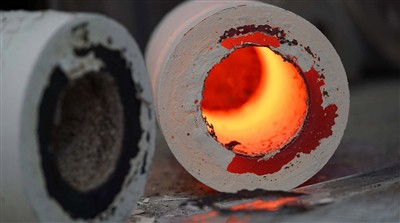
Investment casting and casting are different in how precise and complicated they are. Sand casting and die casting are traditional ways to cast that pour liquid metal into molds that can be used again and again. These methods are great for mass production with reasonable detail. Investment casting, which is also called "lost wax casting," makes a clay shell around a wax design that melts away. This lets complex shapes, tighter tolerances, and better surface finishes be made. Investment casting is the best way to make complicated metal parts that need to be very accurate for aircraft, medical devices, and high-performance uses. Traditional casting is best for making simple, cost-effective parts.
Overview of Casting and Investment Casting Processes
Traditional casting includes several tried-and-true ways that have been used in production for many years. The most common methods are sand casting, die casting, and permanent mold casting. All of them involve putting liquid metal into molds that have already been prepared. Sand casting uses molds that are disposable and are made from sand mixes. It can be used to make big parts in low to medium production numbers. Die casting uses metal models that can be used again and again while high pressure is applied. This makes it possible to quickly make regular parts out of metals like aluminum and zinc alloys. These standard ways work well for engine blocks for cars, housings for building equipment, and other industry parts that can handle moderate tolerances.
How Traditional Casting Works
Pattern making comes first in sand casting, then putting together the sand mold and pouring the metal into it. The process can be used with almost any metal combination and can make items that weigh anywhere from a few ounces to several tons. Die casting moves faster and puts a lot of pressure on liquid metal as it flows into precisely machined steel forms. This method provides excellent dimensional consistency over thousands of production cycles, which makes it cost-effective for high-volume manufacturing situations that are popular in consumer goods and car uses.
Understanding the Investment Casting Process
Investment casting is a very different method that has roots in ancient Egypt and China, more than 5,500 years ago. Through a series of steps, this lost wax method makes very precise work. Injection-molded or 3D-printed wax models are made to exact specs and then put together on a central support system to make a "tree." This assembly is then dipped in a liquid ceramic slurry several times and then coated with fine sand to add layers. Once the ceramic shell is completely dry and hard, the whole thing is put into an autoclave, where heat melts the wax away, leaving a negative space that can reproduce incredibly fine details.
Material Compatibility Across Processes
When it comes to choosing materials, standard casting and investment casting are very different. Any metal can be made in sand, such as gray iron, ductile iron, steel, aluminum, and bronze. Die casting works best with non-ferrous metals that have lower melting points. Alloys made of aluminum, zinc, and magnesium work well in this area. High-temperature superalloys, stainless steel grades, tool steels, and valuable metals are just some of the most difficult materials that can be made using investment casting.In advanced manufacturing applications, material selection is critical to performance and cost efficiency.Welongcasting offers investment casting capabilities for a full range of engineering materials, including stainless steel, carbon steel, alloy steel, and superalloys such as nickel-based and cobalt-based alloys.With ISO 9001 certified processes and global supply experience, Welongcasting provides reliable investment casting solutions for aerospace, automotive, energy, and industrial equipment industries.
Contact us to learn more about material compatibility and custom casting solutions.
Core Differences Between Casting and Investment Casting
The difference in performance between investment casting and standard casting is clear when you look at surface quality, geometric complexity, and correctness of dimensions. When key measurements are cast using traditional methods, the tolerances are usually ±0.030 inches, and the surface finishes are between 250 and 500 microinches Ra. With as-cast surface finishes between 63 and 125 microinches Ra, investment casting provides significantly tighter tolerances of 0.005 inches or better. This level of accuracy usually gets rid of the need for extra machining, which lowers total production costs even though the original cost of the tools is higher.
Geometric Complexity and Design Flexibility
When you use traditional casting, you have to follow certain rules for the draft angles, parting lines, and core placement. For pattern removal, sand casting needs walls that are at least 0.125 inches thick and draft angles that are between 2 and 5 degrees. Similar things need to be thought about when die casting, since parting lines leave noticeable marks on finished parts. Many of these restrictions are lifted by investment casting, which makes it possible to create complex internal passageways, undercuts, and draft angles that are almost zero.
Production Volume and Economic Considerations
The cost patterns of these methods are very different, which affects how well they work in different business situations. Because the cost of making the molds is cheap at first, sand casting is a good way to make samples and small batches of 10 to 1000 pieces. Die casting needs expensive steel forms that are only worth it when the number of units made is more than 5,000 to 10,000. However, when the number of units produced is high, the cost per piece is lowest. Investment casting is in the middle, with modest equipment costs and competitive per-piece prices when 25 to 10,000 parts are produced, based on how complicated the part is. The break-even study should look at the total cost, which should include any extra operations. The better quality of investment casting as-cast often gives cost benefits even at low numbers.Welongcasting provides cost-optimized investment casting solutions across sand casting, die casting, and precision casting processes to help you select the most efficient manufacturing method for your part requirements.
Lead Time and Production Considerations
When it comes to simple things, traditional casting is usually faster. Patterns for sand casting can be made in just a few days, and the casts will be ready in two to four weeks. Making die casting models takes between 6 and 10 weeks, but once the tools are ready, production goes very quickly. Depending on the technology of the process, investment casting has varying lead times. From acceptance of the pattern to the first castings, the industry average wait time is 8 to 16 weeks. Modern makers, on the other hand, have automated the whole process, which cuts lead times down to as little as one week for pressing needs by improving wax injection, automating shell building, and streamlining finishing steps.
Advantages and Limitations of Investment Casting Compared to Traditional Casting
For challenging uses, investment casting offers a number of strong benefits. The process makes great surface finishes that cut down on or get rid of the need for extra finishing. This saves time and material. High measurement accuracy makes sure that parts fit together the same way every time, which is very important for assemblies that need to fit together tightly. Being able to cast very complex shapes combines several made parts into a single casting, which lowers the cost of assembly and the number of places where something could go wrong. Almost any metal that can be cast can be worked with, which gives you more material options than die casting does. The lack of parting lines and low draft needs make the design look better and work better in either hydrodynamics or aerodynamics.
Technical Performance Benefits
Because of the following features, investment casting is the best way to go for uses that need to be precise:
Superior Dimensional Control: Tolerances always stay within ±0.005 inches on important dimensions, and some features can get as close as ±0.002 inches by improving the process. With this level of accuracy, there is no need for expensive secondary machining, which is what would have to be done with standard casting ways. Purchasing teams that are looking for parts for medical surgical tools, aerospace actuators, or precision car parts need this level of accuracy to keep the quality of the assembly and make sure it works properly.
Recognizing Process Limitations
Investment casting has some good points, but it also has some problems that buyers need to be aware of. For simple shapes and large quantities, the total cost structure is still higher than standard casting. Piece-part prices are high because of the need for specialized tools, expensive clay materials, and a lot of work that goes into making molds. The most cost-effective way to make something is in small batches of 25 to 500 pieces. For larger orders over 10,000 units, die casting may be better, even though it is less precise.
Use Case Comparisons: When to Choose Investment Casting Over Traditional Casting
Applications that are specific to an industry show where investment casting is clearly better than other ways. Lost wax casting is a common way for aerospace companies to make turbine blades, structural frames, fuel system parts, and actuator housings. The process works with high-temperature superalloys like Rene 41 and Inconel 718, which don't change shape when heated to very high temperatures.
Medical Device Applications
Investment casting is used to make high-end medical devices like orthopedic implants, surgical tools, and dental fixtures. It is easy to make biocompatible materials like cobalt-chrome alloys, titanium alloys, and stainless steel 316L with the accuracy needed for implanted devices. Hip and knee replacement parts have complicated shapes that help bones grow while keeping their functional power. Surgical tools with complicated working ends, thin cross-sections, and comfortable handles are made in small amounts to save money and fit the buying habits of hospitals.
Defense and Firearms Manufacturing
Investment casting is used in defense applications to make parts for weapons, vision equipment, and vehicles that need to be strong while also being light. Lost wax processes are being used more and more in the gun business to make pistol frames, trigger systems, and receivers. These methods are much cheaper to make than machining from billet.
Automotive Performance Components
Die casting is usually used for mass production of cars, but investment casting is better for precise uses like racing and performance. Cast from heat-resistant metals, turbocharger housings, exhaust pipes, suspension parts, and transmission parts save weight and improve efficiency. It is cost-effective to use investment casting for small batches of limited-edition cars or aftermarket speed parts.
Comparing Mechanical Performance
The dynamic qualities of investment-cast parts are similar to those of forged or machined parts. When casting methods are planned correctly and solidification is managed, small, uniform grain structures are created that give the metal great tensile strength, yield strength, and fatigue resistance. Aerospace-grade investment castings usually meet strict mechanical property standards, such as having a final tensile strength of more than 180 ksi and an elongation of 12 to 15% for some superalloys.
Selecting the Right Supplier and Managing Your Investment Casting Procurement
When picking an investment casting provider, you need to look at more than just the price. Lead time potential shows how much can be made and how efficiently the process works. Standard industry lead times of 8 to 16 weeks can be cut down by a large amount by makers who use automatic wax injection, robotic shell building, and better finishing techniques.
Quality Certifications and Standards Compliance
For real industry providers, ISO 9001:2015 certification is the minimum standard for quality control. As a result of this standard, processes are recorded, methods for continuous growth are used, and defects are prevented in a planned way. As9100 certification is needed for aerospace suppliers, ISO 13485 certification is needed for medical device makers, and IATF 16949 certification is needed for car suppliers. These industry-specific guidelines cover the needs for tracking, verifying special processes, and managing risks in that field.
Geographic and Cultural Considerations
China-based investment casting suppliers serve markets around the world, such as those in Europe, North America, and the Asia-Pacific region, at very low costs. Established makers with decades of experience, like those that have been in business since 2001, have honed their methods to produce quality that meets international standards. When looking at Chinese suppliers, you should find out how well they can communicate in English and how much they know about foreign technology standards.
Pricing Structure and Cost Management
Investment casting price usually represents part weight, complexity, material selection, batch number, and finishing requirements. Given the cost of materials and the economy of the process, a price based on weight makes sense. When shapes are complicated and need complex ceramic cores or specialized tools, they cost more because they require more engineering work and lower yields during process development. Because of the high cost of raw materials and the difficulty of handling them, superalloys and specialty metals have material fees.
Critical Questions for Supplier Assessment
Asking specific questions about skills and cultural fit is an important part of choosing a seller. Find out how long it usually takes to make tools, send out models of the finished product, and start production. Learn about the quality control methods, how often they are checked, and the paperwork that comes with packages. Ask for customer examples from companies in the same line of work and talk to them about how quick, problem-solving, and constantly improving they were.
Conclusion
When procurement workers know the differences between traditional casting and investment casting, they can make better buying choices that meet technical needs and business goals. Traditional methods are more cost-effective for producing large quantities of simple parts, while investment casting provides superior precision, surface quality, and the ability to manufacture complex geometries for demanding applications.
The choice depends on balancing dimensional tolerances, production volume, material requirements, and total cost, including secondary operations. Successful procurement strategies recognize that sourcing decisions go beyond price comparison. Long-term value is determined by factors such as quality certifications, engineering capability, technical support, and communication efficiency.When it comes to cost-effectiveness and high reliability, experienced suppliers such as Welongcasting, with long manufacturing history, international certifications, and comprehensive service capabilities, demonstrate strong competitiveness in global supply chains.
By using the information in this guide, procurement managers can confidently evaluate suppliers, optimize part specifications, and build stable supply chains that support high-quality manufacturing outcomes.
FAQ
What metals work best for investment casting?
A remarkably wide variety of metals and alloys can be used in investment casting. Grades of stainless steel like 304, 316, and 17-4PH don't rust and can be used in naval, chemical processing, and food industries. For inexpensive structural parts, carbon steels are a good choice. Superalloys, such as Inconel, Hastelloy, and cobalt-chrome metals, can handle high temperatures in engines used in spacecraft and factories. Aluminum and titanium metals are used in aircraft and medicine because they are strong for their weight. Tool steel is good for parts that don't wear down easily. This process is so flexible that it can even be used to cast valuable metals for jewelry and dental work.
How does investment casting compare to die casting in cost and quality?
Compared to die casting, investment casting makes parts with better measurement accuracy, surface finish, and geometric complexity, but at a higher cost per piece. When making more than 10,000 units, die casting is a good way to go because the costs of the tools are spread out over many parts. Depending on the complexity, investment casting becomes cost-effective at 25–10,000 pieces, especially when high accuracy removes the need for pricey secondary machining. Die casting has tolerances of ±0.015 inches, while investment casting has tolerances of ±0.005 inches. Also, investment casting has much better surface finishes, which reduces the amount of work needed for finishing.
What defects should I watch for in investment castings?
Common flaws include porosity from trapped gases causing empty spaces inside, clay inclusions from shell material getting into the casting and contaminating it, differences in size due to poor process control, and surface irregularities from flaws in the shell. Statistical process control, automated checking, and full quality management systems are some of the ways that reputable providers stop these problems. Ask for radiographic testing of important medical and aircraft parts, dimensional inspection records that show compliance, and material approvals that prove the alloy's makeup. Processes that are well managed have defect rates below 2%.
Partner with Welong for Investment Casting Excellence
Welong has more than 20 years of experience managing the supply chain for investment casting, working with demanding industries like aircraft, oil drilling, automobiles, and high-end medical products. Our methods are ISO 9001:2015 approved, which means they always meet international quality standards and take advantage of China's lower costs. We make precise parts based on your sketches or samples, and we offer engineering support through AutoCAD, Pro-Engineering, and Solidworks to help you get the best results from your designs. As a provider of investment castings that wants to build long-term relationships, we offer a wide range of services, such as developing suppliers, overseeing purchases, and ensuring strict quality control. Get in touch with us at info@welongpost.com to talk about how our skills can help you improve your supply chain and get the fine metal parts your apps need.
References
1. Brown, J.R. (2019). Foseco Ferrous Foundryman's Handbook (11th ed.). Butterworth-Heinemann.
2. Campbell, J. (2015). Complete Casting Handbook: Metal Casting Processes, Metallurgy, Techniques and Design (2nd ed.). Butterworth-Heinemann.
3. Jones, S. & Yuan, C. (2021). Investment Casting: Principles and Practice for Precision Manufacturing. ASM International.
4. Beeley, P.R. & Smart, R.F. (2017). Investment Casting: Process Engineering and Design. The Institute of Materials.
5. Piwonka, T.S. (2018). "Investment Casting." In ASM Handbook: Casting (Vol. 15, pp. 289-310). ASM International.
6. Sabau, A.S. & Viswanathan, S. (2020). "Advances in Investment Casting Technology." Materials Science and Engineering Reports, 89(3), 125-168.


