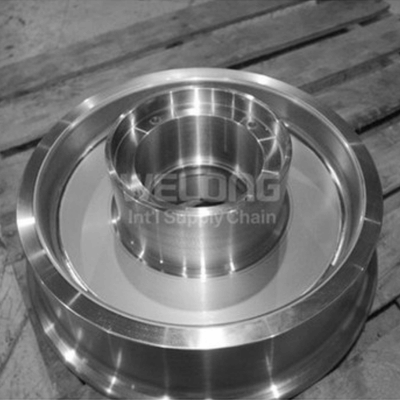

What is the gap between the quality of domestic castings and that of developed countries? What causes it?
Reasons for the gap in quality between Chinese castings and those in developed countries
1. Dimensional accuracy and surface quality
There is a gap in dimensional accuracy and surface quality between Chinese castings and those in developed countries, as follows:
Gap performance
Dimensional accuracy: The dimensional tolerance of castings in developed countries can generally be controlled within ±0.1mm - ±0.5mm, while the dimensional tolerance of most castings in China is ±0.5mm - ±2mm. For example, in the production of automobile engine cylinders, the dimensional accuracy of cylinders produced by advanced foreign companies can reach ±0.05mm, while some domestic companies can only reach ±0.1mm - ±0.2mm.

Surface quality: The surface roughness values of castings in developed countries are usually Ra0.8μm - Ra6.3μm, and the surface roughness values of Chinese castings are mostly Ra3.2μm - Ra25μm. For example, on the shell castings of precision instruments, foreign products have smooth surfaces and can be directly assembled with high precision, while domestic castings may have obvious defects such as sand holes and pores on the surface, requiring more subsequent processing to improve the surface quality.
Causes
Process equipment: Developed countries mostly use automated and intelligent advanced casting equipment and precision molds, such as vacuum die-casting machines, high-precision CNC machining centers, etc., which can accurately control various parameters in the casting process. However, some Chinese companies still use traditional manual or semi-automatic equipment, which has low equipment precision and poor stability, and it is difficult to ensure the dimensional accuracy and surface quality of castings.
Process materials: Foreign countries have in-depth research on raw materials and auxiliary materials for casting, and the material properties are stable. For example, in terms of the used molding sand, foreign molding sand has uniform particle size and low mud content, which can make the surface of castings smoother. However, the quality of molding sand used by some Chinese companies is uneven, affecting the surface quality of castings.
Personnel quality: Practitioners in the casting industry in developed countries have undergone systematic and professional training, have high technical levels, can skillfully operate advanced equipment, and strictly implement process specifications. There is a relative shortage of talent in China's foundry industry. Some practitioners have limited skills and lack the mastery of new processes and technologies, making it difficult to achieve precise control in the production process.
Quality control system: Enterprises in developed countries have established a complete quality control system, with strict standards and processes for each link from raw material procurement, production process monitoring to finished product inspection. The quality control system of some Chinese enterprises is not sound enough, the inspection equipment and means are relatively backward, and the inspection and control of casting quality are not comprehensive and accurate enough.
2. Performance stability
There is a certain gap between Chinese castings and those in developed countries in terms of quality stability, which is mainly reflected in the following aspects:
Performance consistency
High-end castings in developed countries have high consistency in mechanical properties, physical properties, etc., and the performance data of different batches of products have a small degree of discreteness. For example, in the production of aircraft engine blades, the blades produced in developed countries can control the differences between batches within a very small range in key performance indicators such as high temperature strength and oxidation resistance. However, similar castings produced in China have a relatively large fluctuation range of performance indicators, which may lead to some castings failing to meet high-standard performance requirements in actual use.
Defect rate
Advanced foundries in developed countries are able to control the defect rate of castings at a low level through precise process control and strict quality inspection. Taking the cylinder block of an automobile engine as an example, its scrap rate may be less than 1%. In contrast, the cylinder block scrap rate of some foundries in China may be around 3% - 5%, with high defects such as pores, sand holes, shrinkage, etc. These defects will seriously affect the quality stability and service life of castings.
Production process control
Foundries in developed countries generally adopt advanced production management systems and automated production lines, which can monitor and accurately adjust key parameters such as temperature, pressure, and time in the production process in real time. However, the production process control of some Chinese companies is relatively extensive, with more manual intervention and large parameter fluctuations, resulting in the quality of castings being greatly affected by human factors and the stability is difficult to guarantee.
Quality standards and traceability system
The foundry industry in developed countries has a complete and strict quality standard system, and it can be strictly implemented in actual production. At the same time, they have established an advanced quality traceability system. Once a quality problem is found, it can be quickly traced back to various links such as raw material procurement and production process parameters, and timely measures can be taken to improve it. Although China also has relevant quality standards, some companies are not strict enough in the implementation process, the quality traceability system is not perfect, and the feedback and improvement of quality problems are slow, which affects the stability of casting quality.
3. Material purity and quality
The purity of raw materials used by some Chinese foundries fluctuates greatly, and the impurity content is relatively high. Taking high-strength bolts as an example, Germany chooses high-strength alloy steel with high material purity, while some Chinese companies use 45 steel, 40 boron steel, etc., and the material purity is not stable enough. This will affect the final performance of castings, such as strength, toughness and corrosion resistance.
4. Production management and quality control
Foundry companies in developed countries have many process control projects, meticulous management specifications and strict implementation. However, some Chinese companies are not strict enough in the implementation of quality standards. During the production process, the monitoring and adjustment of process parameters are not timely and accurate, and there is a lack of effective quality traceability system and continuous improvement mechanism.
5. High-end product R&D capabilities
Developed countries are in a leading position in the research and development and application of advanced casting technologies. For example, in the fields of precision molding and special casting, they can produce high-value-added, high-tech high-quality castings. China's research and development and application in these high-end fields are relatively lagging behind, and some high-precision, high-performance mechanical equipment and components still rely on imports.