

How to choose the lining refractory suitable for the melting amount of the medium frequency electric furnace?
1. How to choose the lining refractory suitable for the melting amount of the medium frequency electric furnace?
1. Melting amount and lining thickness
Determine the lining thickness based on the melting amount
Small medium frequency electric furnace: When the melting amount is from a few kilograms to tens of kilograms, the lining thickness is usually 50-100 mm. For example, the lining thickness of a 5-kilogram experimental medium frequency electric furnace may be 50-60 mm; the lining thickness of a 50-kilogram small melting electric furnace can be 80-100 mm. Because the heat demand and mechanical stress of small electric furnaces are small, thinner linings can meet the requirements.
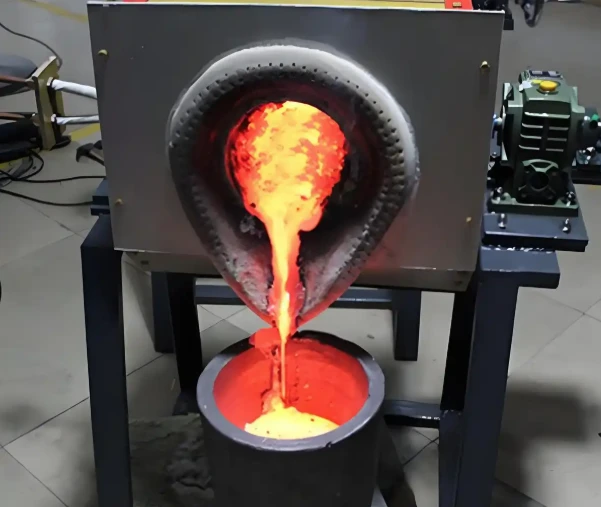
Medium-sized medium frequency electric furnace: When the melting amount is from hundreds of kilograms to several tons, the lining thickness is generally 100-200 mm. For example, for a 500-kilogram medium frequency electric furnace, the lining thickness is about 120-150 mm; for a 2-ton medium frequency electric furnace, the lining thickness can be 150-200 mm. At this time, the thickness of the furnace lining needs to be appropriately increased to withstand greater heat and mechanical shock.
Large medium frequency electric furnace: When the smelting volume reaches tens of tons, the thickness of the furnace lining is usually 200-300 mm or even thicker. For example, the thickness of the furnace lining of a 5-ton medium frequency electric furnace may be 200-250 mm; for large electric furnaces of 10 tons and above, the thickness of the furnace lining can be more than 250-300 mm to ensure sufficient strength and thermal insulation performance.
Other factors considered during design
Furnace structure: Different furnace structures have an impact on the thickness of the furnace lining. If a double-layer furnace shell structure is used, the thickness of the furnace lining can be appropriately reduced; while a single-layer furnace shell structure requires a thicker furnace lining to ensure thermal insulation and safety performance.
Refractory performance: If high-performance refractory materials are used, their thermal conductivity is low and their strength is high. On the premise of meeting the requirements of thermal insulation and strength, the thickness of the furnace lining can be relatively thinner. If silicon carbide refractory materials are selected, their performance is excellent, and the thickness of the furnace lining can be 10%-20% thinner than ordinary refractory bricks.
Melting process: The continuous melting process requires the furnace lining to have better thermal insulation and thermal shock resistance, and the thickness of the furnace lining needs to be appropriately increased; the intermittent melting process has relatively low requirements for the thermal stability of the furnace lining, and the thickness of the furnace lining can be appropriately adjusted according to the specific situation.
In the actual design, it is also necessary to conduct a comprehensive analysis based on the specific use environment, production requirements and empirical data of the electric furnace, and determine the best matching scheme of melting volume and furnace lining thickness through calculation and testing to ensure the efficient and safe operation of the medium frequency electric furnace.
2. Performance of refractory materials
Refractory
Refractory refers to the performance of the furnace lining to resist high temperature without melting when there is no load. Generally speaking, the refractoriness of the medium frequency electric furnace lining is required to be above 1650℃. For example, the acidic furnace lining used for melting ordinary metals usually has a refractoriness of 1650-1730℃; while the alkaline furnace lining used for melting high alloy steel, etc., can reach a refractoriness of 1770-2000℃.
Load softening temperature
Load softening temperature refers to the temperature at which the furnace lining begins to produce obvious plastic deformation under certain load and temperature conditions. It reflects the stability of the furnace lining when subjected to high temperature and certain pressure. The load softening temperature of high-quality medium-frequency electric furnace lining is relatively high, generally required to be around 1400-1600℃, so that it can maintain a good shape and structure during the electric furnace smelting process and avoid collapse or deformation due to high temperature load.
Thermal shock resistance
Thermal shock resistance refers to the ability of the furnace lining to resist rapid temperature changes without damage. The medium-frequency electric furnace will frequently undergo heating and cooling cycles during operation, and the furnace lining needs to have good thermal shock resistance to prevent cracks, peeling and other phenomena. Usually, the furnace lining with materials with good thermal shock stability, such as silicon carbide, cordierite, etc. as additives or main components, can withstand multiple rapid cooling and heating cycles without damage.
Slag resistance
Slag resistance refers to the ability of the furnace lining to resist slag erosion. During the smelting process, the slag will react chemically with the furnace lining, resulting in damage to the furnace lining. Therefore, the furnace lining needs to have good slag resistance to extend its service life. For example, alkaline furnace linings have good resistance to alkaline slag, while acidic furnace linings are more suitable for acidic slag environments. By optimizing the formula and production process of the furnace lining, its density and chemical stability can be improved, thereby enhancing slag resistance.
3. How to choose furnace charges from an economic perspective
From an economic perspective, the following aspects need to be considered comprehensively:
Initial procurement cost
Comparison of different materials: Generally speaking, the cost of alkaline furnace linings with magnesia as the main raw material is relatively low, and it is suitable for most metal smelting, such as ordinary carbon steel and low alloy steel. High-grade furnace linings such as corundum are more expensive and are usually used for special metal smelting with extremely high requirements for furnace lining performance, such as high alloy steel, precious metals, etc.
Consider brands and suppliers: Furnace linings of well-known brands are more guaranteed in quality, but the price may also be high. You can negotiate with different suppliers through multiple channels to get a more favorable price. At the same time, you should consider the supplier's reputation and after-sales service to avoid additional costs caused by quality problems.
Use cost
Service life: Choosing furnace linings with long service life can reduce long-term costs. For example, although high-quality corundum refractory materials are expensive, they have good corrosion resistance and thermal stability. When used in large medium-frequency electric furnaces, they can extend the furnace lining replacement cycle and reduce downtime and labor costs caused by frequent replacement of furnace linings. The overall economic efficiency may be better.
Energy consumption: Furnace linings with low thermal conductivity can reduce heat loss, improve the thermal efficiency of electric furnaces, and reduce energy consumption. For example, using alumina hollow ball bricks as furnace lining materials, although the procurement cost is high, long-term use can save a lot of electricity bills, and the economy is more significant when the energy cost is high.
Maintenance cost
Construction difficulty: Furnace linings with good construction performance can reduce construction costs and difficulties. Plastics, castables, etc. are easy to construct, can adapt to complex furnace types, and can reduce construction time and labor costs. Although the price of ramming materials is relatively low, the construction process is relatively cumbersome. For large medium-frequency electric furnaces, plastic or castable materials may be more economical after comprehensive consideration of the construction cost.
Maintenance frequency: Furnace linings with good thermal shock resistance and slag resistance have low maintenance frequency. For example, silicon carbide refractory materials can better resist thermal shock damage and slag erosion, which can reduce the number of maintenance times and the use of maintenance materials, and reduce maintenance costs.
When selecting medium-frequency electric furnace linings, the above factors should be comprehensively considered, and a comprehensive cost analysis should be conducted according to the specific smelting needs and production conditions to select cost-effective furnace linings.


