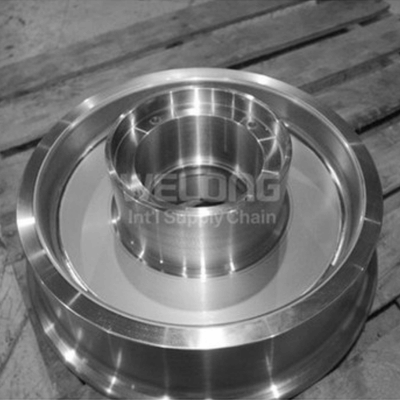

To machined parts means to use controlled material-removal processes to create a finished part or component. Machining is primarily a term used in the context of metalworking and involves shaping metal pieces through cutting, boring, drilling, milling, grinding, and other subtractive manufacturing techniques. Each of these processes removes small amounts of metal from the workpiece until it achieves the desired shape and size.
The fundamental purpose of machining is to:
- Achieve precise geometric dimensions on the part.
- Attain the fine surface finishes required for specific functions.
- Ensure the part meets necessary tolerances, which are the allowable variations for the physical dimensions of the part, crucial for it to fit and function correctly within its intended application.
Machining can involve a variety of equipment, from traditional manual machines like lathes and milling machines, where the operator directly controls the cutting movement and feed, to highly sophisticated CNC (Computer Numerical Control) machines, where computers control the machining process according to pre-programmed sequences and parameters.
Machining is often necessary for creating critical components in various industries, including aerospace, automotive, medical devices, and manufacturing machinery, where parts must meet stringent specifications for performance, safety, and reliability.
What is the Machined Material of Machined parts?
Machined materials refer to metal or plastic stock and parts that have been formed by material-removing processes via machine tools such as lathes, mills, drills, etc. Machining operations cut away excess raw material to produce the desired part geometry with a high degree of precision and surface finish.
Common machined materials include:
- Metals - steel, stainless steel, aluminum, brass, titanium, alloys
- Plastics - nylon, PEEK, POM, PTFE, acetal, polycarbonate
Machining is suited for materials that are rigid and durable enough to withstand cutting forces without excessive deflection. Harder materials like tool steels require more specialized machining approaches.
Raw stock for machining is available in standard shapes like bars, rods, plates, and blocks. Desired parts are machined from oversized blanks using computerized machine tools. Machining produces high repeatability and accuracies down to micron levels for precision components.
What are Machine Made Parts?
Machine made parts refer to metal or plastic components whose final production involves machining processes performed on automated machine tools such as CNC mills, lathes, drills, etc.
Machining achieves:
- Tight dimensional tolerances and accuracy
- Excellent surface finishes
- Complex geometries like contours, angled features
- Intricate part details unattainable by other processes
- Reliable process repeatability and consistency
- No shape limitations within machine travel range
Machining is commonly used for:
- Automotive powertrain and drivetrain components
- Aircraft structural parts, engine components, landing gear
- Medical devices like surgical instruments, prosthetics
- Electronic hardware like semiconductor dies, heatsinks
- Industrial parts including molds, dies, jigs, fixtures
With computer programming of tool paths and robotic automation, modern machine tools can rapidly produce very complex, high precision parts suited for the most demanding applications.
Is Machining Part of Manufacturing?
Yes, machining is an integral part of the manufacturing process for precision metal and plastic parts across many industries including automotive, aerospace, medical, electronics, and industrial machinery.
Advantages of machining include:
- Extremely high tolerances down to micron precision
- No shape limitations within machine travel range
- Ability to customize and rapidly change designs
- Computer controlled automation for speed
- Excellent surface finishes boosting performance
- Wide range of workpiece materials and grades
- Integrates with other processes like heat treating
Some examples of common machined parts include:
- Engine pistons - CNC turned and milled from forged aluminum alloy blanks
- Turbine blades - Complex geometries machined from nickel alloys
- Automotive drivetrain gears - Milled from case hardened alloy steel blanks
- Orthopedic joints - Intricate contours machined from titanium alloys
- Electronic heatsinks - Fins and flat surfaces machined from aluminum profiles
- Injection molds - Hardened tool steel machined by precise EDM and milling
Machine tools can produce an almost infinite range of part designs from metal and plastic stock. With computer control and automation, machining delivers repeatable precision and complexity across a multitude of industries and applications.
Our integrated engineering and manufacturing capabilities allow for optimizing each long roller support for strength, durability, and functionality across anticipated loads and service conditions. Please contact China Welong at info@welongpost.com to discuss engineering your next machined parts solution.
References:
API Spec 6A, Specification for Wellhead and Tree Equipment, 21st Edition. 2018. American Petroleum Institute.
Derrick, W.R. & Utter, V.J. Drilling and Well Servicing Methods. Society of Petroleum Engineers Textbook Series, 1985.
Lu, G., Li, Z., Yu, X., Liu, K., Gao, Z., Shi, T. Numerical simulation and structure optimization of hydraulic rod clamping device for continuous pipe launcher on drilling platform. Journal of Petroleum Exploration and Production Technology 10, 1235–1245, 2020.
Mitchell, R.F. & Miska, S.Z. Fundamentals of Drilling Engineering. Society of Petroleum Engineers Textbook Series, 2011.