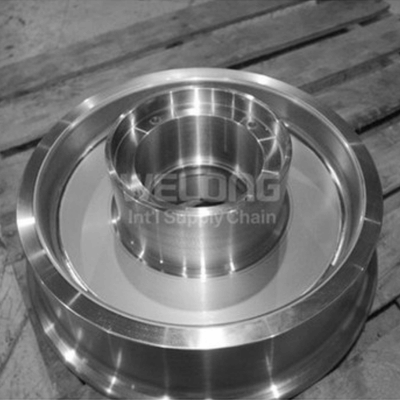

How does Investment casting work?
Investment casting, also known as lost-wax casting, is a specialized metal casting process that allows for intricate, detailed cast components. The steps are:
1. Wax pattern creation - An expendable wax pattern is made to the shape of the desired finished part, including gating and riser systems.
2. Investment shell mold - The wax pattern is repeatedly dipped in a ceramic slurry to build up a hard shell coating. The shell is air-dried and cured between dips.
3. Wax removal - The wax is melted out in an autoclave, leaving behind a hollow mold cavity. Hence "lost wax".
4. Casting - Molten metal is poured by gravity or vacuum pressure into the ceramic shell mold to fill the cavity.
5. Removal - The ceramic mold is broken off to reveal the finished casting. The gating system is cut off.
6. Finishing - Additional cleaning, heat treating, machining, etc. are performed as needed.
The resulting castings can capture extremely complex, delicate geometries not feasible by other casting methods. At China Welong, we produce high-quality metal components across aerospace, medical, and other demanding industries.
What materials are used?
Investment casting involves specialized materials to create intricate molded shapes while withstanding the stresses of casting:
- Wax patterns - Wax tailored for moldability and desired burnout is injected into metal dies or built up additively.
- Ceramic slurries - Liquid silica, alumina, zirconia, or phosphate bonded refractories coat the wax.
- Stucco powders - Ceramic particles build shell thickness between dips.
- Metal alloys - Various castable alloys from aluminum to superalloys are used.
Pattern waxes must fully melt and evacuate the shell mold without residue. Refractory coatings withstand metal pouring temperatures without cracking. At China Welong, we carefully control materials selection and processing to deliver high-quality castings.
What are the advantages and disadvantages?
Key advantages include:
- Ability to produce complex, intricate geometries and details
- Excellent surface finish quality
- High dimensional accuracy and tolerances
- Wide range of castable alloy options
- Low labor requirements with high automation
- No geometric design restrictions
- Minimal scrap rates due to wax pattern reuse
Disadvantages include:
- High costs for small production runs
- Long lead time for pattern making
- Size limitations based on equipment capacity
- Risk of shell cracking during wax removal
- Defects from improper filling without pressure
- Extensive process expertise required
By leveraging both advantages and navigating disadvantages, it provides unique benefits for producing detailed, complex cast metal components across diverse applications.
Is Investment casting better than other casting methods?
Whether it is "better" depends on the needs of each specific application and product requirements.
Advantages of sand casting:
- Higher dimensional accuracy and better surface finishes
- Ability to cast very thin, fragile sections
Advantages over gravity and pressure die casting:
- No limitations on component geometry complexity
- Can use higher melting point alloys like stainless steels
Advantages of forging:
- Much lower forces are required for complex shapes
- No billet size limitations
But investment cast also has disadvantages like higher per-part costs and size limitations. The process must be weighed based on each project's priorities around geometry, alloy, volumes, lead time, and cost. At China Welong, we help customers select the optimal casting process to meet their product goals.
What are the limitations?
Some key limitations include:
- Part size - Limited by equipment capacity. Typical max around 0.5m for critical dimensions.
- Alloy types - Very reactive alloys can interact with the ceramic shell mold.
- Cost effectiveness - High labor and pattern costs unless mass produced.
- Lead times - Pattern making and mold preparation increase lead times.
- Thin sections - Minimum wall thickness around 0.5mm before becoming too fragile.
- Defects - More porous, less dense castings than pressurized techniques.
- Post processing - Significant finish machining often required on castings.
- Maximum temperature - Shell mold materials limit max pouring temp.
Understanding these restrictions allows matching components to investment cast that can navigate the limitations. Finding the right manufacturing process is a complex balance of capabilities, cost, and performance. Please contact China Welong at info@welongpost.com to discuss engineering your next projects.
References:
Horton, J.A. & Tompkins, B.J. Investment casting. ASM Handbook, Volume 15: Casting. ASM International (2008).
Jones, S. & Yuan, C. Advances in shell moulding for Investment casting. Journal of Materials Processing Tech. 135, 258-65 (2003).
Singh, R. Investment casting: Materials Selection. Advanced Materials & Processes. Vol. 176, 31-34 (2018).
Qamar, S.Z. & Arif, A.F.M. Development of Investment casting processes – A review. Int. Journal of Advanced Manufacturing Technology 107, 2597–2618 (2021).