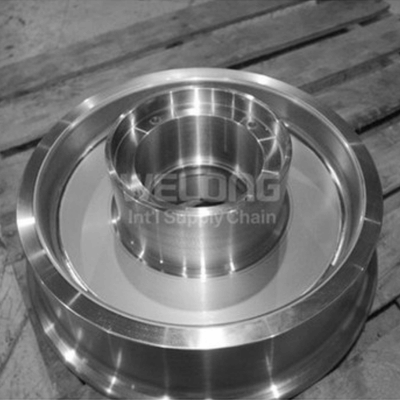

Sand casting is a traditional and widely used casting process that forms metal parts of the desired shape by pouring molten metal into a sand mold. This process is suitable for the manufacture of parts of various materials and complex shapes. The following are the products, materials, weight ranges, flexibility and advantages of sand casting:
Sand casting is widely used to manufacture various complex shapes and large-sized metal parts, including but not limited to:
Automotive industry: Engine block, Cylinder head, Intake manifold, Exhaust manifold, Transmission housing Material.
Heavy machinery and equipment: Pump housings, Valve bodies, Compressor housings, Hydraulic cylinders, Excavator and bulldozer parts.
Aerospace: Turbine housings, Aircraft engine parts , Aircraft landing gear components.
Industrial machinery: gears and gearbox housings, couplings, pulleys, bearing housings, compressor and fan housings
Agricultural machinery: tractor parts, planter and harvester components, agricultural pumps and valves
Energy and Power: Turbine Components, Generator Housings, Boiler Components, Wind Turbine Parts
Others
Ship parts (such as propellers, ship engine parts)
Railway parts (such as train wheels, brake system parts)
Mining equipment (such as crusher housings, mill parts)
Art castings (such as sculptures, decorations)
Sand casting can be used for a variety of metals and alloys, including:
Cast iron, cast steel, aluminum alloy, copper alloy, magnesium alloy, nickel alloy, stainless steel
Weight Range
Sand casting is suitable for manufacturing parts weighing from a few grams to several tons. The specific range is as follows:
Small parts: a few grams to a few kilograms
Medium parts: tens of kilograms to hundreds of kilograms
Large parts: hundreds of kilograms to several tons
Flexibility
Sand casting is highly flexible and suitable for producing both small and large batches. The main features are:
Complex shapes: It can produce parts with complex geometries and cavities.
Various materials: It can be used in a variety of metals and alloys.
Size range: It can produce parts of various sizes, from small precision parts to large structural parts.
Benefits of Sand Casting

Versatility: Sand casting can be used to create a wide variety of shapes and sizes, from small intricate parts to large components.
Material Flexibility: It supports a wide range of metals, including ferrous and non-ferrous alloys.
Cost-Effective: The initial cost for molds and setup is relatively low, making it economical for small to medium production runs.
Complex Geometries: It allows for the creation of complex geometries and internal cavities that would be difficult or impossible with other casting methods.
Short Lead Time: Sand molds can be produced quickly, which reduces lead times for prototypes and production.
Customization: Easily adaptable for custom and one-off production runs.
If you want to know whether your product is suitable for sand casting, please contact me for more information.
E: joy@welongpost.com