


-
![CQI-17 system]() Oct 27, 2025CQI-17 systemCQI-17 is one of the special process assessment standards issued by AIAG (American Automotive Industry Action Group). Its full name is: CQI-17: Specia
Oct 27, 2025CQI-17 systemCQI-17 is one of the special process assessment standards issued by AIAG (American Automotive Industry Action Group). Its full name is: CQI-17: Specia -
![CQI-15 system]() Oct 24, 2025CQI-15 systemCQI-15 is one of the automotive industry quality standards issued by AIAG (American Automotive Industry Action Group). Its full name is: CQI-15: Speci
Oct 24, 2025CQI-15 systemCQI-15 is one of the automotive industry quality standards issued by AIAG (American Automotive Industry Action Group). Its full name is: CQI-15: Speci -
![CQI-12 system]() Oct 23, 2025CQI-12 systemCQI-12 is one of the AIAG (American Automotive Industry Action Group) Special Process Evaluation Guidelines. The full name is: CQI-12: Special Process
Oct 23, 2025CQI-12 systemCQI-12 is one of the AIAG (American Automotive Industry Action Group) Special Process Evaluation Guidelines. The full name is: CQI-12: Special Process -
![CQI-11 system]() Oct 22, 2025CQI-11 systemCQI-11 is a process audit standard for electroplating processes published by AIAG. The full name is: CQI-11: Specialty Process Assessment – Co
Oct 22, 2025CQI-11 systemCQI-11 is a process audit standard for electroplating processes published by AIAG. The full name is: CQI-11: Specialty Process Assessment – Co -
![CQI-9 system]() Oct 21, 2025CQI-9 systemCQI-9 is a standard of the AIAG (American Automotive Industry Action Group). The full name is: CQI-9: Special Process – Heat Treatment System As
Oct 21, 2025CQI-9 systemCQI-9 is a standard of the AIAG (American Automotive Industry Action Group). The full name is: CQI-9: Special Process – Heat Treatment System As -
![CQI system]() Oct 20, 2025CQI systemThe CQI (Continuous Quality Improvement) system is a quality system evaluation guideline series issued by AIAG (Automotive Industry Advancement Group)
Oct 20, 2025CQI systemThe CQI (Continuous Quality Improvement) system is a quality system evaluation guideline series issued by AIAG (Automotive Industry Advancement Group) -
![Part 2 Metal spare parts--lost foam casting]() Oct 17, 2025Part 2 Metal spare parts--lost foam casting3. Binding the model into a cluster: It is to combine and glue the foam model processed by yourself (or purchased) with the injection and riser model
Oct 17, 2025Part 2 Metal spare parts--lost foam casting3. Binding the model into a cluster: It is to combine and glue the foam model processed by yourself (or purchased) with the injection and riser model -
![Metal spare parts --Lost foam casting]() Oct 13, 2025Metal spare parts --Lost foam castingLost foam casting is a solid casting method that combines a foam plastic mold using binder-free dry sand with vacuum technology. The main names in Jap
Oct 13, 2025Metal spare parts --Lost foam castingLost foam casting is a solid casting method that combines a foam plastic mold using binder-free dry sand with vacuum technology. The main names in Jap -
![Part 2 Heat treatment properties and performance characteristics of Ferritic ...]() Oct 10, 2025Part 2 Heat treatment properties and performance characteristics of Ferritic ...Heat treatment properties and performance characteristics of Ferritic and Martensitic stainless steel 3. Ferritic stainless steel Ferritic stainless s
Oct 10, 2025Part 2 Heat treatment properties and performance characteristics of Ferritic ...Heat treatment properties and performance characteristics of Ferritic and Martensitic stainless steel 3. Ferritic stainless steel Ferritic stainless s -
![Part 1 Heat treatment properties and performance characteristics of austeniti...]() Oct 09, 2025Part 1 Heat treatment properties and performance characteristics of austeniti...Heat treatment properties and performance characteristics of austenitic stainless steel 1. Heat treatment properties of stainless steel The purpose of
Oct 09, 2025Part 1 Heat treatment properties and performance characteristics of austeniti...Heat treatment properties and performance characteristics of austenitic stainless steel 1. Heat treatment properties of stainless steel The purpose of -
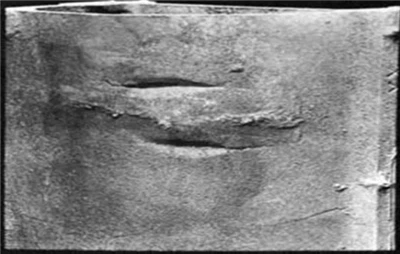
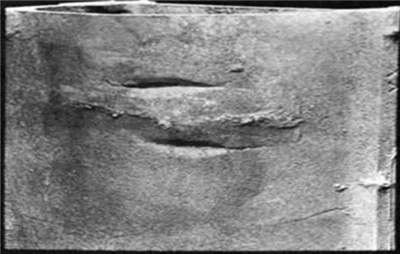
![Part 7 Casting defects]() Sep 29, 2025Part 7 Casting defects7. Rat Tail Rat tails appear as irregular cracks or lines on the casting. These defects are caused by compression failure of the mold cavity surface w
Sep 29, 2025Part 7 Casting defects7. Rat Tail Rat tails appear as irregular cracks or lines on the casting. These defects are caused by compression failure of the mold cavity surface w -
![Part 6 Casting defects]() Sep 28, 2025Part 6 Casting defects4. Expansion Metallostatic forces often cause the mold walls to move back, which results in the workpiece expanding in size. This means that the casti
Sep 28, 2025Part 6 Casting defects4. Expansion Metallostatic forces often cause the mold walls to move back, which results in the workpiece expanding in size. This means that the casti






Popular Products

suspension control arms
At its core, the suspension control arm, also known as an A-arm or wishbone, is a vital link between the vehicle’s

Forged Rotor Body
Item:Forged Rotor Body. Material: 26NICRMOV145. Weight:10-60tons. Process:Forging+Heattreatment+Machining.

Cradle
Item: Cradle. Material: AlSi10Mg. Technology: sand casting+machining+assemblying. Weight:72kg. Industry: CT equipment.

Double Acting Valve Bonnet
Double Acting Valve Bonnet

Washing Machine Door Frame
Item: Washing Machine Door Frame. Material: SS304. Weight:36kg. Process: Casting

Hydraulic Generator Shaft
Item: Hydraulic Generator Shaft. Material: 42CrMo4+QT. Technology: forging+QT+machining. Weight:1015kg. Industry: