


Selecting the correct manufacturing method for big metal components is one of the most critical choices an engineering or procurement team can make. Making the incorrect decision might result in additional expenses, structural flaws or extended lead times, while making the right pick means durability, accuracy and budget efficiency. This article describes the major parameters, trade-offs and practical considerations involved in selecting casting, forging, machining or fabrication for big metal components for heavy industries, oil drilling and infrastructure projects.
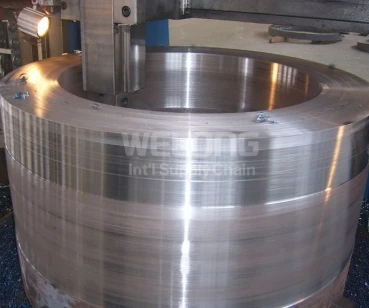
What Factors Determine the Best Process for Large Metal Components?
Load Requirements and Mechanical Performance
The mechanical requirements imposed on big metal components have a major impact on the optimal production method. "Parts that have been subject to high stress, repeated impact, or extreme pressure often require process to improve internal grain structure and strength." Early understanding of load requirements helps engineers avoid picking a method that cannot provide the durability demanded by tough industrial applications.
Production Volume and Order Quantity
The manufacturing volume is an important factor for process selection for big metal components. However, the cost of equipment for forging and automated machining might be prohibitive for low-volume or one-off products, making casting or fabrication generally the cheaper option. Matching output volume with the right method avoids excessive capital expenditure and enhances the economics of the whole project.
Budget Constraints and Lead Time Expectations
"Inevitably, when you're talking about making large parts, there are practical factors like cost and delivery time. Some techniques have longer tooling development but cheaper per unit costs at scale, whereas others have a quicker turnaround with higher individual part prices. The most appropriate path to manufacture for a particular application is one that will balance budget limitations with project timescales.
How Do Size, Geometry, and Material Affect Process Selection?
Overall Dimensions and Weight Limitations
The size and weight of massive metal parts are closely related to the feasibility of production processes. Some forging presses or machining centers may not be able to handle very big or heavy items, thus casting or fabrication is the most feasible option. Early dimensional constraints evaluation avoids expensive redesigns and helps guarantee that the selected process can realistically handle the part's size.
Geometric Complexity and Internal Features
Complex geometries with internal cavities, varied wall thickness or complex contouring affect the viability of a method for big metal components. Casting - very good for complex shapes in a single operation. Machining - very good for accuracy and close tolerances. Welded plates and sections may be fabricated to provide irregular forms that are difficult to obtain by other processes.
Material Selection and Alloy Compatibility
Different manufacturing procedures are more suitable for different materials for the production of massive metal components. Some alloys are good for forging and it improves the grain flow. Some alloys are better for sand casting because they are more fluid when melted. Checking that the material is compatible with the desired procedure will provide the best mechanical qualities and decrease the potential for problems in production.
Casting, Forging, Machining, and Fabrication: Key Trade-Offs
Casting for Complex Shapes and Cost Efficiency
Foundry work is a common alternative for big metal parts with complicated geometries at a fair cost. Molten metal is poured into a mold . This allows sophisticated forms to be created in one operation without significant subsequent processes . This technology is especially economical for medium to large production runs when tooling expenses may be amortized across several pieces.
Forging for Superior Strength and Durability
Forging generates massive metal parts with improved grain structure resulting in better strength, toughness and fatigue resistance than casting. This procedure is especially suited for items that will be exposed to strong mechanical stresses, such shafts, flanges and structural fittings for oil drilling and heavy equipment. The trade-off is increased tooling costs and longer die development lead times.
Machining and Fabrication for Precision and Flexibility
Machining is a good way to provide excellent dimensional precision for huge metal parts that have to be very accurate . But machining from solid may create a lot of waste material . Fabrication is cutting, bending and riveting metal plates. This is flexible for bespoke or irregular designs without the need of tooling. Both procedures are complementary to casting and forging, according to the particular precision and design requirements.
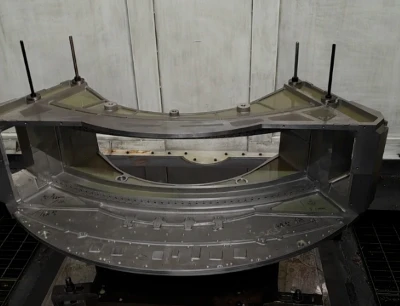
Which Process Offers the Best Balance of Cost, Strength, and Quality?
Evaluating Total Cost of Ownership
Selecting the correct process for big metal components is more than only the initial cost of manufacturing, but the value over the long haul. The total cost of ownership is affected by a number of factors such as maintenance frequency, lifetime of parts, risk of failure. Sometimes the more costly technique that extends service life might be a better value than the less expensive method with greater long-term maintenance needs.
Balancing Mechanical Strength Against Budget
When manufacturing massive metal parts, strength demands must be well matched with the budget. Typically, forging provides the best strength but at a higher cost, while casting offers a good compromise between performance and cost for mild strained applications. Engineers should not excessively define expensive procedures but match strength requirements to the demands of the application
Quality Control and Consistency Across Production Runs
Consistency in quality of massive metal components for crucial industrial systems is a must. Robust quality control techniques comprising non-destructive testing and dimensional inspection make processes less likely to fail in the field. If you work with manufacturers who have certified quality management systems, you may be certain that every batch of parts you get will fulfill requirements consistently.
How Can You Select the Right Manufacturing Process for Metal Components?
Defining Application Requirements Early
Selection of heavy metal components should start with a clear characterization of application requirements including load conditions, environmental exposure and estimated service life. Collecting this information early in the design process enables engineers to eliminate less appropriate production methods before they spend time in detailed design work, eventually saving time and avoiding expensive changes later in the development cycle.
Consulting Experienced Manufacturing Partners
Choosing a provider who has expertise with big metal parts might make the choosing process a lot easier. Years of actual manufacturing expertise provide established manufacturers the ability to advise on the viability of a method, availability of material, and cost implications. This collaborative method typically reveals optimization potential that internal teams may not consider during early-stage planning.
Prototyping and Testing Before Full-Scale Production
Fabrication of prototype big metal parts helps teams to test design assumptions and performance objectives prior to full-scale manufacture. Prototypes may be used to test in a setting that replicates the use of the product and problems can be identified before they become costly difficulties in the actual manufacturing. This stage is especially helpful for mission-critical applications when failure is not an option.
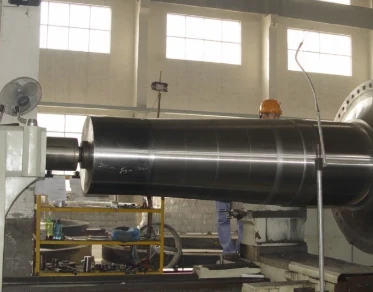
Conclusion
Selecting the appropriate production method for big metal components relies on strength needs, shape, quantity and cost. China Welong, established in 2001, is ISO 9001:2015 certified and has been supplying bespoke metal components to more than 100 customers in the UK, Germany, USA and abroad for the last 20 years. Welong assists its customers to choose the most efficient procedure for their projects using AutoCAD, Pro-Engineering and SolidWorks engineering assistance. Let Welong help you with your next mass production choice.
FAQ
Q1: Which process is best for producing very large metal components?
A: Casting and fabrication are often preferred for very large metal components due to fewer size limitations compared to forging presses or machining centers.
Q2: Is forging always stronger than casting for metal components?
A: Generally yes, forging improves grain structure and offers higher strength, though casting can still be suitable for moderately stressed applications.
Q3: How does production volume affect process selection?
A: Low volumes favor casting or fabrication due to lower tooling costs, while high volumes may justify forging's higher upfront investment.
Q4: Can machining be used for large metal components alone?
A: Machining is typically used as a finishing step for precision features rather than producing entire large metal components from scratch.
Q5: What role does material choice play in selecting a process?
A: Material properties affect fluidity, grain flow, and machinability, all of which influence which manufacturing process suits specific metal components best.
Let Welong Help You Choose the Right Process
Not sure which manufacturing process fits your large metal components? China Welong's experienced engineering team can evaluate your drawings, application requirements, and budget to recommend the most efficient and cost-effective production method. Backed by ISO 9001:2015 certification and two decades of international supply chain experience, we deliver reliable results for clients worldwide. Reach out today at metal@welongpost.com to start your project with confidence and precision.
References
1. ASM International. ASM Handbook, Volume 14: Forming and Forging. ASM International, 2005.
2. ASM International. ASM Handbook, Volume 15: Casting. ASM International, 2008.
3. Kalpakjian, Serope, and Steven R. Schmid. Manufacturing Engineering and Technology. 8th ed., Pearson, 2019.
4. Groover, Mikell P. Fundamentals of Modern Manufacturing: Materials, Processes, and Systems. 7th ed., Wiley, 2019.
5. Society of Manufacturing Engineers (SME). Selecting the Right Manufacturing Process for Large-Scale Components. SME Technical Papers Series.
6. Forging Industry Association (FIA). Forging Design Handbook and Process Selection Guide. Forging Industry Association.


