


In ductile cast iron, a very special metallurgical characteristic makes it both strong and flexible. This is the presence of graphite in spherical form, scattered throughout the metal matrix. In gray iron, the graphite is in the form of brittle flakes, but in nodular cast iron, the graphite is in the form of rounded nodules, which greatly improves the mechanical performance. Here we will examine the origins of these spherical graphite structures, their effect on toughness and fatigue resistance, and why nodular cast iron is a favored material for demanding industrial applications.
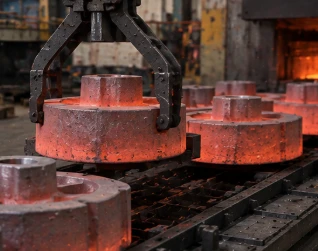
How Do Graphite Nodules Improve the Strength of Nodular Cast Iron?
The Formation of Spherical Graphite During Solidification
Nodular cast iron is treated with additions of magnesium or cerium in a regulated manner during solidification to acquire its distinctive spherical graphite. These elements change the surface tension of the graphite when it precipitates out of the molten iron and help it to form into spherical nodules instead of pointed flakes. This conversion is important to achieve the increased mechanical qualities that differentiate nodular cast iron from standard gray iron castings.
Reduced Stress Concentration Compared to Flake Graphite
The nodules of graphite in nodular cast iron have a spherical form which greatly minimizes stress concentration locations in the metal matrix. While sharp-edged graphite flakes are locations for fracture initiation, spherical nodules distribute the mechanical stress more uniformly throughout the material. The benefit of this structure is that nodular cast iron can take larger loads without early breaking and may be used for parts that are exposed to dynamic or recurring stresses.
Improved Tensile Strength and Ductility
The tensile strength and elongation qualities of nodular cast iron are much better than those of flake graphite cast iron since the spherical graphite has less of a disruptive effect on the metal matrix. This combination permits parts to bend or deform somewhat under strain without fracturing . This is very useful in applications such as automobile suspension parts , pipe fittings and heavy equipment parts that need to be strong but yet flexible .
Graphite Morphology, Nodularity, and Mechanical Performance
Understanding Nodularity Percentage and Its Importance
Nodularity is the fraction of the graphite particles having a genuinely spherical form in nodular cast iron. The higher the proportion of nodularity the better the mechanical characteristics since there are less irregular graphite forms that weaken the structure. Foundries watch nodularity very closely throughout production since even little variations may greatly impair the strength and ductility of the final nodular cast iron part.
Factors Influencing Graphite Shape and Distribution
The graphite morphology in nodular cast iron is influenced by several elements, such as cooling rate, chemical composition and inoculation procedure. However, in certain cases, faster cooling rates might produce undesired graphite forms. Proper inoculation will ensure equal nodular distribution throughout the casting. By controlling these factors throughout production, foundries are able to produce nodular cast iron of uniform quality with predictable mechanical qualities.
Grading Systems for Evaluating Graphite Structure
ASTM A247 provides a standard for classifying graphite nodules in nodular cast iron according to their form, size and distribution. These categories enable engineers to define exact material requirements for important applications and ensure consistency from one manufacturing batch to the next. Knowledge of these grading criteria assists purchasers in verifying that supplied nodular cast iron components conform to the mechanical performance anticipated for their intended use.
Can Spherical Graphite Inclusions Enhance Toughness and Fatigue Resistance?
Superior Impact Resistance Under Dynamic Loading
The nodular cast iron, with its spherical graphite structure, has a much superior impact resistance than its flake graphite counterpart. The spherical nodules assist to absorb and diffuse energy when exposed to quick mechanical impacts, rather of concentrating tension at sharp graphite edges. This hardness makes nodular cast iron very appropriate for parts subjected to vibration, impact or changing mechanical stresses.
Extended Fatigue Life in Cyclic Loading Applications
sections constructed from nodular cast iron show better fatigue life during repeated loading cycles, an important factor for components such as crankshafts, gears and axle sections. The lower stress concentration surrounding spherical graphite nodules retards the beginning and growth of fatigue fractures. This property makes it possible for nodular cast iron parts to withstand cyclic mechanical stress over long time periods without premature failure.
Performance Advantages in High-Vibration Environments
Nodular cast iron is very durable and ideal for industrial equipment that is always under vibration such as pump housings and machinery bases. It dissipates vibrational energy without microcracking, resulting in a longer operating life, and less maintenance. This robustness has made nodular cast iron a popular material option in automotive, industrial and oil drilling industries .
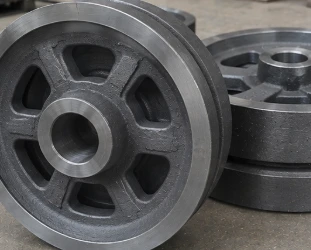
How Do Matrix Structure and Nodule Size Affect Material Durability?
Ferritic Versus Pearlitic Matrix Characteristics
The metal matrix around the nodules in nodular cast iron (either primarily ferritic or pearlitic) has a strong impact on the overall mechanical behavior. The ferritic matrices have stronger ductility and impact resistance, whereas the pearlitic matrices have more hardness and wear resistance. By choosing the correct matrix type, engineers may adapt the qualities of nodular cast iron for the precise needs of an application, from flexible pipes to wear-resistant gears.
The Role of Nodule Count and Size Distribution
The nodule count, i.e., the number of graphite spheres per unit area and their size distribution, impacts the mechanical consistency of nodular cast iron. More nodules of the same size usually means more predictable mechanical qualities and less variability in a casting. Such characteristics are controlled in the manufacturing to allow the manufacturers to reliably produce the nodular cast iron components with consistent performance.
Heat Treatment Effects on Long-Term Durability
The durability of nodular cast iron may be improved by heat treatments: normalizing and austempering, which can refine the matrix structure and optimize the mechanical characteristics. In particular austempered ductile iron has excellent strength and wear resistance but still good toughness. These treatment methods enable producers to create nodular cast iron components for specific applications that need higher durability and longer service life.
Conclusion
Nodular cast iron has high strength, toughness and fatigue resistance. This is because it has spherical graphite inclusions which distribute stress more uniformly than the flake graphite in conventional cast iron. China Welong was created in 2001 and is an ISO 9001:2015 certified company, providing bespoke ductile iron and metal components to more than 100 customers globally over the last 20 years. With engineering assistance in AutoCAD, Pro-Engineering and SolidWorks, Welong assists manufacturers to acquire quality nodular cast iron components. Partner with Welong on your next project.
FAQ
Q1: What makes nodular cast iron stronger than gray cast iron?
A: Nodular cast iron contains spherical graphite instead of flakes, which reduces stress concentration and significantly improves tensile strength and ductility.
Q2: How is nodularity measured in nodular cast iron?
A: Nodularity is assessed as the percentage of graphite particles that form a spherical shape, typically evaluated using standards like ASTM A247.
Q3: Is nodular cast iron suitable for high-vibration applications?
A: Yes, its toughness and energy-absorbing graphite structure make nodular cast iron well suited for pumps, machinery bases, and vibration-heavy environments.
Q4: Can heat treatment improve nodular cast iron properties?
A: Yes, processes like austempering enhance strength and wear resistance while maintaining good toughness in nodular cast iron components.
Q5: What matrix structure offers the best ductility in nodular cast iron?
A: A ferritic matrix generally provides greater ductility and impact resistance compared to a pearlitic matrix in nodular cast iron.
Source Reliable Nodular Cast Iron Components with Welong
Looking for high-performance nodular cast iron components engineered to precise specifications? China Welong combines two decades of international supply chain experience with ISO 9001:2015 certified quality control to deliver dependable, durable castings for demanding applications. Our engineering team works from your drawings or samples using AutoCAD, Pro-Engineering, and SolidWorks. Contact us today at metal@welongpost.com to discuss your nodular cast iron sourcing requirements and strengthen your supply chain.
References
1. ASM International. ASM Handbook, Volume 15: Casting. ASM International, 2008.
2. ASTM International. ASTM A247: Standard Test Method for Evaluating the Microstructure of Graphite in Iron Castings. ASTM International.
3. ASTM International. ASTM A536: Standard Specification for Ductile Iron Castings. ASTM International.
4. Davis, J.R., editor. ASM Specialty Handbook: Cast Irons. ASM International, 1996.
5. American Foundry Society (AFS). Ductile Iron Handbook. American Foundry Society.
6. Dorazil, Eduard. High Strength Austempered Ductile Cast Iron. Ellis Horwood, 1991.


