


The forged slacker adjuster rod is the crucial connection in the air brake system of a commercial vehicle, transforming brake chamber stroke into the rotational motion that applies the foundation brakes. But it functions barely centimeters above the road, amid the shower, grit, and salt of winter. Over months and years, rust silently eats at the rod and its hardware. This page describes the causes of this corrosion, how it increases, and how it eventually impacts wear, fatigue, and braking accuracy.
What Causes Corrosion in a Forged Slacker Adjuster Rod?
Constant Road Environment Exposure
A forged slacker adjuster rod lives its whole service life next to the road surface, soaking up spray, grit, and dirt. Mud accumulates around clevises and splined connections, keeping moisture against bare steel for days on end. Thus, corrosive chemicals are in action on a continual basis rather than an infrequent basis since the assembly does not dry up entirely very often. The underbody environment is a major driver of rod corrosion.
Galvanic Effects in Mixed-Metal Assemblies
The brake linkage is made up of many metals: forged steel rod, clevis pins, washers, and zinc-plated fasteners. When dissimilar metals come into contact in the presence of an electrolyte (such as salt water), tiny galvanic currents occur, and one of the components preferentially corrodes. Forged slacker adjustment rods with matching hardware and isolation washers are significantly less susceptible to this hidden electrochemical process than loosely attached systems.
Mechanical Damage to Protective Coatings
Stone hits, road debris, and frequent wrench contact during brake service chip and scrape the protective coatings long before the rod itself wears out. Every scratch exposes new steel to the environment, and rust accumulates at those places of breach. That's why makers of the forged slacker adjuster rod specify strong, damage-tolerant coating methods and why inspectors pay special attention to nicked, flaking surfaces during normal maintenance.
How Do Moisture and Road Salt Accelerate Rod Corrosion?
Chloride Attack from De-Icing Salt
Winter de-icing salt is the single greatest enemy of brake hardware. Dissolved chlorides break down the passive films that protect steel, letting rust advance even in cold, oxygen-poor conditions. Regions that salt each winter heavily routinely see brake components, including the forged slacker adjuster rod, corrode several times faster than identical parts operating in dry climates, dramatically shortening service intervals.
Water Trapped in Crevices and Threads
Adjustment mechanisms rely on threaded sections and pin joints where water seeps in but drains poorly. These crevices retain a concentrated electrolyte long after the rest of the assembly has dried, producing aggressive localized attack exactly where smooth operation matters most. Corrosion products also occupy more volume than the parent metal, so trapped rust gradually jacks threads apart and stiffens adjustment.
Freeze–Thaw and Humidity Cycles
Daily temperature swings force humid air in and out of joints, and condensation forms on cold metal each morning. Repeated wet–dry cycling leaves behind concentrated salt deposits that become more aggressive with every cycle. A forged slacker adjuster rod operating through seasonal freeze–thaw weather therefore experiences cumulative chemical attack that steadily consumes coating reserves and dimensional margins.
Corrosion Resistance, Material Strength, and Surface Protection
Forged Steel Strength and Grain Flow
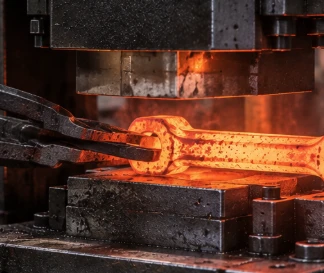
Forging aligns the steel's grain flow along the rod's contour, producing exceptional toughness, impact resistance, and fatigue strength - properties that also slow corrosion's structural impact. A forged slacker adjuster rod retains substantial load capacity even after surface rust appears, because its dense, void-free structure offers no easy path for pitting to penetrate, unlike porous cast alternatives.
Zinc and E-Coat Barrier Protection
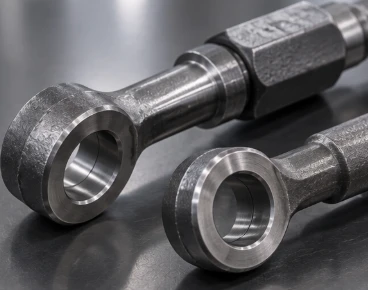
Surface engineering provides the first line of defense. Hot-dip galvanizing and zinc flake coatings sacrifice themselves to protect exposed steel, while electrocoating deposits a uniform, bonded polymer layer that reaches into threads and recesses. When a forged slacker adjuster rod leaves the factory with a qualified zinc-plus-paint duplex system, its corrosion protection is measured in decades rather than seasons.
Grease, Seals, and Maintenance Intervals
Lubrication is chemical protection as much as mechanical protection. Fresh grease excludes water from pin bores and splines and displaces trapped electrolyte, while sealed boots shield threads from direct exposure. Fleets that grease the forged slacker adjuster rod at recommended intervals and inspect coatings annually consistently report slower corrosion growth, smoother adjustment, and longer component life than neglected units.
How Does Corrosion Affect Wear, Fatigue, and Adjustment Accuracy?
Roughened Surfaces and Accelerated Wear
Rust is abrasive. As corrosion roughens pin bores and bearing surfaces, every brake application grinds debris between mating parts, accelerating wear far beyond design rates. Increased clearance at pin joints translates directly into lost stroke and spongy pedal feel. Keeping a forged slacker adjuster rod surface-clean preserves bearing geometry and maintains the crisp, predictable response the brake system was engineered for.
Corrosion Fatigue Under Cyclic Braking Loads
Braking loads cycle the rod millions of times over its life, and corrosion is a tireless fatigue promoter. Pits and rust breaches act as stress concentrators where fatigue cracks can initiate earlier than in smooth, protected material. A forged slacker adjuster rod benefits doubly here: forged grain flow resists crack growth, and intact coatings prevent pits from forming in the first place.
Seized Adjustment and Lost Stroke Precision
Automatic and manual slack adjusters both depend on threads and pawls that move freely. When corrosion seizes these interfaces, the mechanism can no longer take up lining wear, stroke lengthens beyond legal limits, and braking performance degrades - a common cause of inspection failures. Protecting the forged slacker adjuster rod's adjustment threads is therefore essential to keeping pushrod stroke within a safe, compliant range.

Conclusion
Corrosion is the quiet, cumulative threat to brake adjuster hardware, driven by road salt, trapped moisture, damaged coatings, and cyclic loading. Left unchecked, it accelerates wear, promotes fatigue, and seizes adjustment threads until stroke exceeds safe limits. Since 2001, Welong has supplied forged slacker adjuster rod components manufactured to drawings and samples, backed by ISO 9001:2015 quality systems, complete engineering support, and disciplined supplier management for leading automotive, oil drilling, aerospace, and medical enterprises worldwide. Contact Welong for corrosion-resistant forging solutions today.
FAQ
Q1: What is a forged slacker adjuster rod made of?
A: Typically medium-carbon or alloy forged steel, heat-treated for strength, then protected with zinc plating, zinc flake, or e-coat systems for corrosion resistance.
Q2: How often should the rod and slack adjuster be lubricated?
A: Most manufacturers recommend greasing at every chassis lubrication interval - commonly every 10,000–25,000 miles - and inspecting coatings and stroke annually.
Q3: Can a corroded adjuster rod be restored, or must it be replaced?
A: Light surface rust with intact threads can be cleaned and re-protected; deep pitting, seized threads, or stroke beyond limits require replacement for safety.
Q4: Does Welong manufacture to customer drawings and samples?
A: Yes. Welong produces from incoming drawings and samples, and its engineering department can also design drawings using AutoCAD, Pro/Engineer, and SolidWorks.
Q5: Which markets does Welong serve?
A: Over 20 years, Welong has shipped products to more than 100 customers in the UK, Germany, France, the USA, Canada, Sweden, Australia, and other countries.
Protect Your Brake Hardware - Partner with Welong Today
Corrosion never rests, and neither do we. Welong, founded in 2001, is a professional international integrated supply chain service provider concentrating on customized industrial metal products. Our supplier development, purchasing supervision, and ISO 9001:2015 certified quality control services give fleet and parts buyers confidence that every forged slacker adjuster rod meets drawing, coating, and fatigue requirements. Email your drawings or samples to metal@welongpost.com and let our engineers deliver a competitive quotation. Empower your business with the finest supply chain in China.
References
1. Fontana, M. G. Corrosion Engineering. 3rd ed., McGraw-Hill, 1986.
2. Revie, R. W., and Uhlig, H. H. Corrosion and Corrosion Control: An Introduction to Corrosion Science and Engineering. 4th ed., John Wiley & Sons, 2008.
3. Leygraf, C., and Graedel, T. E. Atmospheric Corrosion. Wiley-Interscience, 2000.
4. Altan, T., Ngaile, G., and Shen, G. Cold and Hot Forging: Fundamentals and Applications. ASM International, 2004.
5. Heisler, H. Advanced Vehicle Technology. 2nd ed., Butterworth-Heinemann, 2002.
6. ASM International. ASM Handbook, Volume 13A: Corrosion: Fundamentals, Testing, and Protection. ASM International, 2003.


