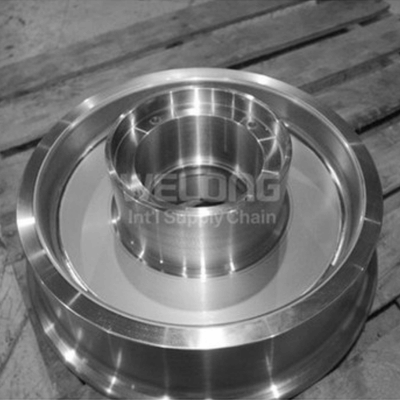

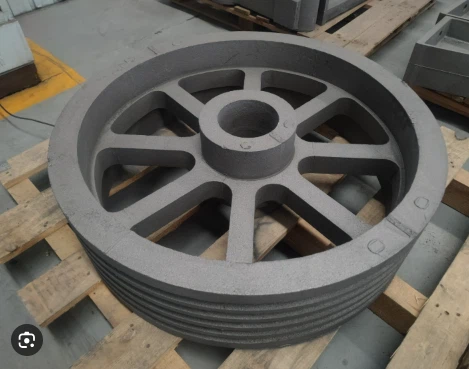
A Geneva wheel is a common mechanical transmission component, usually referring to a component of a Geneva mechanism. Together with a crank and a frame equipped with a round pin, it forms a stepped-motion Geneva mechanism, primarily used for intermittent transmission.
A "Geneva Wheel" is a grooved wheel. In practical applications, it typically refers to a key component in a Geneva mechanism that acts as a driven element, working with the crank and frame to achieve intermittent actuation and positioning.
Classification
Based on the position of the grooves, flat Geneva wheels can be divided into the following categories:
• Outer Geneva Wheel: The grooves extend outward from the center of the circle, and the driving and driven parts rotate in opposite directions. The fewer grooves, the lower the dynamic performance. • Inner Geneva Wheel: The grooves extend inward from the center of the circle, and the driving and driven parts rotate in the same direction, resulting in better dynamic performance than outer Geneva Wheels.
Operating Principle
Take the outer pulley mechanism as an example:
When the active dial with a round pin rotates continuously, if the round pin does not enter the pulley's radial groove, the pulley remains stationary due to locking by the dial's locking loop. When the round pin enters the groove, the locking loop is released, and the dial drives the pulley to rotate, producing unidirectional intermittent motion. When the round pin exits, the pulley is again locked by the locking loop, stopping the rotation. This cycle provides accurate and reliable intermittent transmission.
Operational Characteristics
Advantages
• Simple structure, easy to manufacture
• Reliable operation, high mechanical efficiency
• Precise control of rotation angle
• Smoother movement when engaging and disengaging than a ratchet mechanism
Disadvantages
• Angular velocity is not constant, resulting in soft impact
• Non-adjustable rotation angle, high acceleration when starting and stopping
• Not suitable for high-speed transmission, mainly used in medium- and low-speed applications
Application Industries and Typical Equipment
Grooved wheel mechanisms, due to their reliable intermittent indexing characteristics, are widely used in:
• Packaging machines (automatic packaging machines, cartoning machines)
• Printing machines (intermittent conveying and positioning)
• Food machines (filling machines, indexing turntables)
• Textile machines (intermittent feeding and transmission)
• Machine tools (automatic devices) Tool indexing)
• Automated assembly lines (intermittent part positioning and transfer)
Common Manufacturing Materials and Processes
To ensure the service life and accuracy of the grooved wheel transmission, the following materials and processes are commonly used:
• Alloy steel (such as 42CrMo, 20CrMnTi, 40Cr): Suitable for applications requiring high load capacity and wear resistance, often subjected to tempering, carburizing, and quenching.
• Ductile iron (such as QT500-7, QT600-3): Offers excellent vibration damping and machinability, suitable for medium- and low-speed equipment.
• Stainless steel (such as 304, 316): Suitable for industries requiring high corrosion resistance, such as food and pharmaceuticals.
The process typically involves forging + machining or casting + heat treatment + finishing, to ensure dimensional accuracy and wear resistance.
Technical Requirements for Grooved Wheels
• Dimensional Accuracy: The angle and position of the grooves must be strictly controlled to ensure indexing accuracy.
• Surface Hardness: The tooth groove surface typically needs to reach HRC 50 or higher to improve wear resistance.
• Coaxiality and Parallelism: Must meet standards to prevent jerking and binding.
• Fatigue Resistance: The material and heat treatment must ensure the absence of cracks, even under long-term intermittent motion.
Inspection Requirements and Plans
To ensure the consistent quality of grooved wheels, our commonly used inspection measures include:
1. Appearance Inspection: Check for defects such as cracks, pores, and holes.
2. Dimensional Inspection: Use calipers and, if necessary, coordinate measuring machines (CMMs) to measure critical dimensions and angles.
3. Hardness Inspection: Test the Surface and core quality to ensure heat treatment quality.
4. Non-Destructive Testing: Perform ultrasonic or magnetic particle testing, as needed, to ensure the presence of internal defects.
Summary
As an essential component of intermittent transmissions, grooved pulleys are widely used in the packaging, printing, food, textile, machine tool, and automation equipment industries. Our company can provide customized grooved pulley products, such as casting, forging, and finishing, according to customer drawings and needs. Through rigorous material selection, process control, and inspection programs, we ensure that our products meet the technical requirements of various industrial applications.