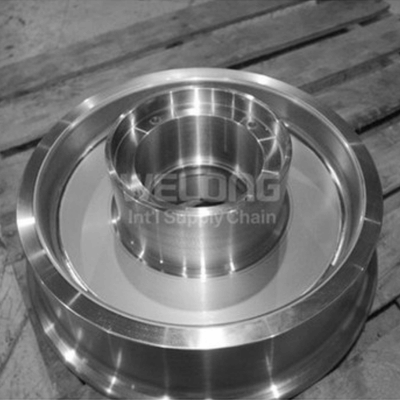

Stainless steel, a material known for its excellent corrosion resistance and strength, is widely used in various industrial fields. With the development of technology and industry, the types and applications of stainless steel have expanded, from traditional construction industries to modern high-tech industries. This article will explore stainless steel's classification, characteristics, and application industries in detail.
1. Classification of Stainless Steel
Stainless steel is an alloy containing at least 10.5% chromium, and its excellent corrosion resistance, high-temperature resistance, and mechanical properties make it a key engineering material. Stainless steel can be classified into the following types based on its microstructure and alloy composition:
1.1 Austenitic Stainless Steel
Austenitic stainless steel is the most common type, accounting for more than 60% of stainless steel production. It is characterized by a high content of chromium and nickel, which allows it to form a stable austenite microstructure at room temperature. This gives it good formability, weldability, and corrosion resistance. Austenitic stainless steel is generally non-magnetic and is widely used in environments that require high corrosion resistance with no concern for magnetic properties.
Common grades of austenitic stainless steel include 304 and 316. Type 304 is commonly used in kitchen equipment, food processing, and chemical industries, while type 316, due to its molybdenum content, offers superior corrosion resistance and is used in marine environments and high-salinity conditions.
1.2 Ferritic Stainless Steel
Ferritic stainless steel contains a high amount of chromium (10.5%–30%) but little or no nickel. It has good oxidation resistance and corrosion resistance, but its plasticity is lower than that of austenitic stainless steel, making it more difficult to process. It also has relatively poor weldability. Ferritic stainless steel is often used in automotive exhaust systems and household appliances.
A common grade of ferritic stainless steel is grade 430.
1.3 Martensitic Stainless Steel
Martensitic stainless steel contains a relatively high amount of carbon and a lower percentage of chromium (12%–18%). It has high hardness and strength but relatively lower corrosion resistance. Often, it requires surface treatments or coatings to improve its corrosion resistance. Due to its high hardness, martensitic stainless steel is commonly used to manufacture cutting tools, bearings, and other high-strength parts.
Common grades of martensitic stainless steel include 410 and 420.
1.4 Duplex Stainless Steel
Duplex stainless steel refers to alloys that contain both austenitic and ferritic phases, typically in a 50/50 ratio. This dual-phase structure provides a combination of high strength and excellent corrosion resistance. Duplex stainless steel also has better stress corrosion cracking resistance than austenitic types. It is widely used in chemical, oil, and gas industries.
A common grade of duplex stainless steel is 2205.
1.5 Precipitation-Hardening Stainless Steel
Precipitation-hardening stainless steel is a type of alloy that strengthens through the precipitation of certain alloying elements. It exhibits excellent strength, hardness, and corrosion resistance. These steels are typically used in high-performance applications, such as aerospace, nuclear, and military industries.
A common grade of precipitation-hardening stainless steel is 17-4 PH.
2. Characteristics of Stainless Steel
2.1 Excellent Corrosion Resistance
The primary advantage of stainless steel is its excellent corrosion resistance. The chromium content in stainless steel forms a stable chromium oxide layer on the surface, which protects the material from further oxidation. Different types of stainless steel offer varying levels of corrosion resistance. For example, austenitic stainless steels, duplex stainless steels, and grade 316 stainless steel exhibit excellent resistance to corrosion in aggressive environments, such as seawater, acids, and alkalis.
2.2 High Strength and Heat Resistance
Stainless steel not only offers high strength but also excellent high-temperature resistance, maintaining its mechanical properties at elevated temperatures. Austenitic stainless steel, in particular, is resistant to high-temperature oxidation, making it a valuable material in industries like chemical engineering and aerospace.
2.3 Good Processability and Weldability
Stainless steel is easy to process and can undergo various forming processes such as cutting, stamping, and drawing. Additionally, it has good weldability, and after welding, its mechanical properties and corrosion resistance are typically maintained at a high level, making it suitable for a wide range of welding techniques.
2.4 Aesthetic and Hygienic Qualities
Stainless steel has a clean, attractive appearance and is easy to clean, making it ideal for environments that require high hygiene standards, such as food processing and medical equipment. Its resistance to rust and staining makes it a durable and aesthetically pleasing material in various applications.
3. Application Industries of Stainless Steel
3.1 Food Processing and Pharmaceutical Industries
Due to its excellent corrosion resistance, hygienic properties, and ease of cleaning, stainless steel is indispensable in the food processing and pharmaceutical industries. It is commonly used in food processing equipment, pharmaceutical storage tanks, and medical devices. For example, type 304 stainless steel is widely used in food processing machinery and pharmaceutical containers.
3.2 Chemical and Petroleum Industry
The chemical and petroleum industries often require materials that can withstand harsh environments, such as high temperatures and aggressive chemicals. Stainless steel, particularly grade 316 and duplex stainless steel, is used in chemical reactors, storage tanks, pipelines, and heat exchangers due to its excellent corrosion resistance and mechanical properties in demanding conditions.
3.3 Automotive Industry
In the automotive industry, stainless steel is used primarily for exhaust systems, structural components, and engine parts. Its high resistance to corrosion and ability to perform well in high-temperature and high-moisture environments make it a vital material for automotive manufacturing.
3.4 Construction and Architectural Applications
Stainless steel is widely used in the construction industry for structural support, facades, cladding, and kitchen equipment. It is also commonly used in architectural applications such as handrails, staircases, and decorative elements due to its aesthetic appeal and durability. In residential and commercial construction, stainless steel offers low-maintenance, corrosion-resistant solutions for appliances, fittings, and surfaces.
3.5 Aerospace Industry
In the aerospace sector, stainless steel is used extensively for manufacturing components that require high strength, durability, and heat resistance. It is commonly used for engine parts, structural components, and high-performance parts for aircraft and spacecraft. Stainless steel meets the stringent requirements for materials used in the aerospace industry due to its ability to withstand extreme temperatures and mechanical stresses.
4. Conclusion
Stainless steel, with its unique combination of corrosion resistance, high strength, heat resistance, and ease of processing, is a crucial material in various industries, including food processing, chemical engineering, construction, automotive, and aerospace. As technology continues to advance, the range of stainless steel types and applications will continue to grow, and its role in high-tech fields is expected to expand further in the future.
If you need any Stainless Steel parts, please feel free to contact us at any time.
Annie Wong: welongwq@welongpost.com
WhatsApp: +86 135 7213 1358