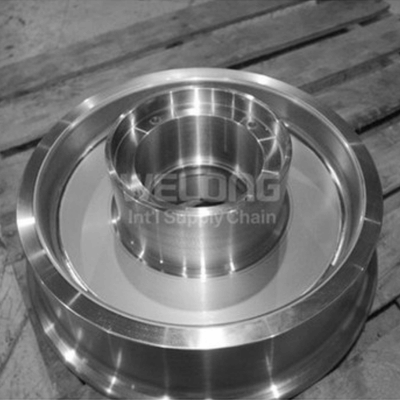

Heat treatment is a technique widely used in industry and manufacturing that applies heat and cooling to materials to improve their performance, durability and characteristics. During the heat treatment process, the grain size and shape of the material will change, the phase structure will be adjusted, and the internal stress will be eliminated, thereby significantly improving the hardness, strength, toughness and corrosion resistance of the material. Changes in these properties are affected by a variety of factors, the most significant of which are mass effect, shape effect, and size effect. This article will explore these three effects in depth in order to provide theoretical guidance for the application of heat treatment technology.
1. Mass Effect
Mass effect is the most intuitive effect in the heat treatment process, and it mainly originates from the difference in mass (or size) of the parts being processed. Under the same heat treatment conditions, materials of different qualities will show completely different heat treatment results. The mass effect is particularly significant during the quenching process. The thicker the diameter of the steel piece, the more difficult it is to quench through; while the smaller the diameter, the easier it is to quench through. This phenomenon is attributed to differences in heat transfer rates and cooling rates within the material.
The size of the mass effect, that is, the degree of difference in performance changes of materials of different masses after heat treatment, is closely related to the hardenability of the material. Steels with good hardenability, such as chromium-molybdenum steel and nickel-chromium-molybdenum steel, have less mass effect and can be hardened even for large-sized parts. Steels with poor hardenability, such as carbon castings, have a larger mass effect, and the quenching effect decreases significantly as the size of the part increases. Therefore, by optimizing the hardenability of the material, the mass effect can be effectively reduced and the consistency and stability of the heat treatment can be improved.
To improve mass effect, several measures can be taken. For example, adding boron, manganese, molybdenum, chromium and other alloying elements can effectively improve the hardenability of steel, allowing large-size parts to achieve good quenching effects. In addition, optimizing heat treatment process parameters, such as heating temperature, holding time and cooling rate, can also reduce the mass effect to a certain extent.
2. Shape Effect
Shape effect is another important effect in the heat treatment process, which mainly originates from the shape difference of the processed parts. Different shapes will affect the heat conduction and cooling rate of the material, resulting in different heat treatment results. For example, bar stock, plate material and spherical parts will show different quenching effects under the same heat treatment conditions.
The influence of shape effect on heat treatment results is reflected in many aspects. First, parts of different shapes will produce different thermal stress distributions during the cooling process, thus affecting the mechanical properties and microstructure of the material. Secondly, the shape effect will also affect the heat conduction rate and cooling rate of the material, thereby affecting the hardness and strength of the material.
In order to reduce the influence of shape effects on heat treatment results, the following measures can be taken. First, pre-process the parts before heat treatment, such as heating homogenization, surface treatment, etc., to reduce the impact of shape differences on the heat treatment results. Secondly, optimize the heat treatment process parameters, such as heating temperature, holding time and cooling method, to adapt to the heat treatment needs of parts of different shapes. Finally, advanced heat treatment equipment and technologies, such as vacuum heat treatment, ion nitriding, etc., are used to improve the consistency and stability of heat treatment.
3. Size effect
The size effect is a relatively complex effect in the heat treatment process. It mainly stems from the impact of size differences on the material properties of the processed parts. During heat treatment, the mechanical properties of the material are not only determined by the material, but also affected by the shape and size. Typically, as a material's size increases, its mechanical strength decreases, with corresponding changes in properties such as fatigue strength, tensile strength, and wear resistance.
The influence of size effect on heat treatment results is mainly reflected in the following aspects. First, the increase in size will lead to an increase in internal defects and uneven distribution of the material, thereby affecting the mechanical properties and microstructure of the material. Secondly, the size effect will also affect the heat conduction and cooling rate of the material, thereby affecting the hardness and strength of the material. In addition, size effects may also cause defects such as deformation and cracking of materials during heat treatment.
In order to reduce the impact of size effect on heat treatment results, the following measures can be taken. First, precise dimensional measurement and quality control are performed on the parts before heat treatment to ensure that the dimensions of the parts meet the design requirements. Secondly, optimize the heat treatment process parameters, such as heating temperature, holding time and cooling method, to adapt to the heat treatment needs of parts of different sizes. Finally, advanced heat treatment equipment and technologies, such as laser heat treatment, electron beam heat treatment, etc., are used to improve the consistency and stability of heat treatment.
In conclusion
Mass effect, shape effect and size effect are three important effects in the heat treatment process. Together they affect the heat treatment results and performance of the material. In order to obtain good heat treatment results, it is necessary to fully consider the influence of these three effects and take corresponding measures for optimization and control. By optimizing the hardenability of materials, pretreating parts, optimizing heat treatment process parameters, and using advanced heat treatment equipment and technology, the impact of these three effects on heat treatment results can be effectively reduced and the consistency and stability of heat treatment can be improved. This will help promote the widespread application and development of heat treatment technology in industry and manufacturing.