


If you need to produce a large, heavy metal part, the way you produce it will have an impact on cost, lead time, and performance. Generations have relied on sand casting parts as a reliable option because the technique can accommodate sizes and weights that most other processes cannot, while keeping tooling costs low. Sand cast metal is used when strength and scale are important, such as engine blocks, machine bases, and pump housings. This book shows why the method is particularly ideal for big components, how it saves money, where it is utilized, and how buyers may confidently pick the proper provider.
Sand Casting Parts: Size, Material Options, and Design Flexibility
Almost No Practical Size Limit
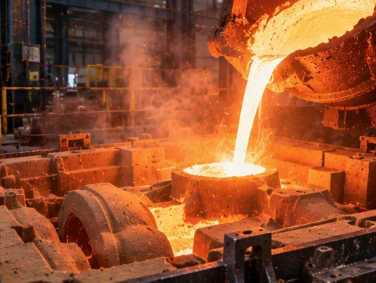
One of the main benefits of sand casting parts is the scale. Molds are made of compacted sand; therefore, the mold may be as big as the foundry's floor area and pouring capability will allow. Typically manufactured parts range from a few kilos to several tons. This makes the technique a suitable alternative for huge housings, frames, and bases that are beyond the economic reach of other technologies.
A Wide Range of Metals and Alloys
Sand is extremely refractory; hence, sand-cast parts may be poured in gray iron, ductile iron, carbon steel, alloy steel, stainless steel, aluminum, and copper-based alloys. "That independence allows engineers to choose a material based on strength, wear resistance, corrosion behavior, or weight, rather than the technique. It also allows easy alloy changes between various projects.
Freedom to Shape Complex Designs
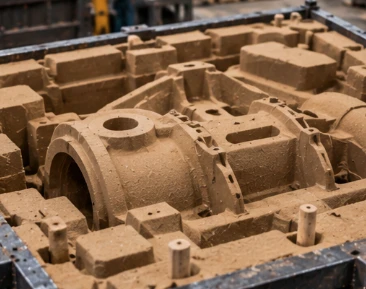
Cores may be added to sand molds to create hollow parts, interior chambers, and tunnels. Thus, sand casting pieces may be made with several characteristics to make a single piece, eliminating welding, fasteners, and assembly time. Designers may add ribs, bosses, and curved surfaces where strength is required, producing parts that are efficient and sturdy in service.
How Do Sand Casting Parts Reduce Tooling Costs for Large Components?
Affordable Patterns Instead of Expensive Dies
Die casting needs very expensive steel dies. Sand casting parts use patterns made of wood, resin, or aluminum. These patterns may be produced at significantly less expense, particularly in large quantities, and can be changed rapidly when a design is altered. This facilitates the production of prototypes, small quantities, and bespoke orders.
Lower Investment for Low to Medium Volumes
Large components are not often ordered by the million. Sand casting parts generally provide the optimum compromise between tooling investment and unit pricing for batches of a few pieces to a few hundred. Buyers don't want to spread large die costs across a limited amount. Budgets stay predictable, and it's much simpler to get projects approved.
Faster Lead Times and Easy Design Changes
Sand casting parts may go from design to first sample in a hurry because it takes less time to build a pattern than it does to cut a hardened die. If the pattern has to be changed, the initial sample may be redone at little expense. This flexibility helps keep development on time and eliminates the danger of costly redesigns later on.
Sand Casting Parts for Heavy Machinery, Housings, and Industrial Equipment
Heavy Machinery and Construction Equipment
Excavators, loaders, and crushers rely on thick, rugged parts that can withstand stress and vibration. Iron and steel castings provide great strength and wear resistance. Sand casting elements like counterweights, brackets, and gear housings are ideal for these needs. Large sizes may be made, helping manufacturers keep designs simple and robust.
Pump, Valve, and Gearbox Housings
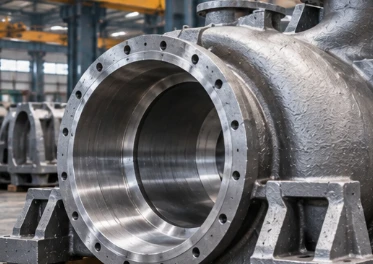
Fluid handling and power transmission systems sometimes need intricate internal channels inside a sturdy exterior shell. These forms may be cast directly in sand casting parts, minimizing machining and leak spots. Pump casings, valve bodies, and gearbox housings are typical examples. These are frequently utilized in oil drilling, water treatment, and general industrial applications.
Machine Bases, Frames, and Custom Industrial Parts
Machine tools and industrial systems need sturdy, vibration-damping foundations. Sand cast parts in gray and ductile iron are renowned for their vibration-damping characteristics, which help keep equipment accurate. In addition to conventional forms, bespoke castings produced from client designs or samples enable manufacturers to get the precise component they need for their equipment.
How Should Buyers Choose Sand Casting Parts for Large Metal Components?
Define Material, Size, and Performance Needs
Specify clearly the alloy, weight, dimensions, mechanical qualities, and working conditions. The more detailed your requirements, the simpler it is for a supplier to suggest appropriate sand casting parts and provide you with an exact price. Include drawings, projected yearly volume, and any standards or certifications your company needs.
Evaluate Foundry Capability and Quality Control
Not every foundry does every size or alloy, so inquire about their capacity to pour, equipment, and inspection techniques. Sand casting parts from trusted vendors are supplied with material certifications, dimensional reports, and non-destructive testing when applicable. Quality systems such as ISO 9001 offer further assurance that every order will meet the quality set.
Consider Machining, Finishing, and Supply Chain Support
Large castings usually require machining, heat treatment, or surface polishing before they can be used for assembly. Partnering with a vendor that can do these steps means less coordination work and faster delivery. A supplier with effective supply chain management can handle quality, packing, and shipping, which makes sourcing sand casting parts simpler across borders.
Conclusion
Sand casting parts provide a cost-effective way to produce massive metal components with infinite size, wide material variety, and cheap tooling costs. They are suitable for heavy machinery, housings, and industrial equipment while allowing design freedom for complicated designs. For success, customers should know exactly what they need and purchase from a provider with a demonstrated capacity to regulate quality and do finishing work. Start your next casting project with a seasoned partner now.
FAQ
1. Why are sand casting parts good for large components?
Sand molds can be made very large, and tooling costs stay relatively low.
2. Which metals can be used?
Iron, steel, stainless steel, aluminum, and copper alloys are all common.
3. Are sand casting parts suitable for small batches?
Yes, affordable patterns make low and medium volumes economical.
4. Can sand cast parts be machined afterward?
Yes, machining and heat treatment are often added to meet final tolerances.
5. What should I send when requesting a quote?
Drawings or samples, material, quantity, and any required standards.
Start Your Sand Casting Project With China Welong
Founded in 2001, China Welong is an international supply chain partner for customized metal products, offering supplier development, purchasing supervision, and quality control under ISO 9001:2015. We produce from your drawings or samples, and our engineers can design drawings using AutoCAD, Pro-Engineering, and SolidWorks. Our customers span Europe, North America, and Asia-Pacific. If you need reliable sand casting parts, email your requirements to metal@welongpost.com, and our team will respond quickly with practical advice and a clear quotation.
References
1. Campbell J. Complete Casting Handbook. Butterworth-Heinemann; 2011.
2. ASM International. ASM Handbook, Volume 15: Casting. ASM International; 2008.
3. Kalpakjian S, Schmid SR. Manufacturing Engineering and Technology. Pearson.
4. Groover MP. Fundamentals of Modern Manufacturing: Materials, Processes, and Systems. Wiley.
5. Beeley P. Foundry Technology. Butterworth-Heinemann; 2001.
6. Stefanescu DM. Science and Engineering of Casting Solidification. Springer; 2015.


