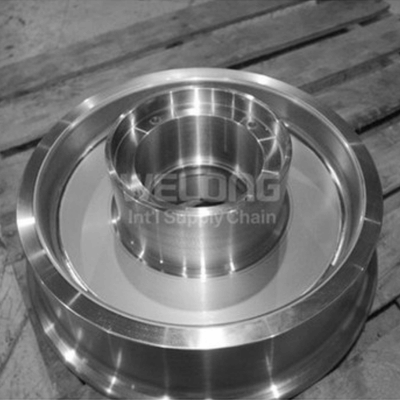

In fields where broken parts can cause major problems, structural stability is not something that can be compromised. Aluminium has long been valued for its low density and natural resistance to rust. However, the qualities of the raw material do not decide how well a finished part works when it is loaded. Because aluminium is so light, the aluminium forging process is what turns it into parts that can meet the strictest structural standards. Forging shapes metal under controlled pressure and temperature to make parts with smooth microstructures, uniform mechanical qualities, and a strength-to-weight ratio that is hard to match by other methods of production. This piece shows why experts in the car, military, and industrial sectors continue to use cast metal for uses that need to be strong.
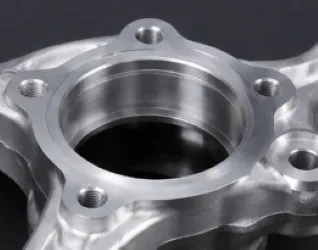
Why Aluminium Forging Outperforms Casting in Structural Parts
Eliminating Internal Defects
The very act of casting involves risk. When liquid metal hardens in a mould, flaws like shrinking holes, gas porosity, and cold shuts can appear inside the part. These flaws are hard to find and don't always have the same effect on strength. These problems don't happen at all in the metal shaping process. When metal is worked while it is still solid, any holes that are there are filled, and no new ones can form. The result is a thick, defect-free part that engineers and testers can trust to work as planned, without any secret weak spots that might only show up when the part is in use.
Consistent Mechanical Properties Across the Part
Property variation is an ongoing problem with casts. Depending on how fast each area cooled during solidification, different parts of the same part can have significantly different hardness, tensile strength, and flexibility. When metal is forged, the features of the whole part are much more regular because the distortion is applied evenly and the grain structure is evened out while the part is being worked on. This consistency lets engineers build with more trust and smaller error gaps for structural uses where safety factors are based on minimum predicted performance. This leads to lighter and more efficient systems.
Better Surface Finish and Dimensional Accuracy
Forgings have better surface quality when they come out of the die than moulds, so they need less cutting after the process to get to their final size. Tighter size limits are possible in the as-forged state of the metal forging process, which cuts down on cutting stock and speeds up production cycles. For companies that make a lot of structural braces, flanges, or housings, this means lower costs per unit and more uniform assembly fit-up. When standards are kept tight from one part to the next, assembly processes go more smoothly and fail rates go down.
The Role of Forging in Enhancing Aluminium Component Reliability
Improved Fatigue Life
When parts are loaded and unloaded over and over, like in aircraft wing attachments, suspension arms, or pump housings, they are more likely to break because of fatigue than static pressure. By making a fine, uniform grain structure with few inclusions and a smooth shift between mathematical features, the aluminium forging process directly improves wear performance. During forging, compression work is done on the metal. This creates helpful leftover pressures at the surface that stop cracks from starting. When compared directly, forged metal parts always have longer wear lives than cast or machined-from-billet peers, and the differences are often quite large.
Enhanced Impact and Shock Resistance
When structural parts are loaded, they aren't always loaded slowly. Collisions, pressure spikes, and quick changes in the load can all cause shock loads that can break materials that aren't tough enough. When metal is forged, it forms a worked structure with long grains and a fine second-phase distribution that is good at absorbing energy when it hits something. This toughness benefit is especially useful for crash structures in cars, where being able to bend and absorb kinetic energy is just as important as being strong. When engineers choose cast metal for these uses, they are choosing a material system, not just a material, that has been made better by the process of making it.
Long-Term Dimensional Stability
Forged metal parts stay the same size over time better than cast parts, especially when they are heated and cooled or loaded for a long time. The process of forging metal gets rid of the leftover stresses that come from casts that solidify unevenly. These stresses can cause parts to warp when they are made or heated afterwards. Dimensional stability is not a nice-to-have for precision systems that need to keep the same gaps over many years of use, like hydraulic valve bodies or aeroplane structure fittings. It cuts down on the number of times that old parts need to be shimmied, realigned, or replaced.
How Grain Flow and Microstructure Affect Structural Integrity
Understanding Grain Flow in Forgings
Grain flow is the way that the metal's crystal structure lines up in a certain direction as it is shaped during the aluminium forging process. When metal is forged, the shape of the die is planned so that the grain flow lines follow the shape of the finished part. They wrap around stress points like edges and holes so they don't get cut through by later cutting. Because the grains are arranged in a certain way, the part's strongest direction is parallel to the main stress path. This makes forged metal parts more structurally efficient than parts made by cutting the same shape from a block of material.
Microstructural Refinement Through Deformation
It is the thermomechanical work that is done during the forging process of metal that breaks down the coarse as-cast grain structure of the billet and replaces it with fine, evenly distributed grains. This improved microstructure raises the yield strength, final tensile strength, and fracture toughness all at the same time. How refined something is depends on the temperature, strain rate, and overall distortion of the casting. These are all things that experienced process engineers carefully control to get the desired mechanical qualities. Forging is a great way to work with alloys like 2024, 6061, and 7075 because it lets you get mechanical properties that are much higher than what you can get by casting.
Heat Treatment Synergy
The forging method for metal works with the heat treatment that comes after to get the end property profile that the product needs. After solution heat treatment and ageing (for example, in a T6 or T73 temper), the microstructure of the cast metal is fine-tuned and precipitation-hardened to its highest strength. Because the formed grain structure is smooth and doesn't separate as moulds do, the way it reacts to heat treatment is always the same and can be predicted. This means that every forged metal part in a production run will meet the same hardness and strength goal, batch after batch. Manufacturers that care about quality count on this level of repetition.
Industrial Applications That Rely on Aluminium Forging
Aerospace Structural Components
The aerospace industry may be the toughest place for metal forgings to work. Parts of the body, the wing spars, the landing gear, and the bulkheads must all meet strict approval standards for strength, stress life, and material tracking. Most of these parts are made using the aluminium forging process, which is approved by aircraft officials because it produces parts that are light, strong, and have proven material purity. From the chemistry of the block to the final review, every step is controlled and recorded. This helps provide the full material approval paperwork that aircraft customers need.
Automotive and EV Suspension Systems
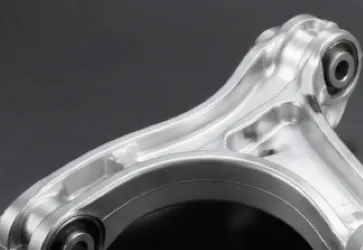
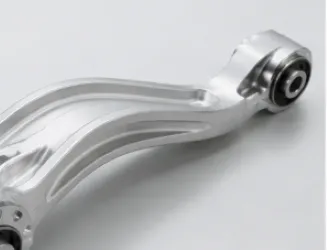
As cars get lighter to use less gas and have longer electric ranges, more and more suspension and steering parts are made of aluminium forgings instead of steel. Forging aluminium makes parts like control arms, steering knuckles, and wheel hubs that are as strong as steel but only about a third of the weight. Because the car industry needs to make a lot of parts, forging is also a good way to save money because, once the cost of the tools is paid for, forged parts can be made quickly and regularly in large quantities. As the move toward electric cars speeds up around the world, the need for lightweight cast metal structure components keeps going up.
Oil, Gas, and Industrial Equipment
In the oil and gas industry, parts like valves, pump bodies, pipelines, and pressure vessels must be able to handle high pressure, changing temperatures, and media that is often acidic. The casting method for metal makes parts that are dense and strong enough to hold up under pressure for long periods of time without leaking or cracking from wear and tear. Suppliers who know how to make unique metal goods for industry, like China Welong, have worked with companies in the oil drilling industry since 2001, so we know what they need in terms of paperwork, material tracking, and quality control. We also have ISO 9001:2015 certification and technical help for making special parts.
Conclusion
The aluminium forging process is important for structural integrity because it fixes the problems that lead to parts breaking-porosity, inconsistent properties, bad grain orientation, and low fatigue resistance-during the manufacturing process, instead of inspecting or over-engineering them later on. Forged metal always works better than other materials when dependability is most important in aircraft, automobile, and industry settings. China Welong has more than 20 years of experience providing custom-made forged parts to customers in the UK, USA, Germany, Australia, and other places. They have the technical skills and quality control system to support difficult forged metal projects from the initial design to delivery.
FAQ
What aluminium alloys are most commonly used in the forging process?
The most widely forged aluminium alloys include 2024, 6061, 6082, and 7075. Each offers a different balance of strength, corrosion resistance, and machinability. Alloy selection depends on the application - aerospace structural parts typically use 7075 for maximum strength, while automotive and general industrial components often use 6061 or 6082 for their good combination of strength, weldability, and surface finish.
How does the aluminium forging process differ from aluminium casting?
Forging shapes solid aluminium under compressive force, refining the grain structure and eliminating internal voids. Casting pours molten metal into a mould, which risks porosity and uneven solidification. Forged parts consistently show better strength, fatigue life, and dimensional stability than cast parts of the same alloy and geometry.
Can aluminium forgings be produced to custom drawings and specifications?
Yes. Experienced manufacturers like Welong produce aluminium forgings to customer-supplied drawings and samples. Engineering teams using AutoCAD, Pro-Engineering, and Solidworks can also develop or refine drawings on the customer's behalf, ensuring the finished forging meets both functional and dimensional requirements.
What quality certifications should a forged aluminium supplier hold?
At minimum, suppliers should hold ISO 9001 certification, which demonstrates a documented quality management system covering material sourcing, process control, and inspection. For aerospace customers, additional certifications such as AS9100 may be required. Material test reports, dimensional inspection records, and non-destructive testing documentation are also standard expectations for structural aluminium forgings.
How does heat treatment affect the final properties of aluminium forgings?
Heat treatment after forging - typically solution treatment followed by artificial ageing (T6 temper) - precipitation-hardens the alloy to its peak strength. Because the forged microstructure is uniform and free of the segregation found in castings, the aluminium forging process ensures that heat treatment response is consistent and predictable, ensuring that every part in a production run meets the same mechanical property targets.
Ready to Source High-Quality Aluminium Forgings? Contact Welong Now
Choosing the right manufacturing partner for structural aluminium forgings is just as important as choosing the right alloy. China Welong has been supplying customised forged metal components to over 100 customers across the USA, UK, Germany, France, Italy, Australia, and beyond for more than 20 years. ISO 9001:2015 certified, engineering-capable, and quality-focused from raw material to final inspection, Welong is ready to support your next project. Send your drawings or technical requirements to info@welongpost.com today, and let our team deliver the forged aluminium solution your application demands.
References
1. ASM International. (2008). ASM Handbook, Volume 14A: Metalworking: Bulk Forming. ASM International, Materials Park, Ohio.
2. Kalpakjian, S., & Schmid, S. R. (2014). Manufacturing Engineering and Technology (7th ed.). Pearson Education, Upper Saddle River, New Jersey.
3. Dieter, G. E. (1988). Mechanical Metallurgy (3rd ed.). McGraw-Hill, New York.
4. Totten, G. E., & MacKenzie, D. S. (Eds.). (2003). Handbook of Aluminium, Volume 1: Physical Metallurgy and Processes. Marcel Dekker, New York.
5. Doege, E., & Behrens, B.-A. (2010). Handbuch Umformtechnik: Grundlagen, Technologien, Maschinen (2nd ed.). Springer, Berlin. [Referenced for forging process fundamentals applicable to aluminium alloys.]
6. The Aluminium Association. (2020). Aluminium Alloy Temper and Designation Systems. The Aluminium Association, Arlington, Virginia.