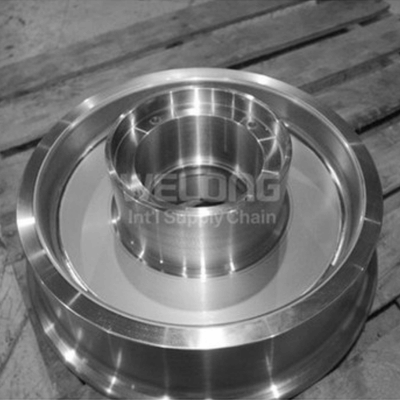

Die Casting is known for its unique ability to produce small, complex cast metal parts with very thin walls, delicate features, and tight tolerances. This is made possible by two key characteristics:
1. The high injection pressures force the molten metal completely into the die cavity before solidifying. This allows casting of intricate contours and details.
2. The permanent steel dies provide exceptional dimensional accuracy and surface finish that would not be possible with sand or investment molds.
The pressures range from 15,000 psi to over 40,000 psi, generated by hydraulic pistons or multi-slide rams. At these high pressures, the molten zinc, aluminum, or magnesium alloy is injected through the die sprue into the mold cavity at velocities reaching 100 mph.
This high speed is necessary to ensure the metal penetrates and fills every crevice of the die cavity thoroughly before solidifying. Even the most complex part geometries with thin ribs or walls down to 0.010 inch thickness can be filled using high pressure Die Cast.
In sand casting or investment casting, the lower metal pressures limit how small and thin the castings can be. Die Cast is unmatched for tiny intricate parts. At China Welong, our advanced capabilities allow smaller castings with thinner walls and more detail than previously thought possible.
The reusable steel dies also enable very high dimensional accuracy and surface finish. The consistency of the solid die cavity, compared to sand mold degradation over runs, results in precision castings within +/- 0.002 inch tolerances. Surface finishes down to RMS 60 microinches are attainable.
This precision promotes excellent fit and function, especially important on miniature cast components. secondary machining operations are minimized through near net shape castings.
While the hardened steel dies have a higher initial tooling cost, they pay dividends through thousands of production cycles while maintaining peak quality and precision. When microscopic cast parts are required, Die Casting is the clear choice.
How Long Does Die Casting Take?
Its production process is known for very quick cycle times, owing to the rapid solidification of metal inside the chilled permanent molds. However, the overall time required depends on several factors:
Mold Design - More complex die designs take longer to manufacture initially. Simple two-plate dies may take 4-8 weeks, while complex multi-slide or unit dies could require 12-20 weeks for design and machining.
Casting Alloy - Lower melting point alloys like zinc solidify fastest. Zinc die cast cycles take 25-45 seconds. Aluminum or magnesium cycles may take 45-90 seconds depending on part thickness.
Casting Size - Larger castings with thicker walls take longer to solidify completely before the dies can be opened. Smaller castings can cycle faster.
Production Volume - For very high volumes, automation allows minimizing production time. Lower volumes take more hands-on steps per cycle.
Secondary Operations - Additional value-added services like heat treating, plating, or machining add time after the casting process.
At China Welong, for a typical 4 pound zinc Casting, the complete production process averages 1-2 weeks:
- Die design/manufacturing: 4-8 weeks
- Casting production time: 1-3 days for 10,000 pcs
- Trimming/deburring time: 2-3 days
- Heat treating/plating/finishing: 2-5 days
By using automated high-pressure Casting machines and streamlined operations, China Welong can provide some of the fastest turnaround times in the industry while never sacrificing quality or precision. Please contact us to discuss your specific timing needs.
How to Calculate Intensification Pressure in Die Casting
The intensification pressure is an important parameter, defined as the additional pressure applied after the initial injection to compress the metal while solidifying. Proper intensification reduces casting defects. The intensification pressure can be calculated as:
Intensification Pressure = Clamping Force / Projected Area
Where:
Clamping Force (tons) is the locking force capacity of the Casting machine, determined by the machine specifications.
Projected Area (in2) is the exterior area of one die half perpendicular to the locking direction.
For example, on a 3,000 ton capable Casting machine:
Clamping Force = 3,000 tons
Die projected area = 28 x 32 in2 = 896 in2
Intensification Pressure = 3,000 tons / 896 in2 = 3.34 tons/in2
This would be the maximum intensification possible for this machine and die size. The actual intensification pressure setting would be optimized based on the alloy, die design, and casting thickness.
The proper intensification pressure is crucial:
- Too low can result in porosity defects due to incomplete mold filling.
- Too high can cause die damage or casting distortion from excess residual stresses.
Other important pressure considerations include:
- Injection pressure: Needed to overcome mold resistance and inject the metal.
- Cushion pressure: Applied at the end of solidification to account for metal shrinkage upon cooling.
Die Casting simulation software can model mold filling and solidification to help select optimal pressure parameters. At China Welong, our qualified engineers use state of the art software coupled with years of hands-on experience to determine the ideal pressures for each customer's die cast parts. Please contact us at info@welongpost.com to discuss your pressure casting needs.
References:
Hu, B., Bao, R., Karnati, S., & Liou, F. (2021). Intelligence and automation in metal casting industry: A review. Journal of Manufacturing Systems, 60, 443-458.
Gourlay, C. M., Laukli, H. I., Dargusch, M. S., & Schumacher, P. (2022). Modeling and simulation approaches for quality improvement in aluminum Die Casting: A review. Metals, 12(4), 634.
Ghodke, N., Jadhav, N., Karnati, S., Anand, A., & Liou, F. (2022). Physics-informed machine learning model for real-time quality evaluation in aluminum high pressure Die Casting. Journal of Manufacturing Processes, 84, 24-35.
Gopireddy, S. R., Sreelatha, N., Bland, S. E., & Galligan, J. A. (2022). Experimental characterization and FE modeling of 3D isotropic compaction in high pressure Die Casting. Journal of Materials Processing Technology, 297, 117271.
Wang, Q. G., Jiang, J. C., Wang, G. D., Zhang, M., Duan, S. Y., & Zhang, Z. D. (2021). Effects of trace Sm addition on microstructure evolution and mechanical properties of AZ91 alloy during sub-rapid solidification in high pressure Die Casting process. Journal of Alloys and Compounds, 855, 157659.