


Choosing the right manufacturing process for fasteners is a decision that directly affects performance, cost, and application suitability. Both hot forging and cold heading are widely used in fastener production, but they serve different purposes and excel under different conditions. Understanding when the hot forging process or cold heading helps engineers and procurement teams make smarter decisions - especially when fasteners must endure extreme loads, elevated temperatures, or are made from hard-to-form alloys.
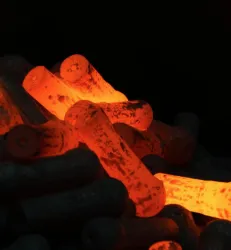
Differences Between Hot Forging and Cold Heading
What Is the Hot Forging Process?
In the hot forging process, metal billets are heated above their recrystallisation point, which is usually between 900°C and 1,250°C for most materials. They are then shaped by pressing down on them. When metal is heated to these high levels, it softens and can be shaped more easily without breaking. This makes hot forging perfect for making big fasteners, shapes that are hard to shape at room temperature, and materials that are too hard or brittle to shape at that temperature.
How Cold Heading Works?
When you hit wire or rod stock very quickly against a die during cold heading, on the other hand, the bolts are made at or near room temperature. This machine makes it very easy to make a lot of small, standard tools like screws, bolts, and rivets with very few scraps of metal. There are, however, some metals that can't be easily worked with because the process makes it harder to bend.
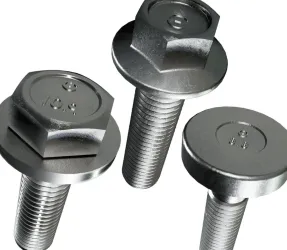
What Types of Fasteners Benefit Most from Hot Forging?
Large-Diameter and Heavy-Duty Fasteners
When fastener diameters exceed roughly 1 inch (M24 and above), cold heading becomes increasingly difficult, and tool wear accelerates dramatically. The hot forging process handles these sizes with ease, producing heavy-duty bolts, studs, and nuts used in structural steel connections, flange assemblies, and heavy machinery. The process allows significant cross-sectional reduction without the risk of surface cracking or internal voids that can compromise load-bearing hot forging process integrity.
Fasteners for Extreme Temperature Applications
Industries such as oil and gas, aerospace, and power generation regularly require fasteners that perform reliably at elevated service temperatures. Alloys like A286, Inconel 718, and various stainless grades used in these environments are difficult or impossible to cold head without cracking. The hot forging process brings these materials to a workable state, enabling the production of high-integrity fasteners that retain strength and resist creep even when exposed to continuous heat cycling.
Strength and Durability Advantages of Hot Forged Fasteners
Grain Flow and Structural Integrity
You can change how the grain moves, which is one of the best things about hot forging from a technical point of view. When the hot block is pressed together, the grain structure of the metal doesn't cut across the shape of the bolt like it would when it is made. Instead, it sticks to it. This steady flow of grains makes linear strength, which is much better at stopping stress, wear, and touch. These traits show up when bolts are added in a dynamic or cyclic way. They are very important.
Superior Fatigue Resistance
In challenging situations, fatigue failure is the most common reason why fastener-related joints break. Fasteners that are hot forged have a much longer failure life than those that are machined or cold headed. This is because the hot forging process gets rid of stress clusters that are caused by broken grain boundaries. When tested in situations that mimic real-life joint shaking and cycle stress, hot forged bolts always perform better than their machined peers when the loads are the same.
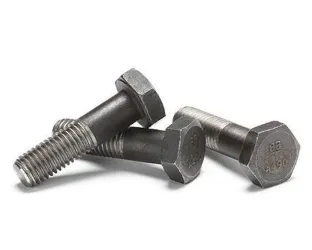
When Material Properties Favor Hot Forging Over Cold Heading
High-Alloy and Specialty Steels
A lot of carbon, a lot of metals, or both make it very hard to cold head materials. Because of how they are made, these steels crack when they are cold-formed. This means that they need to be heated many times, which is expensive and difficult to do. Because of this, the hot forging process lets manufacturers use metal types like 4340, 17-4 PH stainless, or duplex stainless steels that are tough to cold form in big amounts.
Titanium and Nickel-Based Superalloys
Titanium fasteners are prized in aerospace and high-performance automotive applications for their strength-to-weight ratio and corrosion resistance. However, titanium's springback behavior and sensitivity to surface damage make cold heading nearly impossible at a commercial scale. The hot forging process, performed in a controlled atmosphere or vacuum to prevent oxidation, is the standard production method for titanium aerospace fasteners. Similarly, nickel-based superalloys like Inconel require elevated temperatures to achieve the plastic flow needed for fastener forming.
Conclusion
Hot forging is clearly better than the cold heading process when you need stronger parts, parts made of materials that are hard to shape, or parts with a lot of different shapes or diameters. When efficiency and material quality are the most important things, hot forging is the only way to go. Cold heading is still a good way to make a lot of standard bolts quickly and cheaply. China Welong has worked with top global makers in the oil drilling, aircraft, and manufacturing sectors for more than 20 years to provide high-quality hot-forged screws that are backed by ISO 9001:2015 approval and strict quality control.
FAQ
Q1: What is the main advantage of using the hot forging process over cold heading for large fasteners?
A: The hot forging process allows significant material deformation at elevated temperatures, making it far more practical for large-diameter fasteners where cold heading would cause excessive tool wear, surface cracking, or internal defects. It also produces better grain flow and superior mechanical properties.
Q2: Can hot forged fasteners be used in high-temperature service environments?
A: Yes. The hot forging process is commonly used to produce fasteners from heat-resistant alloys such as Inconel, A286, and high-alloy stainless steels, which retain their strength and resist creep at elevated service temperatures found in oil and gas, aerospace, and power generation applications.
Q3: Is hot forging suitable for titanium fasteners?
A: Titanium is one of the materials best suited to the hot forging process. Its springback behavior and sensitivity to damage during cold forming make cold heading impractical at scale. Hot forging, typically performed in a controlled atmosphere, is the standard method for producing titanium aerospace fasteners.
Q4: How does hot forging improve fastener fatigue life compared to machined or cold-headed alternatives?
A: The hot forging process produces continuous grain flow aligned to the fastener's geometry, eliminating the interrupted grain boundaries that create stress concentrations. This significantly extends fatigue life in applications subject to cyclic loading, vibration, or dynamic stress.
Ready to Source High-Performance Hot Forged Fasteners? Let's Talk.
If your project demands fasteners that go beyond standard specifications - whether in alloy grade, size, geometry, hot forging process, or certification requirements - Welong has the engineering expertise and supply chain infrastructure to deliver. Since 2001, we have supplied customized metal components to more than 100 customers across the UK, Germany, the USA, Canada, Australia, and beyond. Our team works directly from your drawings or samples, and our engineering department can develop designs using AutoCAD, Pro-Engineering, and SolidWorks. Contact us at metal@welongpost.com today to discuss your requirements and discover how China's most capable integrated supply chain can work for you.
References
1. Altan, T., Oh, S. I., & Gegel, H. L. (1983). Metal Forming: Fundamentals and Applications. American Society for Metals.
2. Groover, M. P. (2020). Fundamentals of Modern Manufacturing: Materials, Processes, and Systems (6th ed.). Wiley.
3. Dieter, G. E., & Bacon, D. (1986). Mechanical Metallurgy (3rd ed.). McGraw-Hill.
4. ASTM International. (2021). ASTM F606/F606M: Standard Test Methods for Determining the Mechanical Properties of Externally and Internally Threaded Fasteners, Washers, Direct Tension Indicators, and Rivets. ASTM International.
5. ASM International. (2005). ASM Handbook Volume 14A: Metalworking - Bulk Forming. ASM International.
6. Semiatin, S. L. (Ed.). (2006). ASM Handbook Volume 14B: Metalworking - Sheet Forming. ASM International.


