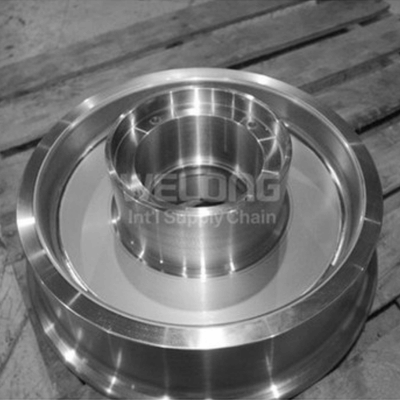

The following stresses will be generated when the casting solidifies:
Casting thermal stress
Causes of casting thermal stress
Casting structure and size factors
Wall thickness difference: The wall thickness of each part of the casting is different. The thick wall dissipates heat slowly and the cooling and shrinkage lags behind. The thin wall cools quickly and shrinks first. The thin wall part that cools quickly will produce tensile stress on the thick wall part, and the thick wall part will produce compressive stress on the thin wall part, thus forming thermal stress.
Complex shape: Castings with complex shapes, such as those with bosses, ribs and other structures, are mutually constrained and cannot be carried out freely during cooling and shrinkage. The shrinkage of different parts affects each other, resulting in thermal stress.
Differences in thermal physical properties of materials
Material characteristics of castings: Different casting materials have different thermal physical properties such as thermal conductivity and specific heat capacity. Materials with high thermal conductivity dissipate heat quickly and shrink quickly when cooling; materials with low thermal conductivity are the opposite. This difference in thermal physical properties will lead to different cooling speeds in different parts of the casting, which will in turn produce thermal stress.
Influence of casting materials: The thermal properties of casting materials will also affect the cooling process of castings. If the thermal conductivity of the casting is large, the surface of the casting in contact with the casting will dissipate heat quickly, while the internal heat will dissipate heat slowly, causing a temperature difference between the surface and the inside of the casting, forming thermal stress.
Cooling conditions and environmental factors
Uneven cooling medium: During the cooling process, if the cooling medium (such as air, water, etc.) is unevenly distributed around the casting, it will cause different cooling speeds in different parts of the casting. For example, when air-cooled, the windward side of the casting cools quickly and the leeward side cools slowly, thus producing thermal stress.
Changes in ambient temperature: The ambient temperature in the foundry is unstable. During the cooling process of the casting, the fluctuation of ambient temperature will affect the heat dissipation speed of the casting, causing inconsistent cooling and shrinkage of various parts of the casting, resulting in thermal stress.
Impact of thermal stress of castings on casting quality
Causes deformation
Thermal stress will cause uneven shrinkage of the casting during the cooling process, thus causing deformation of the casting. For example, in some flat castings, thermal stress generated by different cooling speeds of the surface and the center may cause the flat plate to warp and deform, affecting the dimensional accuracy and appearance quality of the casting, and increasing the difficulty and cost of subsequent processing.
Cause cracking
When the thermal stress exceeds the strength limit of the casting material, the casting will crack. Thermal cracks are usually formed at high temperatures in the late solidification period, with tortuous shapes, wide gaps, and oxidized colors on the surface. Cold cracks are formed at lower temperatures due to the superposition of thermal stress and phase change stress. The cracks are small, continuous and straight, and there is no oxidized color on the surface. Cracks will seriously reduce the mechanical properties and sealing of the casting, making the casting waste.
Reduce mechanical properties
Thermal stress will cause microscopic defects inside the casting, such as lattice distortion and dislocations. These defects will hinder the movement of dislocations and reduce the strength and toughness of the material. At the same time, thermal stress may also cause uneven internal structure of the casting, further reducing the comprehensive mechanical properties of the casting, and it is easy to be damaged at the stress concentration when bearing loads.
Causes residual stress
If the thermal stress generated during the solidification process is not completely released, it will exist in the casting in the form of residual stress. Residual stress will cause the casting to be dimensionally unstable due to stress redistribution during subsequent processing and use, affecting the assembly accuracy and performance of the parts. In addition, residual stress will be superimposed on the working stress, reducing the fatigue strength and stress corrosion resistance of the casting.
Phase change stress of castings
Causes of the formation of phase change stress in castings:
Alloy phase change characteristics
Specific volume change: When the alloy undergoes phase change during solidification, the specific volumes of different phases are usually different. For example, in iron-carbon alloys, when austenite transforms to martensite, the martensite specific volume is large, and volume expansion occurs during phase change. If the phase changes of various parts of the casting are not synchronized, the expansion of the first phase-changed part will produce compressive stress on the non-phase-changed part, and the non-phase-changed part will produce tensile stress on the phase-changed part, thereby forming phase change stress.
Latent heat of phase change: The latent heat of phase change will be released or absorbed during the phase change, which will affect the local temperature field of the casting. The release of latent heat of phase change will increase the temperature of the part, slow down the cooling rate, and the cooling difference with the surrounding parts will lead to inconsistent shrinkage, which will then produce phase change stress.
Difference in cooling conditions
Different cooling rates: When cooling different parts of the casting, the cooling rates are different due to different heat dissipation conditions. The phase change of the part with fast cooling is completed first, and the phase change of the part with slow cooling is delayed. This asynchronicity of phase change causes uneven volume changes inside the casting, thereby generating phase change stress. For example, the surface of the casting cools quickly, while the inside cools slowly. The phase change of the surface and the inside is not synchronized, which will lead to phase change stress.
Temperature gradient effect: There is a temperature gradient inside the casting, and the alloy phase change process in different temperature zones is different. The phase change in the high temperature zone is delayed, and the phase change in the low temperature zone is carried out first. The order of phase change causes interaction between the parts, forming phase change stress.