


Industrial pumps are essential equipment across industries such as oil and gas, mining, chemical processing, power generation, and water treatment. At the heart of every pump is the pump casing, a critical component that supports the internal assembly, directs fluid flow, and withstands pressure throughout the pumping process. As operating environments become more demanding, selecting the right pump casing has become increasingly important for improving efficiency, reliability, and service life. But what is a pump casing, and how do material selection, manufacturing processes, and design influence its performance? This guide explains everything you need to know, from pump casing functions and manufacturing methods to materials, applications, and key considerations for choosing the right pump casing for your project.
What is a pump casing
The pump casing is an important pump component, usually made of a metal material, which is used to protect the internal components of the pump and provide a stable working environment. A pump casing is the outer shell of a pump that encloses and protects its internal components while providing the passage for fluid to flow through the pump. It serves as the primary structural component, housing key parts such as the impeller, shaft, seals, bearings, and wear rings, and ensuring they operate safely and efficiently under pressure.
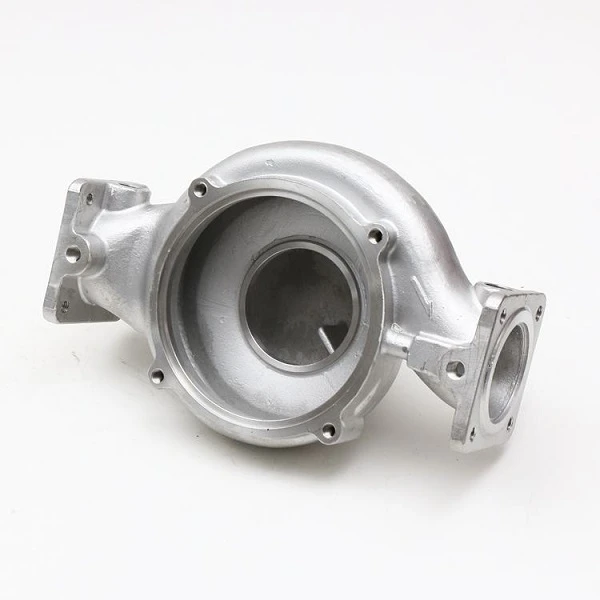
Structure of Pump Casing
It is usually composed of two parts, the front casing and the rear casing, and may also have other auxiliary parts such as inlet and outlet flanges, observation holes, etc. The front shell and the rear shell are connected together by bolts or welding to form a closed cavity. The inside of it contains various flow channels and seals to ensure that the pump can deliver liquid efficiently.
Pump Casing Parts
A pump casing is more than just the outer shell of a pump-it forms the structural foundation that supports and protects the pump's rotating and stationary components. Together with the impeller, shaft, sealing system, and bearings, the pump casing creates a sealed hydraulic chamber that allows fluid to move efficiently while maintaining pressure and minimizing energy loss.
The exact configuration of pump casing parts varies depending on the pump type, but most centrifugal pumps share several essential components that work together to ensure reliable operation.
| Pump Casing Part | Function |
|---|---|
| Casing Body (Volute or Diffuser) | Forms the main pressure boundary of the pump, directs liquid flow, and converts fluid velocity into pressure. |
| Suction Nozzle | Allows fluid to enter the pump smoothly while minimizing inlet turbulence and cavitation. |
| Discharge Nozzle | Delivers the pressurized fluid to the piping system after energy conversion inside the casing. |
| Wear Ring | A replaceable component that maintains the proper clearance between the impeller and casing, reducing internal leakage and improving hydraulic efficiency. |
| Seal Chamber (Stuffing Box or Mechanical Seal Housing) | Houses the sealing system to prevent process fluid from leaking along the rotating shaft. |
| Bearing Housing Interface | Supports shaft alignment by connecting the casing with the bearing assembly, helping reduce vibration and extending equipment life. |
| Casing Cover or Back Cover | Provides access to internal components for inspection, maintenance, and replacement while maintaining pressure integrity. |
| Mounting Feet or Flanges | Secure the pump to its baseplate and connect the casing to the piping system, ensuring structural stability during operation. |
Each of these components plays a critical role in the pump's hydraulic performance. For example, wear rings are widely recognized as sacrificial parts that reduce internal recirculation between the impeller and casing. Maintaining proper wear ring clearance is essential for preserving pump efficiency and reducing energy consumption. Likewise, the volute casing is specifically designed with a gradually expanding flow passage that converts the high fluid velocity generated by the impeller into pressure, improving overall hydraulic efficiency.
In demanding industries such as oil and gas, mining, chemical processing, power generation, and water treatment, pump casing parts are often exposed to high pressure, elevated temperatures, corrosive media, and abrasive particles. Critical components-including the casing body, wear rings, seal chambers, and casing covers-are therefore manufactured with tight dimensional tolerances and wear-resistant materials to ensure long service life, reliable sealing, and reduced maintenance costs. Studies have shown that excessive wear on pump casings and related hydraulic components can significantly reduce pump efficiency and shorten equipment lifespan, particularly in abrasive slurry applications.
Pump Casing Types

The pump casing type is one of the most important design factors affecting a pump's hydraulic efficiency, pressure capability, maintenance requirements, and overall service life. Different casing designs are engineered to optimize fluid flow, reduce energy losses, and meet the demands of specific operating conditions. Selecting the appropriate pump casing type helps improve system reliability, minimize downtime, and maximize long-term operating performance.
Below are the most common pump casing types used in industrial centrifugal pumps.
| Pump Casing Type | Description | Typical Applications |
|---|---|---|
| volute pump casing | The most common casing design features a spiral-shaped chamber that gradually increases in cross-sectional area. It converts fluid velocity into pressure while maintaining smooth flow. | Water treatment, HVAC, chemical processing, industrial pumping |
| Diffuser Casing | Uses stationary diffuser vanes surrounding the impeller to convert kinetic energy into pressure with higher hydraulic efficiency than a volute casing. | High-pressure pumps, boiler feed pumps, and power plants |
| Axially Split Casing | The casing is split horizontally along the shaft centerline, allowing easy maintenance without disconnecting the piping system. | Water supply, irrigation, fire protection, and municipal pumping stations |
| Radially Split Casing | Split perpendicular to the shaft, providing excellent sealing strength for high-pressure and high-temperature applications. | Oil & gas, petrochemical, refinery, pipeline transportation |
| Single Casing | A conventional pressure-retaining casing is used in most standard centrifugal pumps for general industrial applications. | General manufacturing, water transfer, and agriculture |
| Double Casing (Barrel Casing) | Consists of an inner pressure casing enclosed by an outer barrel casing, designed for extremely high-pressure service and enhanced operational safety. | Boiler feed systems, offshore platforms, and power generation |
volute pump casing
The volute casing is the most widely used pump casing design. Its spiral-shaped flow passage gradually expands from the impeller outlet, allowing the high-velocity liquid to slow down while converting kinetic energy into pressure. This design offers excellent hydraulic performance, simple construction, and cost-effective manufacturing, making it suitable for the majority of centrifugal pump applications.
Diffuser Casing
A diffuser casing incorporates stationary guide vanes around the impeller. These vanes gradually reduce fluid velocity and recover pressure more efficiently than a conventional volute casing. Diffuser casings are commonly used in multistage centrifugal pumps where high efficiency and stable flow characteristics are essential.
Axially Split Casing
An axially split casing, also known as a horizontal split casing, separates along the pump shaft centerline. This design enables maintenance personnel to inspect or replace internal components without removing the suction and discharge pipework, significantly reducing maintenance time and operating costs.
Radially Split Casing
A radially split casing is separated perpendicular to the shaft axis, providing superior structural rigidity and pressure containment. This design is commonly selected for high-pressure services involving elevated temperatures or hazardous fluids, where leak prevention and mechanical strength are critical.
Double Casing
A double casing, often referred to as a barrel casing, consists of two pressure-retaining housings. The inner casing handles the process fluid, while the outer casing provides an additional layer of pressure containment and mechanical protection. This configuration is widely used in critical services such as boiler feed pumps and high-pressure hydrocarbon transportation.
Selecting the appropriate pump casing type depends on several engineering factors, including operating pressure, flow rate, fluid properties, temperature, maintenance accessibility, and industry standards. A well-designed casing not only improves hydraulic efficiency but also enhances equipment reliability, extends service life, and reduces lifecycle costs in demanding industrial environments.
What is the purpose of the pump casing?
1. Protect internal components: The shell of the pump has good rigidity and corrosion resistance, which can effectively protect internal mechanical parts, such as impellers and bearings, from erosion and damage by external substances.
2. Support and Fixation: It provides a support frame that allows the pump's internal components to be properly installed and positioned for proper operation and efficiency.
3. Reduce vibration and noise: It can absorb and reduce the vibration and noise generated during pump operation, providing a relatively quiet and stable working environment.
Pump Casing Material
The ideal material depends on the characteristics of the pumped medium, operating conditions, and industry standards. Below are some of the most commonly used materials for industrial pump casings.
| Pump Casing Material | Key Advantages | Typical Applications |
|---|---|---|
| Cast Iron | Excellent machinability, good wear resistance, and cost-effective | Water supply, HVAC, irrigation, and general industrial pumps |
| Ductile Iron | Higher strength and impact resistance than cast iron | Municipal water systems, mining, and wastewater treatment |
| Carbon Steel | High mechanical strength and pressure resistance | Oil & gas, petrochemical, industrial process pumps |
| Stainless Steel (304/316) | Outstanding corrosion resistance and hygienic properties | Chemical processing, food & beverage, pharmaceutical, seawater systems |
| Duplex Stainless Steel | Superior corrosion resistance, especially against chlorides, with excellent mechanical strength | Offshore, marine, desalination, and chemical plants |
| High-Chrome Cast Iron | Exceptional abrasion and erosion resistance | Slurry pumps, mining, mineral processing, and dredging |
| Bronze | Excellent resistance to seawater corrosion and biofouling | Marine pumps, cooling water systems, and shipbuilding |
| Nickel-Based Alloys | Outstanding resistance to high temperatures and highly corrosive chemicals | Power generation, chemical processing, offshore applications |
Materials of construction
The manufacturing material of it is usually made of metal, which has high strength and corrosion resistance. Common materials of manufacture include:
1. Carbon Steel: Carbon steel is a common material with good mechanical properties and weldability. However, carbon steel is susceptible to corrosion, so further precautions are required when handling corrosive liquids.
2. Stainless Steel: Stainless steel pump casings have excellent corrosion resistance and can be used in a wide range of industrial applications. Stainless steel can be made of different grades of materials according to specific needs, such as 304, 316, etc., to adapt to different working environments.
3. Cast Iron: Cast iron has good corrosion resistance and rigidity and is suitable for most industrial applications. It also has low cost and good wear resistance, which can meet the needs of some small and medium-sized pumps.

Finally, the design and manufacturing process also directly affect the performance of the pump. Reasonable design can reduce the eddy, turbulence, and pressure loss of the fluid in the pump, and improve the efficiency and flow of the pump. In addition, the manufacturing process of it also needs to ensure its surface smoothness and dimensional accuracy, so as to reduce friction and energy loss and improve the reliability and maintainability of the pump. It should be noted that when selecting the material, it is necessary to comprehensively consider factors such as the working conditions of the pump, liquid properties, and environmental requirements.
Application of Pump Casing
It is widely used in liquid transfer systems in many different fields. Here are some common applications:
1. Industrial fields: It can be widely used in liquid conveying systems in chemical, petroleum, papermaking, electric power, and other industries to convey various media, such as chemicals, crude oil, wastewater, etc.
2. Construction field: In the construction field, it can be commonly used in liquid circulation systems such as water supply systems, drainage systems, and air-conditioning systems to provide stable water flow and pressure.
3. Agricultural field: Water pumps in agricultural irrigation systems usually also need to protect internal components and ensure smooth water flow.
The pump casing is one of the main components of the pump. It has the following Importance:
1. Protection of internal components: It acts as the casing of the pump and protects the internal components from the external environment. It prevents particles, dust, liquids, etc. from entering the pump, thereby reducing wear and damage to internal components.
2. Provide stable support: It is usually made of strong materials, which can provide a stable support structure so that the pump can maintain stable operation during work. The design and manufacturing quality of them are directly related to the performance and life of the pump.
3. Guiding and positioning: It also serves to guide and position the internal rotating parts. Through reasonable design and processing, the rotor and other components can run in the correct position, so as to ensure the normal operation of the pump.
4. Fluid Control: The interior of it usually contains inlet and outlet pipes and chambers to guide the ingress and flow of fluids. The design of the it can affect the flow velocity, pressure, and direction of the fluid, so as to realize the control of the fluid.
5. Heat Dissipation: In some pump applications, heat is generated due to fluid friction and the operation of internal components. It is usually designed to have a heat dissipation function, which can effectively dissipate heat to maintain the normal operating temperature of the pump.
To sum up, the pump casing is a critical component that protects internal pump parts, supports stable operation, and contributes to the long-term reliability of the pumping system. Proper material selection and precision man
ufacturing are essential to ensure consistent performance under different operating conditions. As an experienced manufacturer, Welong provides customized pump casing solutions based on customer requirements. We accept pump casing drawings and technical specifications for custom manufacturing, helping customers select suitable materials and develop pump casings that meet their specific application and performance requirements.Email:metal@welongpost.com
Reference Sources
ScienceDirect: Practical Machinery Management for Process Plants – Explains the functions of pump casing wear rings, hydraulic clearances, and the relationship between casing design and pump efficiency.
ScienceDirect Topics: Impeller Vane – Provides detailed information on centrifugal pump components, including casing rings, impeller wear rings, and sealing arrangements.
ScienceDirect: Experimental Investigation of Centrifugal Slurry Pump Casing Wear Handling Solid-Liquid Mixtures – Discusses pump casing wear mechanisms, erosion behavior, and their effects on service life and reliability.
ScienceDirect: Erosion Wear on Centrifugal Pump Casing Due to Slurry Flow – Analyzes how erosion affects pump casing performance and hydraulic efficiency under abrasive operating conditions.
Frequently Asked Questions (FAQs)
FAQ
Q: Why are wear rings needed between an impeller and the pump casing?
A: Wear rings are installed between the impeller and pump casing to maintain a controlled clearance and reduce internal fluid leakage from the high-pressure side to the low-pressure side. They also act as replaceable wear components, helping protect the more expensive impeller and pump casing while maintaining pump efficiency.
Q: How do impeller pumps work?
A: Impeller pumps, commonly known as centrifugal pumps, use a rotating impeller to transfer mechanical energy to the fluid. The fluid enters near the center of the impeller, accelerates outward through the rotating vanes, and then enters the pump casing, where the flow is collected and directed toward the discharge outlet.
Q: What are the three main parts of a pump?
A: The three main parts of a typical centrifugal pump are the impeller, pump casing, and shaft. The impeller transfers energy to the fluid, the casing contains and directs the fluid flow, and the shaft connects the impeller to the pump's drive system.
Q: What is the casing and impeller wear ring?
A: Casing and impeller wear rings are replaceable components installed at close-clearance areas between the stationary pump casing and rotating impeller. Their primary purpose is to minimize internal leakage and protect major pump components from excessive wear. When the clearance increases due to wear, the rings can be replaced to help restore pump performance.
Q: What are the different types of pump casings?
A: Common pump casing types include volute casings, diffuser casings, axially split casings, radially split casings, single casings, and double or barrel casings. The appropriate design depends on factors such as pump type, operating pressure, flow requirements, maintenance needs, and application conditions.
Q: What is the function of a casing?
A: The main function of a pump casing is to contain the pumped fluid, guide fluid flow, and provide a pressure-resistant enclosure around the pump's internal components. In centrifugal pumps, the casing also works with the impeller to support efficient pressure recovery and direct the fluid toward the discharge outlet.


