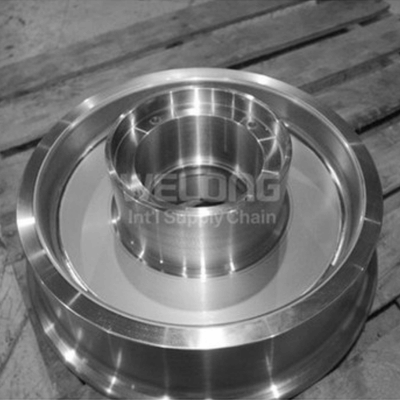

Hot-Dip Galvanizing and Dacromet are two commonly used protective processes for metal surfaces, widely applied in fields such as machinery, construction, and transportation to enhance the corrosion resistance of steel products. Below is a detailed introduction to these two processes.
I. Hot-Dip Galvanizing
1. Process Principle of Hot-Dip Galvanizing
Hot dip galvanizing is achieved by immersing steel products in molten zinc to form a layer of zinc coating on their surface, in order to prevent corrosion and enhance durability. This process utilizes the excellent corrosion resistance of zinc and its ability to form alloys with iron at high temperatures to provide protection for steel substrates.
2. Advantages of Hot-Dip Galvanizing
Excellent Corrosion Resistance: The zinc layer effectively prevents air, water, and other corrosive substances from attacking the steel.
Cost-Effective: The process is relatively low-cost, suitable for mass production.
Strong Wear Resistance: The zinc layer is relatively thick, offering good wear resistance.
Protective Role: The zinc layer acts not only as a physical barrier but also provides cathodic protection, offering protection when the coating is damaged.
Mature Technology: The technology is well-developed and suitable for steel structures of various shapes and sizes.
3. Disadvantages of Hot-Dip Galvanizing
Rough Surface: The surface after hot-dip galvanizing is relatively rough, making it unsuitable for products with high aesthetic requirements.
High-Temperature Deformation: Processing in high-temperature zinc liquid may cause deformation of thin or complex structural parts.
Environmental Impact: The hot-dip galvanizing process generates waste gases and residues that can impact the environment.
4. Application Areas of Hot-Dip Galvanizing
Construction Engineering: Steel structures, guardrails, scaffolding, etc.
Transportation: Bridges, road facilities, traffic signal poles, etc.
Power and Communications: Power towers, communication towers, solar supports, etc.
Agricultural Equipment: Greenhouse frames, fences, trellises, etc.
Household Appliances: Refrigerator back panels, washing machine drums, etc.
II. Dacromet
1. Process Principle of Dacromet
Dacromet is a non-electrolytic zinc coating technology that involves mixing zinc powder, aluminum powder, and chromate compounds into a coating applied and sintered on the metal surface at low temperatures (around 300°C), forming a dense composite coating.
2. Advantages of Dacromet
Strong Corrosion Resistance: Exhibits excellent resistance to salt spray and chemical corrosion, far superior to traditional galvanizing.
Good Environmental Friendliness: Dacromet coatings do not contain heavy metal chromium, having less environmental impact and complying with environmental regulations.
Smooth Surface: The coating surface is smooth, suitable for products with high aesthetic requirements.
No Deformation: The low-temperature process does not cause deformation of the substrate.
High-Temperature Stability: Exhibits good high-temperature resistance, suitable for use in high-temperature environments.
3. Disadvantages of Dacromet
Complex Process: The Dacromet process is relatively complex, requiring strict process control and equipment.
Higher Cost: Compared to hot-dip galvanizing, Dacromet has higher material and process costs.
Thinner Coating: The coating is relatively thin and may be less durable than hot-dip galvanizing in environments with strong mechanical wear.
4. Application Areas of Dacromet
Automotive Industry: Bolts, nuts, brake systems, etc.
Aerospace: Aircraft parts.
High Corrosion Environments: Chemical equipment, marine engineering, etc.
III. Comparative Summary
|
Characteristic |
Hot-Dip Galvanizing |
Dacromet |
|
Corrosion Resistance |
Excellent, thick zinc layer |
Superior, resistant to salt spray and chemical corrosion |
|
Appearance |
Rough, not suitable for high aesthetic requirements |
Smooth, suitable for high aesthetic requirements |
|
Environmental Impact |
Has environmental impact |
Eco-friendly, complies with environmental regulations |
|
Cost |
Lower |
Higher |
|
High-Temperature Performance |
Average, high temperatures may cause zinc layer volatilization |
Excellent, suitable for high-temperature environments |
|
Applicable Uses |
Construction, transportation, and other large structural components |
Automotive, aerospace, and other high-precision parts |
IV. Selection Recommendations
Hot-dip galvanizing is suitable for scenarios that require strong wear resistance and economical large-scale production, such as construction and transportation facilities.
Dacromet is suitable for high-end manufacturing fields that require extremely high corrosion resistance, environmental protection, and refined appearance, such as the automotive and aerospace industries.
By combining actual needs and budget, selecting the appropriate anti-corrosion coating technology can effectively extend product life and meet specific functional and aesthetic requirements.
If you need any metal parts, please feel free to contact us at any time
Annie Wong: welongwq@welongpost.com
WhatsApp: +86 135 7213 1358