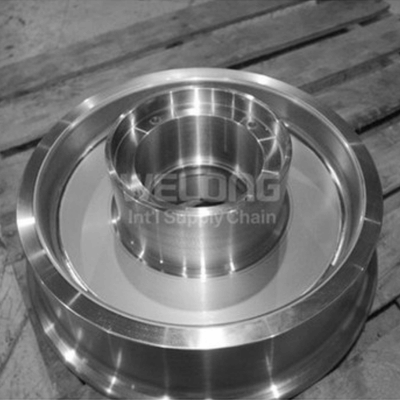

Castings and forgings are indispensable manufacturing processes that play a vital role in modern industry. From automotive and aerospace to construction, energy, and heavy machinery, castings and forgings are found in almost every sector that relies on high-performance, durable metal components. The versatility, strength, and precision of these processes have made them foundational in producing complex and robust parts. As industries evolve with technological advancements, castings and forgings are also experiencing transformations that will shape their future.
Wide Application of Castings and Forgings in Modern Industry
Automotive Industry The automotive sector is one of the largest consumers of castings and forgings, where they are essential in producing critical components such as engine blocks, transmission parts, suspension systems, and crankshafts. Castings, particularly aluminum and iron castings, are widely used for their ability to create complex shapes with excellent heat resistance and strength. Aluminum castings, for instance, are key in producing lightweight automotive components, which help reduce vehicle weight and improve fuel efficiency.
Forged components, such as connecting rods and crankshafts, are used in automotive engines due to their superior mechanical properties, including high fatigue strength and resistance to wear. As the demand for electric vehicles (EVs) grows, the need for lightweight, high-strength forged parts will increase to support the development of more efficient powertrains and battery systems.
Aerospace Industry In the aerospace industry, precision, strength, and material integrity are critical due to the extreme conditions under which aircraft operate. Castings and forgings are used extensively in the production of jet engine components, landing gear, turbine blades, and structural airframe parts. Titanium and aluminum alloys are commonly used in aerospace castings for their high strength-to-weight ratio, while forgings are preferred for their ability to withstand high temperatures and mechanical stress.
Aerospace manufacturers often rely on closed-die forging to produce parts that meet the exacting safety and performance standards required for flight. As the aerospace industry continues to innovate with more fuel-efficient engines and advanced materials, castings and forgings will remain integral in producing the high-performance parts necessary for modern aircraft.
Energy and Power Generation The energy sector, particularly oil, gas, and power generation industries, demands components that can endure extreme environments, high pressures, and corrosive conditions. Forged parts, such as valves, flanges, and fittings, are essential in oil and gas pipelines for their strength and reliability. Turbine blades and rotors used in power generation are often forged to ensure they can withstand the high temperatures and rotational stresses in gas and steam turbines.
Castings are also crucial in energy infrastructure, particularly in the production of large-scale components like wind turbine housings, hydroelectric dam parts, and nuclear reactor vessels. The durability and customization possible with casting processes make it ideal for these large, complex parts.
Construction and Heavy Machinery Castings and forgings are indispensable in the construction and heavy machinery industries. Cast steel and iron are widely used to produce structural components, gears, and bearings for excavators, cranes, bulldozers, and mining equipment. These parts must be able to withstand constant heavy loads and impacts, which is why both casting and forging are preferred manufacturing methods for this sector.
Forgings, due to their superior mechanical properties, are often used for critical safety components such as axles, shafts, and hooks in lifting machinery. The ability to manufacture large and durable parts ensures that these machines can perform reliably under harsh operating conditions.
Defense and Military Applications The defense industry relies heavily on castings and forgings for producing a wide range of military hardware, from armored vehicles to aircraft and naval vessels. Components such as tank tracks, gun barrels, and missile systems are often forged to meet stringent durability and performance standards. The precision and strength of forgings make them ideal for applications where reliability is non-negotiable.
Castings are also widely used in defense applications for producing complex and high-strength parts that need to withstand harsh environments and impacts, such as armor plating and vehicle chassis.

Future Trends in Castings and Forgings
Advanced Materials and Lightweighting One of the major trends shaping the future of castings and forgings is the demand for lightweight yet strong materials. As industries such as automotive and aerospace strive for greater fuel efficiency and performance, the focus on developing and using advanced materials like aluminum, magnesium, and titanium alloys will increase. These materials offer an ideal balance of strength and weight, making them suitable for critical components in EVs and modern aircraft.
Additionally, hybrid materials, which combine metals with other materials like carbon fiber, are being explored to enhance performance and reduce weight. This trend will likely push innovations in both casting and forging processes to accommodate these materials while maintaining high precision and strength.
Automation and Digitalization The integration of automation and digitalization is revolutionizing the casting and forging industry. Advanced manufacturing technologies such as computer-aided design (CAD), 3D printing, and computer numerical control (CNC) machining are enabling greater precision and efficiency in the production of cast and forged components.
In casting, technologies like 3D sand printing and metal additive manufacturing are being used to create complex molds and prototypes more quickly and with fewer errors. In forging, automation is streamlining processes to improve quality control and reduce production times. These advancements are also facilitating the customization of parts, allowing manufacturers to produce tailored components more cost-effectively.
Sustainability and Eco-Friendly Manufacturing As industries focus on reducing their environmental impact, the casting and forging sectors are embracing more sustainable practices. This includes using recycled materials, improving energy efficiency in production, and reducing waste in the manufacturing process. For instance, advancements in closed-loop forging processes, where excess material is reused, help minimize material waste.
Additionally, there is increasing interest in developing eco-friendly materials that maintain the strength and durability required for industrial applications but have a lower carbon footprint. These sustainability efforts will not only reduce the environmental impact of manufacturing but also align with global initiatives to combat climate change.
Increased Demand for Customization and Complex Components As industries such as aerospace, automotive, and defense continue to develop more sophisticated technologies, the demand for highly customized and complex components will rise. Castings and forgings will need to evolve to meet these requirements, pushing the boundaries of what can be achieved in terms of part complexity and performance.
3D printing and additive manufacturing technologies will play a significant role in enabling this trend, allowing for the production of parts with intricate geometries that would be difficult or impossible to achieve with traditional methods. This will also shorten lead times and lower production costs for custom parts.
Conclusion
Castings and forgings are foundational to modern industrial applications, providing the strength, durability, and precision needed for high-performance components across various sectors. As industries evolve, the demand for advanced materials, customization, automation, and sustainability will shape the future of casting and forging technologies. With ongoing advancements, these processes will continue to play a critical role in driving innovation and efficiency in modern industry.
Please contact joy@welongpost.com directly for any inquiry .