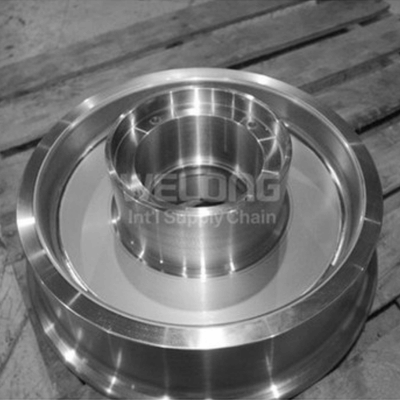

Castings and forgings are fundamental components in the manufacturing of heavy machinery. From construction equipment and mining machinery to agricultural tools and industrial machinery, these metal parts play a crucial role in ensuring the durability, strength, and overall performance of the equipment. Understanding the importance of castings and forgings in this field not only highlights their contribution to industrial progress but also sheds light on the reasons behind their widespread use in heavy-duty applications.
The Role of Castings and Forgings in Heavy Machinery
Structural Integrity and Load-Bearing Capacity
Heavy machinery often operates under extreme conditions, dealing with high loads, harsh environments, and frequent use. In such applications, the structural integrity of components is critical. Castings and forgings are designed to provide exceptional strength and durability, making them ideal for heavy-load-bearing parts. Forged components, for instance, have a fine grain structure that enhances their mechanical properties, including toughness and fatigue resistance. These properties allow forged parts to withstand intense stress and wear without failing, which is essential in heavy machinery.
Castings, on the other hand, are versatile in shape and size, enabling the production of large and complex parts that are often impossible to create using other methods. This makes them essential for creating components such as engine blocks, frames, and housings in heavy machinery. Cast iron, for example, is widely used for its excellent compressive strength, while steel castings provide a good balance between strength and ductility, making them suitable for parts that experience both heavy loads and impacts.
Precision and Customization
Heavy machinery requires precision-engineered components to function effectively. Castings and forgings allow manufacturers to create parts with specific dimensions, tolerances, and mechanical properties, tailored to the machinery's operational needs. Forging processes, such as open-die forging and closed-die forging, enable the creation of parts with exceptional accuracy and minimal waste, ensuring that the finished product meets stringent quality standards.
Casting methods, such as sand casting and investment casting, allow for the production of intricate shapes and large parts with complex geometries. These methods are highly customizable, meaning that manufacturers can create specialized components for unique machinery applications. This level of precision and customization is crucial in heavy machinery, where even small deviations in part dimensions can lead to reduced performance, wear, and potential breakdowns.
Material Versatility
Both castings and forgings can be produced from a wide variety of materials, each selected for its specific properties based on the machinery's requirements. For example, steel and iron are commonly used for their strength and wear resistance, while aluminum and titanium are chosen for lighter-weight components that still need to maintain a high degree of durability.
The ability to choose from different materials allows manufacturers to optimize the performance of their machinery. In some cases, a part may need to be lightweight but strong, as in the case of certain agricultural machinery or automotive applications. In other cases, such as mining equipment, the emphasis may be on using materials that can endure abrasive and corrosive environments. The flexibility in material selection enhances the overall functionality and lifespan of heavy machinery.
Contact Us
For more information, please contact us at metal@welongpost.com.