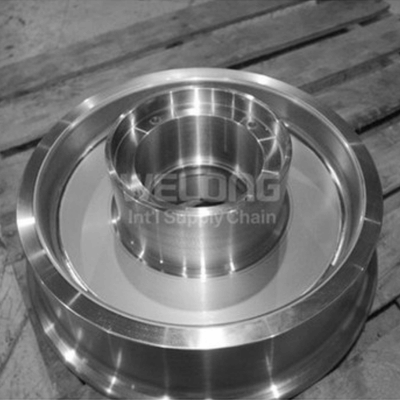

In the field of materials science and engineering, surface treatment is a crucial technology that can not only improve the appearance of materials, but also enhance their physical and chemical properties. Polishing, shot blasting, sand blasting, shot peening and plastic spraying are five common surface treatment technologies. Although their purpose is to improve the surface of materials, their principles, applications and effects are very different. This article will make an in-depth comparison and discussion of these five technologies from the aspects of definition, principle, application, advantages and disadvantages.
1. Polishing
Definition and principle: Polishing is a processing method that reduces the surface roughness of the workpiece through mechanical, chemical or electrochemical action to obtain a bright and flat surface. It mainly uses polishing wheels and abrasive particles to roll and micro-cut the surface of the workpiece to achieve the purpose of smoothing the surface. During the polishing process, the rotation speed of the polishing wheel is usually very high to generate enough cutting force to remove the surface peaks while keeping the surface flat and bright.
Application: Polishing is widely used in the surface treatment of various metal and non-metal materials, especially in occasions requiring high precision and high finish. For example, polishing technology is needed in fields such as precision instruments, optical devices, jewelry and automotive parts.
Advantages and Disadvantages: Polishing technology can significantly improve the surface finish and reflective properties of materials, but the operation process is relatively complicated and requires professional equipment and operating skills. In addition, a certain amount of dust and waste may be generated during the polishing process, which needs to be properly handled to avoid environmental pollution.
2. Shot blasting
Definition and principle: Shot blasting is a mechanical surface treatment process that uses a high-speed rotating impeller to throw projectiles onto the surface of the workpiece to remove impurities such as surface oxide scale, rust, and oil stains, and improve the appearance quality of the workpiece. During the shot blasting process, the impact force of the projectile is large, which can effectively clean the stains and defects on the surface of the workpiece.
Application: Shot blasting technology is widely used in surface treatment in the fields of shipbuilding, automobile parts, aircraft parts, bridges, steel structures, etc. It can efficiently remove stains and defects on the surface of the workpiece, providing a good foundation for subsequent coating, plating and other processes.
Advantages and Disadvantages: Shot blasting technology has high cleaning efficiency and low cost, and is suitable for mass production. However, due to the large impact force of the projectile, it may cause deformation or damage to thin plate workpieces. In addition, the dust and waste generated during the shot blasting process also need to be properly handled.
3. Sandblasting
Definition and principle: Sandblasting is a process that uses compressed air as a power source to spray abrasives (such as quartz sand, copper ore sand, corundum, etc.) at high speed onto the surface of a workpiece to remove surface stains, increase roughness or improve surface properties. During the sandblasting process, the impact and cutting action of the abrasive on the surface of the workpiece can effectively remove stains and increase roughness.
Application: Sandblasting technology is widely used in the surface treatment of metals, non-metals and other materials, especially in situations where surface stains need to be removed, roughness needs to be increased or surface properties need to be improved. For example, sandblasting technology is required for surface cleaning and beautification in the fields of ships, bridges, and building exterior walls.
Advantages and disadvantages: Sandblasting technology has high cleaning efficiency and great flexibility, and can handle the inner and outer surfaces of complex workpieces and the inner walls of pipes. However, a lot of dust and waste are generated during sandblasting, and corresponding recycling and processing equipment is required. In addition, sandblasting has a large impact on the surface of the workpiece, which may cause certain damage to it.
4. Shot peening
Definition and principle: Shot peening is a surface treatment technology similar to sandblasting, but it usually uses steel shot as a medium. During the shot peening process, steel shots hit the surface of the workpiece at high speed under the action of high-pressure wind or compressed air to achieve the purpose of surface strengthening, stress elimination or surface stain removal. Shot peening can significantly improve the fatigue strength, wear resistance and corrosion resistance of the workpiece.
Application: Shot peening technology is widely used in the surface treatment of various metal parts, especially in situations where it is necessary to improve the mechanical strength, wear resistance and corrosion resistance of parts. For example, shot peening technology is needed in the fields of automobile engine parts, aerospace parts, etc.
Advantages and disadvantages: Shot peening equipment is simple, low-cost, not limited by the shape and position of the workpiece, and easy to operate. However, shot peening can easily cause deformation or damage to thin plate workpieces, and the working environment is poor. In addition, the efficiency of shot peening is relatively low, and the unit output is low.
5. Spraying
Definition and principle: Spraying is a surface treatment technology that evenly sprays plastic powder on the surface of metal or other substrates through a spray gun, and then melts, levelizes, and solidifies the plastic powder through high-temperature baking to form a dense coating. Spraying technology can not only protect and decorate the surface of the substrate, but also enhance its anti-corrosion, anti-wear, waterproof, and dustproof functions.
Application: Plastic spraying technology is widely used in home appliances, automobiles, building materials, electronics, medical equipment and other industries, especially in outdoor or humid environments that require protection and decoration. For example, plastic spraying technology is needed in highway guardrails, car shells, building exterior walls and other fields.
Advantages and Disadvantages: Plastic spraying technology has significant advantages such as dense coating, strong adhesion, corrosion resistance, wear resistance, waterproofness and dustproof ness. However, problems such as powder waste and environmental pollution may occur during the plastic spraying process, and corresponding measures need to be taken to control and deal with them. In addition, the cost of plastic spraying technology is relatively high, and the requirements for equipment and operating skills are also high.
6. Summary
Polishing, shot blasting, sand blasting, shot peening and plastic spraying are five common surface treatment technologies, each of which has unique principles, applications, advantages and disadvantages. In practical applications, it is necessary to select appropriate treatment technologies according to specific needs and conditions to achieve the best surface treatment effect. At the same time, with the continuous advancement and innovation of science and technology, these surface treatment technologies will continue to develop and improve, bringing more convenience and possibilities to the fields of materials science and engineering.