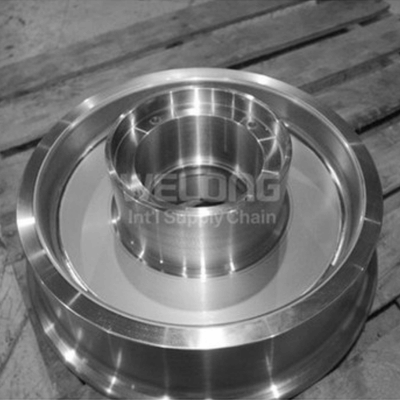

Aluminum alloy castings are prized across industries-from automotive and aerospace to consumer electronics-for their excellent strength-to-weight ratio, durability, and complex manufacturability. However, the as-cast surface often exhibits porosity, oxides, and aesthetic inconsistencies that limit its performance and appeal. Surface treatment is the critical, value-adding process that transforms a raw casting into a high-performance, market-ready component.
These processes can be categorized into three primary groups: Cleaning and Pretreatment, Mechanical Treatment, and Chemical/Electrochemical Treatment.
Step 1: Cleaning and Pretreatment (The Essential Foundation)
A flawless finish is impossible without a perfectly clean surface. This stage removes all contaminants from the casting process.
Degreasing: Alkaline or acidic solutions are used to dissolve and remove lubricants, oils, and release agents.
Alkaline Etching: A caustic soda (sodium hydroxide) bath removes the natural oxide layer and superficial imperfections, activating the surface for subsequent treatments.
Desmutting/Deoxidizing: Following etching, an acid bath (often nitric or sulfuric acid) removes insoluble smut (alloying elements like copper or silicon) left on the surface, resulting in a uniform, clean substrate.
Category 2: Mechanical Treatments (Improving Texture and Appearance)
These processes physically alter the surface texture.
Blasting (Shot Peening or Sand Blasting)
Process: Propelling media (e.g., glass beads, aluminum oxide, plastic grit) at high velocity against the casting surface.
Benefits:
Cleaning: Removes scale and debris.
Finishing: Creates a uniform matte or satin texture, ideal for hiding minor imperfections.
Strengthening: Induces compressive surface stresses, which can improve fatigue life.
Application: Commonly used for engine blocks, transmission cases, and structural components.
Polishing and Buffing
Process: Using abrasive wheels or belts to progressively smoothen the surface to a high-gloss, reflective finish.
Application: Primarily for decorative parts. It is labor-intensive and challenging for complex geometries.
Category 3: Chemical/Electrochemical Treatments (Creating Functional Surfaces)
These methods form a new surface layer, drastically enhancing properties like corrosion resistance, wear resistance, and aesthetics.
Anodizing (The Gold Standard for Aluminum)
Process: The casting acts as an anode in an electrolytic bath (e.g., sulfuric acid). An applied current grows a thick, porous, and extremely hard aluminum oxide layer.
Key Advantages:
Exceptional Corrosion Resistance: The anodic layer is highly resistant to environmental degradation.
Superior Wear Hardness: The surface is significantly harder than the base aluminum.
Aesthetic Versatility: The porous layer readily absorbs dyes, allowing for a wide range of colors.
Excellent Paint/Adhesive Base: Provides a superior key for subsequent coatings.
Note for Castings: Due to high silicon content, anodized aluminum castings typically have a darker, smoky appearance, which must be managed for color-critical applications.
Chemical Conversion Coating
Process: Immersing the casting in a chemical solution (e.g., chromate, phosphate, or non-chrome alternatives like zirconium-based) to form a thin, adherent protective layer.
Key Advantages:
Cost-Effective and Fast: Simple immersion process.
Excellent Paint Base: The primary use is as a pre-treatment for painting, dramatically improving paint adhesion.
Environmental Shift: Hexavalent chromium (Chromate) coatings are being replaced by more environmentally friendly non-chrome alternatives.
Electroplating
Process: Depositing a thin layer of another metal (e.g., nickel, chrome, copper) onto the casting surface through electrodeposition.
Key Advantages:
Decorative Appeal: Provides a brilliant, chrome-like or brass finish.
Enhanced Functionality: Improves surface hardness, wear resistance, and sometimes solderability or electrical conductivity.
Challenge: Requires complex pre-plating cycles (like zincating) to ensure adhesion to the aluminum substrate.
Organic Coatings (Painting and Powder Coating)
Liquid Painting: Applied via spray gun. Offers a vast range of colors and gloss levels.
Powder Coating:
Process: A electrostatically charged dry powder is applied and then cured under heat to form a durable, continuous film.
Key Advantages:
Durability: Highly resistant to chipping, scratching, and chemicals.
Thick, Uniform Coverage: Excellent for hiding surface imperfections common to castings.
Environmentally Friendly: Contains no solvents (VOC-free).
Application: Widely used for automotive wheels, architectural components, and outdoor equipment.
Selecting the Right Surface Treatment
| Primary Requirement | Recommended Process |
|---|---|
| Maximum Corrosion & Wear Resistance | Anodizing (Type II or Hardcoat) |
| Low-Cost, Pre-Paint Preparation | Chemical Conversion Coating |
| Durable, Decorative Finish (Hides Imperfections) | Powder Coating |
| High-End Decorative/Reflective Finish | Electroplating or Polishing + Clear Coat |
| Uniform Matte/Satin Texture | Blasting (with appropriate media) |
Conclusion
Surface treatment is not merely a final cosmetic step; it is an engineering process that defines the performance, longevity, and perceived quality of an aluminum alloy casting. The choice of technology is a strategic decision based on the component's functional requirements, environmental exposure, aesthetic goals, and cost constraints. By selecting and executing the appropriate surface treatment, manufacturers can unlock the full potential of their cast components, ensuring they meet the rigorous demands of modern applications.
Contact Us
For more information, please contact us at metal@welongpost.com.