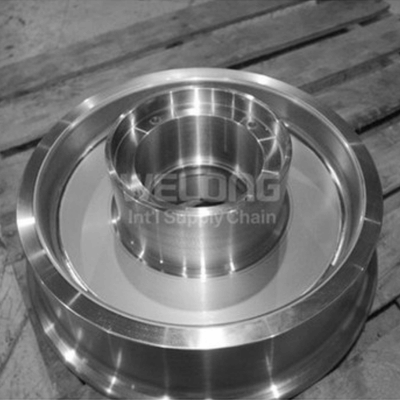

RQTSi5.5 heat-resistant cast iron production process
RQTSi5.5 heat-resistant cast iron production process is as follows:
Batching
Control the main elements: silicon content is controlled at 5.2% - 5.8%, carbon content is 3.0% - 3.8%, manganese content is controlled below 0.3% as much as possible, and the lower the phosphorus and sulfur content, the better.
Add trace elements: A small amount of trace elements such as titanium, vanadium, and magnesium can be added to improve the heat resistance, strength and wear resistance of cast iron.
Smelting
Choose suitable equipment: cupola or medium frequency induction furnace can be used for smelting. Cupola smelting must strictly control the quality of the charge and the accuracy of the batching; medium frequency induction furnace smelting can better control the temperature and composition of the molten iron.
Control the smelting temperature: Heat the molten iron temperature to 1500 - 1550℃ to fully melt and evenly mix the various elements, and at the same time facilitate the removal of impurities and gases.
Refining molten iron: Add an appropriate amount of refining agent during the smelting process to remove impurities such as gas and oxides in the molten iron and improve the quality of the molten iron.
Spheroidizing and inoculation treatment
Spheroidizing treatment: Adopt the dam-type ladle injection method, use spheroidizing agents such as QRMg8RE7, and the amount of spheroidizing agent added is generally 1.0% - 1.5%. During the treatment, a layer of pig iron filings is added on the spheroidizing agent to slow down the reaction and improve the absorption rate of the spheroidizing agent.
Inoculation treatment: The inoculant is generally 75 ferrosilicon, and the addition amount is 0.8% - 1.2%. Inoculation treatment can be carried out immediately after spheroidizing treatment, or it can be carried out by inoculation with the flow to promote graphitization, obtain fine and evenly distributed spheroidal graphite, and improve the mechanical properties of the casting.
Molding
According to the structure and size of the casting, choose a suitable molding method, such as sand casting, lost foam casting, etc. During the molding process, it is necessary to control the compactness and permeability of the molding sand to ensure the quality of the casting.
Pouring
Control the pouring temperature: The pouring temperature is generally controlled at 1360-1420℃. Too high a temperature will cause shrinkage holes and shrinkage defects in the casting. Too low a temperature will affect the fluidity of the molten iron, resulting in insufficient pouring, cold shut and other problems.
Pouring speed: According to the structure and size of the casting, the pouring speed is reasonably controlled to ensure that the molten iron can fill the mold smoothly and quickly to avoid turbulence, splashing and other phenomena.
Heat treatment
After pouring, the casting can be heat treated as needed, such as annealing, to eliminate the internal stress of the casting and improve its structural stability and toughness. The annealing temperature is generally 850-900℃, and the holding time is determined according to the thickness and size of the casting, and then cooled with the furnace.
2. When producing RQTSi5.5 heat-resistant cast iron, in addition to strictly controlling parameters in each process link, the following issues should also be paid attention to:
Raw material quality
Strict screening: Ensure that the raw materials used, such as pig iron, scrap steel, ferrosilicon, etc., are of high purity and few impurities. In particular, the sulfur and phosphorus content should be strictly controlled because they will reduce the heat resistance and mechanical properties of cast iron.
Batch stability: Try to ensure the stability of the composition between batches of raw materials to avoid unstable product quality due to composition fluctuations.
Melting process control
Temperature uniformity: To ensure uniform temperature of molten iron in the furnace and avoid local overheating or overcooling, this can be achieved by reasonably designing the furnace type and optimizing the stirring method.
Precise composition control: Since the silicon content has a significant impact on the performance of RQTSi5.5 heat-resistant cast iron, the amount of silicon added needs to be accurately controlled, and the content of other elements such as carbon and manganese needs to be paid attention to so that it meets the process requirements.
Spheroidizing and inoculation treatment
Selection of spheroidizers and inoculants: According to the specific production conditions and casting requirements, select appropriate spheroidizers and inoculants, and ensure their stable quality.
Process consistency: Strictly follow the prescribed spheroidizing and inoculation treatment process to ensure consistent results for each treatment to obtain stable graphite nodule morphology and distribution.
Prevent casting defects
Shrinkage and shrinkage: Since RQTSi5.5 heat-resistant cast iron has a large solidification shrinkage, it is necessary to reasonably design the riser and chill to achieve sequential solidification, effectively replenish liquid metal, and prevent shrinkage and shrinkage.
Cracks: Castings of this material are prone to cracks during the cooling process. The cooling rate must be controlled to avoid local stress concentration in the casting. At the same time, optimize the structural design of the casting to reduce sharp corners, mutations and other parts that are prone to stress concentration.
Heat treatment process optimization
Parameter determination: According to the specific requirements of the casting and the actual production situation, determine the appropriate heat treatment temperature, holding time, cooling method and other parameters. Improper heat treatment may lead to uneven casting structure, affecting its heat resistance and mechanical properties.
Equipment maintenance: Regularly maintain and calibrate the heat treatment equipment to ensure that its temperature control accuracy and uniformity meet the requirements to ensure the stability of the heat treatment quality.
发送反馈
侧边栏
历史记录
已保存