


3. Slag inclusion
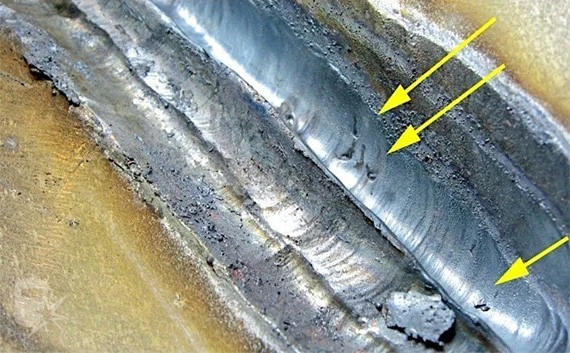
Slag inclusions are firmly attached to the casting and reduce the mechanical properties of the final product. It usually occurs when non-metallic materials cause irregular crusting on the casting surface. Casting defects are band-like inclusions or pockets with sharp edges and irregular shapes. In addition, other forms of inclusions include sand, nails, dirt or oxides. Although they are only a few millimeters thick, you can see them with the naked eye.
Causes
• Pouring and solidification of liquid metal containing slag particles.
• Improper gating system.
• Formation of insoluble intermetallic compounds during solidification; thus, causing them to separate in the residual liquid.
• Addition of alloys that are not completely dissolved in the melt.
Remedies
• Thorough and regular mold cleaning.
• Improve the design of the gating system.
• Use clean molten metal.
• Apply a small piece of alloy material to observe the changes in the metal alloy.
4. scum
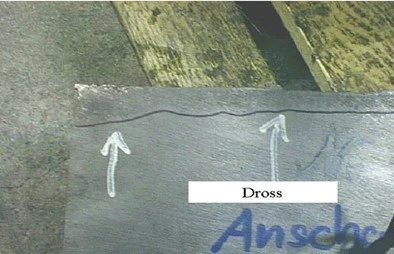
Slag refers to the loss of metal that occurs during nonferrous metal casting operations. As metal melts, it oxidizes to form impurities and a scum layer that floats on the metal surface. These impurities are caused by the mixing of oxides of the base metal with other metals on the surface.
Causes
• · Thermite reaction.
• Excessive metal temperature.
• Oxides are formed due to the reaction between the air in the mold and the hot liquid metal.
Remedies
• · Avoid stirring to prevent oxidation and thermite reaction.
• Reduce metal temperature.
• Reduce melting time.
5. Welding
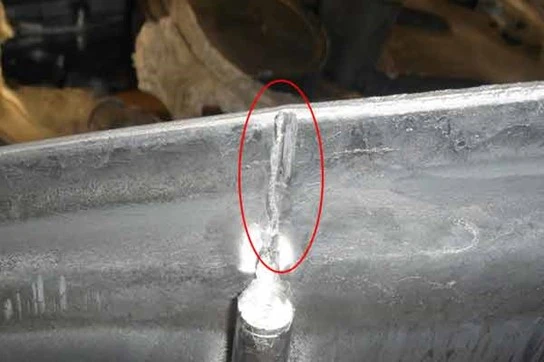
Welding is a common casting defect during the casting process. It occurs when molten metal adheres to the surface of the mold cavity and stays there after the casting is removed. As a result, some areas of the casting are either missing material or have too much material. You can identify welding by visual inspection.
Causes
• Damage to the mold cavity, insufficient hardness, or low roughness.
• An improper ejector mechanism causes skew shots.
• Overheating the molten metal alloy or the mold.
• Using poor quality mold release agents.
• Insufficient iron content in the alloy.
Remedies
• Repair any damage to the mold cavity and improve its roughness.
• Adjust the draft angle and gate design.
• Optimize the ejector mechanism to ensure balanced ejection.
• Monitor and control the temperature of the mold and molten alloy
• Use a good quality mold release agent.
• Use enough iron, with a margin of 0.8% to 1.1%.


