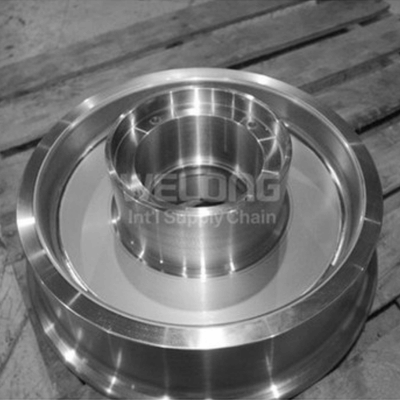

The main characteristics of stainless steel include good corrosion resistance, high hardness and strength, as well as excellent weldability and polishing properties. The corrosion resistance of stainless steel is mainly attributed to the chromium rich oxide film formed on its surface, which can prevent electrochemical corrosion and protect the steel from corrosion. The hardness of stainless steel is usually higher than that of aluminum alloy, and its cost is also higher. In addition, stainless steel can maintain excellent physical and mechanical properties at high temperatures, while also possessing the characteristics of heat resistance and low temperature resistance.
Weldability
The requirements for welding performance vary depending on the different uses of the product. For example the A type of tableware generally does not require welding performance, includes some pot enterprises. But the vast majority of products require good welding performance of raw materials, such as second-class tableware, insulated cups, steel pipes, water heaters, water dispensers, etc.
Corrosion resistance
The majority of stainless steel products require good corrosion resistance, such as first - and second-class tableware, kitchenware, water heaters, water dispensers, etc. Some foreign merchants also conduct corrosion resistance tests on their products: heating NACL aqueous solution to boiling, pouring out the solution after a period of time, washing and drying, and weighing the weight loss to determine the degree of corrosion (note: when polishing the product, the presence of Fe in the sandpaper or sandpaper may cause rust spots on the surface during testing)
When the number of chromium atoms in steel is not less than 12.5%, it can cause a sudden change in the electrode potential of the steel, rising from negative potential to positive electrode potential. Prevent electrochemical corrosion.
Polishing performance
In today's society, stainless steel products are generally polished during production, with only a few products such as water heaters and water dispenser liners not requiring polishing. Therefore, this requires good polishing performance of the raw materials. The main factors affecting polishing performance are as follows:
① Surface defects on raw materials. Such as scratches, pitting, acid pickling, etc.
② Raw material material issues. If the hardness is too low, it is difficult to polish (poor BQ properties), and if the hardness is too low, the surface is prone to orange peel phenomenon during deep stretching, which affects BQ properties. BQ with high hardness has relatively good properties.
③ Products that have undergone deep stretching will also have small black spots and RIDGING on the surface of areas with significant deformation, which will affect their BQ properties.
Heat resistance performance
Heat resistance refers to the ability to maintain its excellent physical and mechanical properties at high temperatures.
The influence of carbon: Carbon is an element that strongly forms and stabilizes austenite in austenitic stainless steel, and expands the austenite region. The ability of carbon to form austenite is about 30 times that of nickel. Carbon is a interstitial element that can significantly improve the strength of austenitic stainless steel through solid solution strengthening. Carbon can also improve the stress and corrosion resistance of austenitic stainless steel in high concentration chloride solutions (such as 42% MgCl2 boiling solutions).
However, in austenitic stainless steel, carbon is often considered a harmful element, mainly due to the fact that under certain conditions in the corrosion-resistant application of stainless steel (such as welding or heating at 450-850 ℃), carbon can form high chromium Cr23C6 carbon compounds with chromium in the steel, leading to local chromium depletion and a decrease in the corrosion resistance, especially intergranular corrosion resistance, of the steel. Therefore. Since the 1960s, the newly developed chromium nickel austenitic stainless steel has mostly been of ultra-low carbon type with carbon content less than 0.03% or 0.02%. It can be known that as the carbon content decreases, the intergranular corrosion sensitivity of the steel decreases. The most obvious effect is only when the carbon content is below 0.02%. Some experiments have also pointed out that carbon can increase the pitting corrosion tendency of chromium austenitic stainless steel. Due to the harmful effects of carbon, it is not only necessary to control the carbon content as low as possible during the smelting process of austenitic stainless steel, but also to prevent carbonization of the stainless steel surface and the precipitation of chromium carbides during subsequent hot and cold processing and heat treatment.
In addition, the processing performance of stainless steel is also worth paying attention to. For example, SUS304 stainless steel becomes harder after cold working and is prone to work hardening. Therefore, softening annealing is required during the processing to eliminate residual stress and restore the plasticity of the material.
Contact Us
For more information, please contact us at metal@welongpost.com.