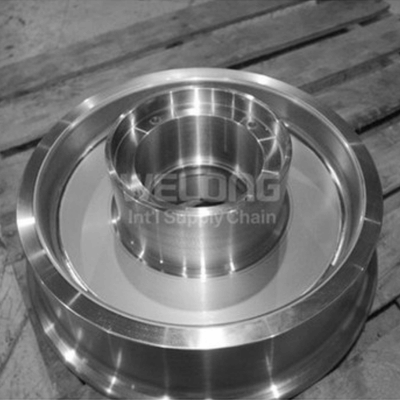

Open die forging is an ancient and important metalworking technology widely used in the manufacture of various metal components. By applying force to metal materials and deforming them at high temperatures, the desired shape and performance are achieved. Open die forging not only played a significant role in history but also continues to hold an important position in modern industry. This article will provide a detailed introduction to the definition, classification, basic process, considerations, and characteristics of open die forging.
Definition of Open Die Forging
Open die forging, also known as "free forging," is a process in which mechanical force is applied to a metal billet to form a specific shape without the use of preset molds. This method primarily involves the use of hammers or hydraulic presses to repeatedly heat and forge the metal billet, causing it to undergo plastic deformation and ultimately achieve the desired component. This process is suitable for various metal materials, especially for producing high-strength, high-toughness, and high-temperature-resistant parts.
Classification of Open Die Forging
Open die forging can be classified based on the forging equipment, process methods, and the intended use of the final product:
1,Classification by Forging Equipment:
Hammer Forging: Utilizes a hammer to apply impact force to the metal billet. The principle of the hammer is to repeatedly apply impacts and pressure to shape the metal billet as required. This method is commonly used for producing small batches of high-strength parts.
Hydraulic Press Forging: Uses a hydraulic press to apply pressure to the metal. The hydraulic press can provide uniform and continuous pressure, making it suitable for large and complex parts.
2,Classification by Process Method:
Hot Forging: Performed above the recrystallization temperature of the metal, making the metal in a plastic state and thus easier to deform. Hot forging effectively improves the metal's microstructure and mechanical properties.
Cold Forging: Conducted at room temperature, suitable for thinner metal materials. Cold forging can increase the strength of the metal but requires higher plasticity of the material.
3,Classification by Final Product Use:
Structural Forging: Used for producing various mechanical structural components such as shafts, connecting rods, etc.
Tool Forging: Used for manufacturing tools and molds such as cutting tools and die molds.
Basic Process of Open Die Forging
The process of open die forging generally includes the following steps:
1,Preparation:
Material Preparation: Select appropriate metal materials, usually steel or aluminum alloys. The quality and composition of the material directly affect the final product's performance.
Preheating: Preheat the material according to its characteristics. Preheating helps reduce deformation resistance during forging and improves the material's plasticity.
2,Forging:
Heating: Heat the metal billet to an appropriate temperature, usually above the recrystallization temperature. Different materials have different heating temperature requirements.
Forging: Place the heated metal billet onto the forging equipment and use a hammer or hydraulic press to forge it. Control the forging force and deformation speed to avoid defects such as cracks in the material.
3,Cooling:
Annealing: After forging, perform annealing to relieve internal stresses and improve the metal's microstructure and properties.
Cooling: Cool the forged component to room temperature. The cooling rate also affects the metal's properties.
4,Post-Processing:
Inspection: Inspect the forged component for dimensions and quality to ensure it meets design requirements.
Machining: If necessary, perform machining on the component to achieve precise dimensions and surface quality.
Considerations in Open Die Forging
In open die forging, special attention must be paid to the following aspects:
1,Temperature Control: Accurate control of the metal temperature during forging is crucial. Excessively high or low temperatures can affect the forging quality. Temperature should be carefully controlled based on the material's characteristics.
2,Equipment Maintenance: Regular inspection and maintenance of forging equipment are necessary to ensure proper operation. Equipment malfunctions can lead to problems during forging and affect product quality.
3,Operator Skill: Open die forging requires a high level of skill from the operator. Operators need to be familiar with forging processes and material characteristics to make correct judgments and adjustments during operation.
4,Safety Measures: Forging involves high temperatures and pressures. Operators must wear appropriate protective equipment and strictly follow safety protocols to prevent accidents.
Characteristics of Open Die Forging
Open die forging has the following notable characteristics:
Excellent Mechanical Properties: The process refines the metal's grain structure, significantly enhancing properties such as strength, toughness, and wear resistance.
High Material Utilization: Open die forging has a high material utilization rate, reducing waste and lowering production costs.
Strong Adaptability: Open die forging can process various shapes and sizes of metal components. It is adaptable to both simple geometric shapes and complex structural parts by adjusting process parameters.
High Processing Precision: Although open die forging does not use molds, precise operation and control can achieve high processing accuracy and good surface quality.
Conclusion
Open die forging, as an ancient and practical metalworking process, continues to play a crucial role in modern industry due to its superior mechanical properties and high material utilization. Understanding the definition, classification, basic process, considerations, and characteristics of open die forging is essential for engineers and technicians in relevant fields. With ongoing advancements in technology and equipment, the application prospects of open die forging remain broad and promising.
If you have any needs for open die forging parts, or if you have more questions, please contact lydia@welongchina.com