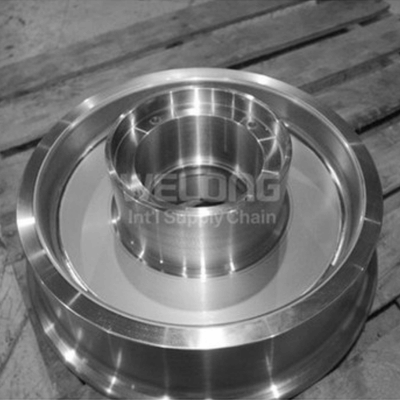

Lost foam casting technology, as a near-static forming method for castings, has developed rapidly in recent years. In foreign countries, due to the successive completion and commissioning of mechanized and automated lost foam casting production lines and the significant economic and social benefits generated, the lost foam casting technology has shown strong vitality.
Although the application of lost foam casting technology in my country has made slow progress some time ago, it has developed rapidly in recent years. Especially due to the low investment in lost foam casting equipment and the short process route, many original small and medium-sized foundry companies are increasingly adopting this technology. However, some companies fail to pay attention to some operational issues, resulting in some problems during the production process, which have a great impact on the quality of castings.
1.Model making
In the lost foam casting process, model making is a very important link. The selection of EPS raw materials, model processing technology, dimensional accuracy, model density, control of factors such as the amount of pyrolysis products during pouring are the prerequisites for obtaining high-quality castings. There are currently several ways to create models for small and medium-sized enterprises:
(1) Cut and bonded from packaging EPS sheets.
(2) Make your own molds and entrust external factories to process them.
(3) Make your own simple pre-forming equipment.
When making models using the above method, there is a common phenomenon of not paying attention to the change in density of the pattern. Especially when the model is entrusted to an outside factory for processing, the moisture is not easy to control. It often occurs that molten iron sprays back from the gate during pouring, or the casting has cold insulation, insufficient pouring, etc. . For this reason, the density of the model should be inspected during the production process, and the drying time of the model should be increased. After the EPS beads are selected through process experiments, the raw material manufacturer cannot be changed at will. Weighing tools should be used to control the beads during pre-production. particle density, changing the method of controlling bead density based on manual experience; after adopting the above method, the problem was solved.
2. Problems with vibration
Vibration compaction is one of the four key technologies of lost foam casting. The function of vibration is to cause the dry sand to flow dynamically in the sand box, improve the filling and density of the dry sand, and prevent casting defects. When vibrating dry sand to fill, the ideal situation is that the dry sand flows in an orderly manner during the vibration process, and evenly fills all parts of the model without deforming the model, so that the molding sand in the sand box obtains a higher and more uniform filling density.
The lost foam casting vibration tables of small and medium-sized enterprises are mostly self-made equipment. When vibrating, the most common phenomenon is due to improper vibration operation, resulting in pattern deformation, cracking of the paint layer, etc., thus causing corresponding casting defects. Some vibrating tables themselves are prone to deformation due to excessive excitation force and unbalanced polarizing blocks of the same group of motors. To this end, the excitation force, amplitude and vibration time should mainly be adjusted; for castings with larger sizes and simple structures, the three-dimensional vibration of six motors can be changed to vertical or horizontal vibration of dual motors; especially the vibration detection instrument Each parameter of the platform is tested and adjusted to meet the design requirements.
3. There are problems with the use of paint
In the lost foam casting process, the use of coatings can improve the stiffness and strength of the pattern, isolate the EPS pattern from the mold, and prevent sand adhesion and mold collapse; during the casting process, the high-temperature decomposition products of the pattern are allowed to be discharged through the coating in a timely and smooth manner. Coatings are generally composed of refractory materials, binders, suspending agents, etc. The proportion of each component has a great influence on the performance of the coating.
However, some companies are not very clear about the role of coating composition, and they arbitrarily change the coating formula and preparation process, or continue to prepare and use it due to the lack of a certain component, resulting in a significant decline in coating performance; some companies have problems in the pattern dipping and drying process. Sometimes in order to shorten the time, the next dip coating is carried out before the first coating is dry, resulting in the interior of the model not being fully dried and containing moisture; in summer, only the drying method is used, and there is instability in the process, resulting in Back spray or pores are generated during pouring; the coating thickness does not change according to different castings, pouring temperature and molten iron pressure head.
Only by paying attention to and solving the above problems and working on the details of the operation will there be no casting defects caused by coating.
4. There are problems in the pouring process
During the pouring of lost foam casting, in order to discharge gas and pattern vaporization residue, the sprue must be of sufficient height so that the molten metal has sufficient pressure head to push the molten metal flow to fill the mold stably and quickly, ensuring that the surface of the casting is complete and clear. In practice, some companies use the original sprue cup for sand casting. Due to its small size, unstable liquid flow is prone to cause the workpiece to be scrapped. In order to ensure that there is enough flow to keep the pouring process flowing and to quickly establish the starting pressure, a larger sprue cup can be used; the sprue is made hollow to reduce gas back-spray and increase the pressure at the beginning of pouring. head.
Lost foam casting uses negative pressure dry sand vibration molding. When molded using this method, the strength of the mold is much greater than the strength of green sand. The use of negative pressure can improve the stability of the casting mold and promptly remove the pyrolysis and gasification products produced when the mold is vaporized. However, during the production process, some factories only pay attention to observing the surface negative pressure before pouring, but often ignore the changes in negative pressure during the pouring process, resulting in casting defects. This problem can be well solved by adjusting the negative pressure during the pouring process according to the size of the casting and the amount of pyrolysis products.
The most commonly used casting method is sand casting, followed by special casting methods, such as metal mold casting, investment casting, plaster mold casting, etc. Sand casting can be divided into clay sand molds, organic binder sand molds, resin self-hardening sand molds, lost foam molds, etc.
Principles for selecting casting methods:
1. Sand casting is preferred. The main reason is that compared with other casting methods, sand casting has low cost, simple production process and short production cycle. When the wet type cannot meet the requirements, consider using clay sand surface dry sand type, dry sand type or other sand type. The weight of castings produced by clay green sand casting can range from a few kilograms to tens of kilograms, while the castings produced by clay dry mold can weigh tens of tons.
2 The casting method should be suitable for the production batch. Casting methods such as low-pressure casting, die casting, and centrifugal casting are only suitable for mass production due to the expensive equipment and molds.
3. The modeling method should be suitable for factory conditions.
For example, in the production of castings such as large machine tool beds, the core molding method is generally used, without making patterns and sand boxes, and the core is assembled in the pit; while other factories use the sand box molding method to make patterns. Different enterprises have different production conditions (including equipment, sites, employee quality, etc.), production habits, and accumulated experience. Based on these conditions, we should consider what products are suitable and what products are not suitable (or cannot) be considered.
4. The precision requirements and cost of castings must be taken into consideration.
Defects and prevention in mold heat treatment
1. There are soft spots on the mold surface
There are soft spots on the surface of the mold after heat treatment, which will affect the wear resistance of the mold and reduce the service life of the mold.
(1) Causes
There are oxide scales, rust spots and partial decarburization on the surface of the mold before heat treatment. After quenching and heating, the cooling and quenching medium is improperly selected, and there are too many impurities or aging in the quenching medium.
(2) Preventive measures
Oxide scale and rust spots should be removed before heat treatment of the mold. The surface of the mold should be properly protected during quenching and heating. Vacuum electric furnaces, salt bath furnaces and protective atmosphere furnaces should be used for heating as much as possible. When cooling after quenching and heating, a suitable cooling medium should be selected, and the cooling medium used for a long time should be filtered frequently or replaced regularly.
2. Poor structure of the mold before heat treatment
The final spheroidized structure of the mold is coarse and uneven, the spheroidization is imperfect, and the structure has mesh-like, belt-like and chain-like carbides, which will make the mold prone to cracks after quenching and cause the mold to be scrapped.
(1) Causes
The original structure of the mold steel material has severe carbide segregation. Poor forging process, such as too high forging heating temperature, small deformation, high forging stop temperature, slow cooling rate after forging, etc., makes the forging structure coarse and has network, band and chain carbides, which makes spheroidization annealing. difficult to eliminate. Poor spheroidizing annealing process, such as too high or too low annealing temperature, short isothermal annealing time, etc., can cause uneven spheroidizing annealing structure or poor spheroidization.
(2) Preventive measures
Generally, good quality mold steel materials should be selected as much as possible based on the working conditions of the mold, production batch size and the toughening properties of the material itself. Improve the forging process or use normalizing preparatory heat treatment to eliminate the inhomogeneity of network and chain carbides and carbides in the raw materials.
High-carbon mold steels with severe carbide segregation that cannot be forged can be subjected to solid solution refinement heat treatment. To formulate correct spheroidizing annealing process specifications for the forged mold blank, quenching and tempering heat treatment and rapid uniform spheroidizing annealing can be used. Install the furnace reasonably to ensure the uniformity of the temperature of the mold base in the furnace.
3. Quenching cracks occur in the mold
Cracks in the mold after quenching are the biggest defects in the heat treatment process of the mold, which will cause the processed mold to be scrapped and cause great losses to production and economy.
(1) Cause of occurrence
The mold material has severe network carbide segregation. There are mechanical processing or cold plastic deformation stresses in the mold. Improper heat treatment operation (heating or cooling too fast, improper selection of quenching cooling medium, cooling temperature too low, cooling time too long, etc.).
The mold has complex shapes, uneven thickness, sharp corners and threaded holes, which cause excessive thermal stress and structural stress. Quenching heating temperature is too high to cause overheating or overburning. The tempering after quenching is not timely or the tempering and heat preservation time is insufficient. During rework, quenching and heating, the parts are heated and quenched again without intermediate annealing. Heat treated, improper grinding process. During EDM after heat treatment, there are high tensile stresses and microcracks in the hardened layer.
(2) Preventive measures
Strictly control the inherent quality of the mold raw materials, improve the forging and spheroidizing annealing process, eliminate network, ribbon, and chain carbides, and improve the uniformity of the spheroidized structure. After mechanical processing or cold plastic deformation, the mold should be stress-relieved annealed (>600°C) and then heated and quenched. For molds with complex shapes, asbestos should be used to plug the threaded holes, wrap dangerous sections and thin-walled areas, and use graded quenching or isothermal quenching.
Annealing or high-temperature tempering is required when reworking or refurbishing molds. Preheating should be used during quenching and heating, precooling measures should be taken during cooling, and appropriate quenching media should be selected. The quenching heating temperature and time should be strictly controlled to prevent the mold from overheating and overburning.
The mold should be tempered in time after quenching, and the heat preservation time should be sufficient. High-alloy complex molds should be tempered 2-3 times. Choose the right grinding process and the right grinding wheel. Improve the mold EDM process and perform stress relief and tempering.
4. The structure of the mold becomes coarse after quenching
The coarse structure of the mold after quenching will seriously affect the mechanical properties of the mold. When used, the mold will break, seriously affecting the service life of the mold.
(1) Cause of occurrence
Mold steel materials are confused, and the actual steel quenching temperature is much lower than the required quenching temperature of the mold material (such as treating GCr15 steel as 3Cr2W8V steel). The correct spheroidization process was not carried out before the steel was quenched, resulting in poor spheroidization structure. The quenching heating temperature is too high or the holding time is too long. Improper placement in the furnace may cause overheating near the electrodes or heating elements. For molds with large cross-section changes, improper selection of quenching heating process parameters will cause overheating in thin sections and sharp corners.
(2) Preventive measures
Steel materials should be strictly inspected before entering the warehouse to prevent confusion and random placement of steel materials. Correct forging and spheroidizing annealing should be performed before mold quenching to ensure a good spheroidizing structure. Correctly formulate mold quenching and heating process specifications and strictly control quenching heating temperature and holding time. Regularly check and calibrate temperature measuring instruments to ensure normal operation of the instruments. Keep an appropriate distance from the electrodes or heating elements when heating in the furnace.