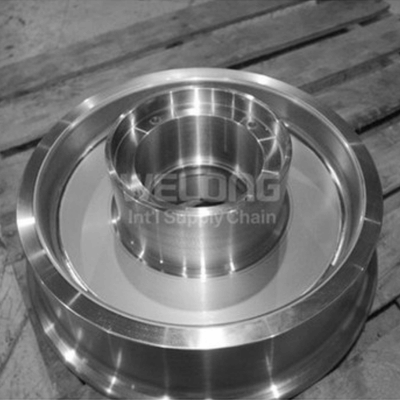

In the world of heat treatment, the focus is often on the science of temperatures, times, and transformations. However, a critical component operates behind the scenes, directly determining the success or failure of the entire process: the heat treatment fixture. Far from being simple racks or baskets, these fixtures are precision-engineered tools that work by holding components in a specific configuration to ensure uniform thermal processing, minimize distortion, and maximize throughput.
Understanding how these fixtures work is essential for anyone involved in manufacturing high-integrity metal parts.
The Core Functions: What Fixtures Do
A heat treatment fixture's primary job is to interface between the product and the furnace environment. Its work can be broken down into four key functions:
Support and Positioning: Fixtures hold parts in a precise orientation during the heating, soaking, and quenching phases. This prevents parts from sagging under their own weight at high temperatures and ensures consistent exposure to the furnace atmosphere or quenchant.
Distortion Control: This is arguably their most critical role. By strategically supporting parts at their strongest sections or applying gentle constraint, fixtures counteract the internal stresses that cause warping and distortion during thermal cycles.
Facilitating Efficient Handling: Fixtures are designed for easy loading and unloading, often integrating with automated conveyor systems or forklifts. They allow multiple small parts to be treated as a single batch, dramatically improving productivity.
Ensuring Process Uniformity: By creating space between parts, fixtures promote the free flow of furnace gases or quench media around every surface. This is vital for achieving uniform temperature and cooling rates, which are prerequisites for consistent mechanical properties.
The Working Principle: A Delicate Balance of Physics and Engineering
The effectiveness of a fixture hinges on a careful balance of several engineering principles:
Thermal Mass Management: The fixture itself must heat up and cool down. A fixture with excessive thermal mass will act as a heat sink, robbing energy from the parts and slowing down their heating and cooling rates, leading to non-uniformity. Engineers design fixtures to be robust yet lightweight, using materials with favorable thermal properties.
Thermal Expansion Compatibility: Both the fixture and the parts being held will expand when heated. The fixture must be designed to accommodate this expansion without binding, crushing, or over-constraining the parts. Clever design using slots, springs, or loose-fitting locators allows for this movement.
Strength at Temperature: A fixture must maintain its structural integrity at peak process temperatures (which can exceed 1000°C / 1832°F). Its strength cannot degrade significantly, or it will fail. This is the primary driver behind material selection.
Types of Fixtures and How They Work in Practice
The design of a fixture is highly application-specific. Common types include:
Baskets: Used for bulk handling of small parts like fasteners or bearings. They work by containing parts in a perforated container, allowing for full exposure to the process environment while enabling easy transport.
Trays and Grids: Ideal for flat or elongated components like saw blades or bar stock. They work by providing a flat, supported surface to prevent bending. The grid pattern minimizes contact points and maximizes airflow/quenchant flow.
Custom Rigs and Mandrels: For complex, high-value components like aerospace landing gear or turbine blades. These fixtures work by providing contoured support that matches the part's geometry, constraining it at critical points to counteract predicted distortion vectors identified through prior experience or simulation.
Pit Type Fixtures: Used for long shafts or tubes in vertical vacuum furnaces. The part is suspended vertically, allowing it to hang freely and be quenched uniformly from all sides, minimizing runout (bending).
The Critical Element: Fixture Material Selection
The material a fixture is made from is fundamental to how well it works. Key considerations include:
Heat Resistance: The material must resist oxidation (scaling) and maintain strength at high temperatures. Common choices are heat-resistant alloys like RA 330, 314, or Inconel 600.
Thermal Stability: The material must have a low coefficient of thermal expansion and not undergo phase transformations that cause dimensional changes during the cycle.
Durability vs. Cost: While high-nickel alloys offer excellent performance, they are expensive. The choice is a balance between fixture longevity and the value of the parts being processed. For some lower-temperature processes, carbon steel fixtures may be sufficient.
Conclusion: More Than Just a Rack
Heat treatment fixtures are not passive components; they are active participants in the metallurgical process. They work by applying principles of mechanical engineering and physics to control the environment of each individual part. A well-designed fixture is a strategic investment that pays dividends through reduced scrap, consistent part quality, and higher furnace utilization.
In the pursuit of perfection in heat-treated components, the unsung hero-the fixture-plays a role as critical as the furnace itself. Its proper design, selection, and maintenance are fundamental to achieving the precise material properties that modern manufacturing demands.
Contact Us
For more information, please contact us at metal@welongpost.com.