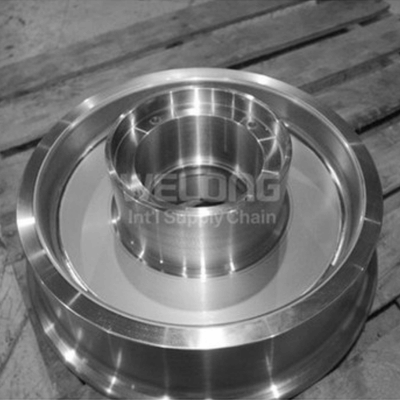

Cast aluminum alloys are prized for their excellent castability, good strength-to-weight ratio, and corrosion resistance. However, in their as-cast state, they often possess microstructural inhomogeneities, internal stresses, and mechanical properties that fall short of their full potential. Heat treatment is a controlled process used to manipulate the alloy's microstructure, thereby significantly improving its mechanical properties, dimensional stability, and suitability for demanding applications.

The Objective: Why Heat Treat Cast Aluminum?
The primary goal of heat treating cast aluminum alloys is to achieve an optimal dispersion of strengthening particles within the aluminum matrix. In the as-cast condition, the alloying elements (such as copper, magnesium, silicon, and zinc) are not uniformly distributed. Heat treatment allows these elements to dissolve, redistribute, and precipitate in a controlled manner, leading to:
Increased Strength and Hardness: The main benefit, achieved through precipitation hardening.
Improved Ductility and Toughness: Relieving internal stresses and creating a more uniform structure.
Enhanced Dimensional Stability: Reducing residual stresses from the casting process to prevent warping during machining or service.
Better Machinability: A uniform, stabilized microstructure allows for cleaner and easier machining.
The Fundamental Stages of Heat Treatment
For most cast aluminum alloys, the complete heat treatment cycle, known as Precipitation Heat Treatment, involves three critical steps:
1. Solution Heat Treatment (Solutionizing)
Purpose: To dissolve the soluble alloying elements into a solid solution within the aluminum matrix. This involves heating the castings to a temperature very close to the alloy's eutectic melting point (typically between 460°C and 540°C / 860°F and 1000°F).
Process: The components are held at this temperature for a prolonged period (soaking time) to allow the maximum amount of soluble phases (like Mg₂Si in Al-Si-Mg alloys) to dissolve. This step produces a supersaturated solid solution.
Critical Consideration: Temperature control is vital. Excessive temperature or time can cause overheating or even localized melting (burning) of the eutectic phases, permanently damaging the casting.
(Image Description: A micrograph showing the microstructure of an Al-Si alloy. The left image shows the as-cast structure with sharp, needle-like silicon particles. The right image shows the solution-treated structure, where the silicon particles have spheroidized and dissolved into the matrix, creating a smoother appearance.)
Figure 1: The effect of solution heat treatment on the microstructure of a cast Al-Si alloy (e.g., A356).
2. Quenching
Purpose: To "freeze" the supersaturated solid solution achieved in the solution treatment step by rapidly cooling the casting. This prevents the dissolved alloying elements from precipitating out in large, uncontrolled formations.
Process: Immediately after solutionizing, the castings are rapidly cooled, typically using a water quench (hot water for reduced distortion) or sometimes polymer quenchant or forced air. The rapid cooling locks the atoms in place.
Critical Consideration: The quenching rate is crucial. Too slow a rate will allow coarse precipitates to form, weakening the alloy. Too fast a quench in cold water can introduce significant residual stresses or cause distortion.
3. Aging (Precipitation Hardening)
Purpose: To allow the supersaturated solution created by quenching to decompose in a controlled way, forming a fine, uniform dispersion of secondary precipitate particles that block dislocation movement and greatly increase strength.
Process: The castings are heated to a much lower temperature (typically 150°C - 250°C / 300°F - 480°F) and held for a specific time.
Types of Aging:
Natural Aging (T4 Temper): The casting is held at room temperature for several days. Strength increases gradually.
Artificial Aging (Precipitation Heat Treatment - T5, T6, T7 Tempers): The controlled heating process accelerates precipitation, yielding higher and more consistent strength levels.
T6 Temper: Solution heat treated + Quenched + Artificial Aged. This provides the highest strength.
T7 Temper: Solution heat treated + Quenched + Over-aged. This stabilizes the casting for high-temperature applications, sacrificing some peak strength for improved dimensional stability and resistance to stress corrosion cracking.
(Image Description: A graph showing the increase in hardness (or strength) over time during the artificial aging process. The curve peaks, demonstrating that exceeding the optimal aging time can lead to over-aging and a drop in properties.)
Figure 2: A typical aging curve showing the peak strength achieved at the optimal aging time.
Common Heat Treatment Tempers for Cast Alloys
The combination of these steps defines the "temper" designation:
T4: Solution heat treated, quenched, and naturally aged. Good combination of strength and ductility.
T5: Artificially aged only (without prior solution treatment). Used for castings where cooling from the casting process is rapid enough to achieve some solutionizing (e.g., in die casting).
T6: Solution heat treated, quenched, and artificially aged. The most common temper for high-strength structural castings (e.g., A356-T6, A357-T6).
T7: Solution heat treated, quenched, and over-aged. Used for applications requiring high stability at elevated temperatures.
Industrial Applications
Heat-treated cast aluminum components are critical in industries where lightweight and high strength are paramount:
Automotive: Cylinder heads, pistons, wheels, and suspension components.
Aerospace: Structural airframe components, housings, and engine parts.
Military and Defense: Lightweight armor, vehicle hulls, and weapon systems.
Conclusion
Heat treatment is an essential and sophisticated process that transforms the inherent potential of cast aluminum alloys into reliable, high-performance components. By meticulously controlling the stages of solution treatment, quenching, and aging, manufacturers can tailor the material's properties to meet precise engineering requirements, ensuring safety, durability, and efficiency in the most demanding applications.
Contact Us
For more information, please contact us at metal@welongpost.com.