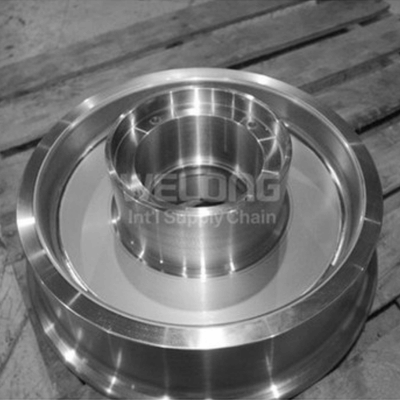

Compilation of cast brass grades and production processes
1. Cast brass grades
Ordinary cast brass
ZCuZn38: Cu content 60.0%-63.0%, Zn balance. General cast brass, corrosion resistant, used for general structural parts, valves, etc.
ZCuZn40Pb2: Cu content 58%-63%, Zn balance, Pb content 0.5%-2.5%.
Special cast brass
ZCuZn25Al6Fe3Mn3: Cu content 60%-66%, Al content 4.5%-7%, Fe content 2%-4%, Mn content 1.5%-4%. High-strength aluminum brass, resistant to seawater corrosion, used for ship propellers, pump bodies, etc.
ZCuZn40Mn3Fe1: Cu content 53%-58%, Mn content 3%-4%, Fe content 0.5%-1.5%.
ZCuZn33Pb2: Cu content 63%-67%, Pb content 1%-3%, Zn balance.
ZCuZn16Si4: Cu content 79%-81%, Si content 2.5%-4.5%, Zn balance. Silicon brass, wear-resistant and corrosion-resistant, used for friction parts.
2. What is the relationship between the performance and use of cast brass?
The properties of cast brass include mechanical properties, corrosion resistance, processing properties, etc. These properties make it widely used in different fields. The specific relationship is as follows:
Mechanical properties
With high strength and hardness, such as aluminum brass such as ZCuZn25Al6Fe3Mn3, it is suitable for manufacturing mechanical parts that bear large loads, such as ship propellers, which can maintain shape and strength under high-speed rotation and seawater scouring.
Good toughness and impact resistance make it possible to manufacture some parts that may be impacted, such as connecting parts and valves in some vibration environments, which can withstand a certain degree of impact without breaking.
Corrosion resistance
It has good corrosion resistance to the atmosphere, fresh water and seawater. Ordinary brasses such as ZCuZn38 are often used to manufacture water pipe fittings, building decorations, etc. They are not easily corroded in daily environments and can maintain performance and appearance for a long time. Special aluminum brass, nickel brass, etc. are more suitable for manufacturing marine engineering equipment, ship parts, etc., which can resist the erosion of seawater and extend the service life of equipment.
Processing performance
Good casting performance, easy to cast parts with complex shapes, can be used to manufacture various crafts with complex shapes, mechanical parts shells, etc.
Good cutting performance, convenient for subsequent mechanical processing, can be made into parts with higher precision, meet the requirements of parts precision in different industrial fields, such as in the manufacture of precision parts such as gears and shafts in instrumentation manufacturing.
Other performance aspects
It has certain thermal conductivity and electrical conductivity, and is used in some occasions where thermal or electrical conductivity is required, such as conductive connectors and radiators in electrical equipment.
Beautiful color. Some brasses have beautiful colors such as golden or bronze. They are often used in decorative fields, such as architectural decoration, furniture decoration, accessories, etc. They are both beautiful and durable.
3. Melting process and pouring process of cast brass:
Melting process
1. Prepare the charge: Select electrolytic copper, zinc ingots and other alloy elements (such as lead, tin, etc.) with higher purity as the charge to ensure that the charge is clean, free of oil and impurities.
2. Preheat the charge: Load the charge into a furnace such as an electric furnace or a fuel furnace for preheating to reduce the smelting time and energy consumption, and avoid splashing of the molten metal when adding cold charge.
3. Melt the copper: First heat the copper material until it melts. During the melting process, stir it appropriately to make the temperature of the copper liquid uniform, accelerate the melting process, and remove the scum on the surface of the copper liquid.
4. Add zinc and other alloy elements: When the copper liquid reaches a certain temperature (usually 1100-1200℃), add zinc ingots and other alloy elements. Since zinc has a low boiling point and is volatile, it should be added slowly and evenly to reduce the burning loss of zinc.
5. Refining: Add refining agent for refining to remove gas and impurities in the copper liquid. Commonly used refining agents include borax, ammonium chloride, etc., and the refining time is generally 10-15 minutes.
6. Adjust the composition: Take samples for chemical composition analysis, and adjust the alloy composition according to the analysis results to meet the specified grade requirements.
7. Adjust the temperature: Adjust the temperature of the smelted brass liquid to the appropriate pouring temperature. Generally, the pouring temperature of cast brass is 1050-1100℃.
Pouring process
1. Prepare the mold: According to the shape and size of the casting, make a sand mold or metal mold and dry it to ensure that the mold is dry and free of moisture to prevent defects such as pores during the pouring process.
2. Design of the pouring system: Rationally design the pouring system, including the gate and riser, so that the brass liquid can flow into the mold cavity smoothly and quickly, and at the same time ensure that the casting can be fully compensated for shrinkage.
3. Pouring operation: Slowly pour the smelted brass liquid into the gate, control the pouring speed, and avoid splashing of the brass liquid and entrainment of gas. For large or complex castings, multiple gates can be used for simultaneous pouring to ensure uniform filling.
4. Riser treatment: During the pouring process, pay attention to the condition of the riser and replenish the riser in time to ensure that the brass liquid in the riser can fully supply the shrinkage of the casting during solidification, reducing defects such as shrinkage cavities and shrinkage.
5. Cooling and solidification: After pouring, let the casting cool and solidify naturally in the mold. For some castings with special requirements, forced cooling and other methods can also be used to control the solidification process and improve the quality of the casting.
6. Sand removal: When the casting is cooled to a certain temperature, sand removal is carried out to remove sand and burrs on the surface of the casting to obtain the final cast brass parts.