


Every year, vehicles pack more technology into less space, and every component requires dependable cooling. This article will examine the factors to consider when choosing tiny heat sinks for compact heat sinks for automotive applications. These factors include thermal performance, fin design, real-world applications, and supplier selection. Here is China Welong to give some practical tips to help you find the correct answer.
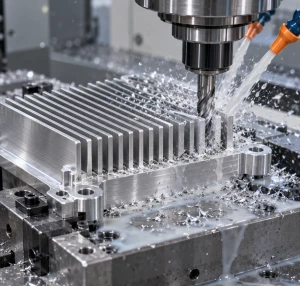
What Factors Determine the Thermal Performance of Compact Heat Sinks for Automotive Applications?
Material and Thermal Conductivity
The material is where the cooling begins. Aluminum is an excellent compromise of conductivity, weight, and cost, whereas copper conducts heat more quickly if space is very tight. Choosing the correct metal helps pack heat sinks for automotive uses to effectively pull heat away from chips and modules, keeping electronics stable throughout lengthy drives and rigorous everyday use.
Base Thickness and Contact Surface
A thicker, flat base will disperse the heat from a tiny component over the whole heat sink before it reaches the fins. Precision machining makes excellent contact with the device. Thermal paste or pads cover small gaps. These characteristics make tiny car heat sinks far more effective even if the total size is restricted.
Surface Area and Finish
Heat leaves a heat sink via its surface; hence, the greater the useful surface area, the better the cooling. Finishing such as anodizing may provide a better look and preserve the metal in the environment of vehicle. Smart design is what allows small heat sinks for automotive applications to maximize surface area without increasing bulk, just what narrow engine bays and electronic housings need.
How Do Fin Geometry and Airflow Affect Heat Dissipation in Limited Spaces?
Fin Height and Spacing
Fin height and spacing influence how much air can pass between the fins. Tall fins increase the surface area, but the gaps have to be large enough for air to flow freely. Engineers have to be very cautious when they're trying to balance these two characteristics for tiny heat sinks used in compact heat sinks for automotive applications, so the item cools efficiently but doesn't take up too much space within the vehicle.
Fin Shapes
Straight, pin, and flared fins each fit a distinct airflow pattern. Straight fins are good for a constant, one-way flow, whereas pin fins are good when air comes from several directions. The correct design permits tiny heat sinks for automotive applications to continue to work under dynamic airflow around a moving car.
Natural and Forced Airflow
Others are aided by natural convection, and others by fans or movement of air from the vehicle. Natural cooling requires more space between the fins. Forced airflow enables you to pack the fins closer together. Designers look at the airflow characteristics of each place and may build tiny heat sinks for automotive applications that are customized so each unit can work reliably in its unique environment, whether in sealed housings or vented locations.
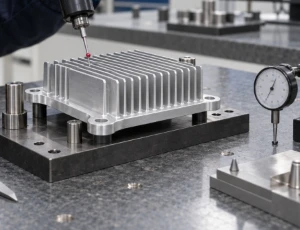
Automotive Heat Sink Design for EVs, LED Lighting, and Electronic Control Units
Heat Sinks for EVs
Electric cars also use inverters, onboard chargers, and battery systems, which all produce concentrated heat. Compact heat sinks for automotive applications are constructed around each module with sturdy bases and well-engineered fins. Good cooling means consistent power supply and protection for key components throughout rapid charging, steep climbs, and extended trips.
LED Lighting
LED headlamps and lamps are brilliant yet compact; thus, they need effective cooling to provide a stable light output. Lightweight aluminum is a common option, with fins set up to fit beneath the light housing. These small heat sinks for automotive applications assist LEDs in maintaining constant brightness and have a long operating life.
Electronic Control Units
Control units handle engines, brakes, and driver-assistance systems and are located in tight, frequently enclosed locations. Custom fin layouts, flat contact regions, and custom mounting holes provide easy installation. The appropriate design of tiny heat sinks for automotive uses maintains them cool, accurate, and reliable across all seasons and driving conditions.
How to Choose a Reliable Custom Heat Sink Manufacturer for Automotive Projects?
Experience and Certification
Start with history and certification. China Welong was established in 2001, and its service is accredited with ISO 9001-2015. With more than 100 automotive clients globally, we understand what tiny heat sinks for compact heat sinks for automotive applications need to offer, and our proven technologies provide purchasers with assurance of consistent, repeatable quality from order to order.
Drawing and Engineering Support
Then check engineering capabilities. Welong manufactures from incoming designs and samples, and our experts can draw for you in AutoCAD, Pro/ENGINEER, and SolidWorks. This flexibility allows us to take a preliminary design and transform it into a production-ready small heat sink for the automotive market without delays and important project time before mass production starts.
Quality Control and Communication
Finally, consider quality control and communications. Welong offers supplier management, buying monitoring, quality inspection, and prompt service. You can count on a reliable partner that will share inspection data, immediately answer queries, and keep schedules clear so your team can confidently plan production of small heat sinks for automotive applications and prevent expensive surprises.
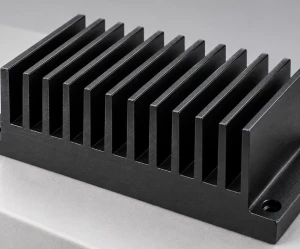
Conclusion
When selecting tiny heat sinks for compact heat sinks for automotive applications, consider material, base design, fin shape, airflow, and the provider behind the product. Aluminum and copper have their own advantages, and well-designed fins can cool tiny items in tight quarters. For the optimum fit, a bespoke design is preferable for an EV, LED lights, or a control unit. China Welong was created in 2001 and can work from your designs or samples. We utilize AutoCAD, Pro-Engineering, and SolidWorks and are ISO 9001-2015 certified. We are working hard continuously to lead the worldwide supply chain and help China's intelligent manufacturing, so give us your proposal immediately.
FAQ
Q1: Which metals are commonly used?
A: Aluminum and copper, chosen by application.
Q2: Do fins matter in small spaces?
A: Yes, height, spacing, and shape control airflow.
Q3: Can designs be customized?
A: Yes, from your drawings or samples.
Q4: Which uses benefit most?
A: EVs, LED lighting, and control units.
Q5: Is Welong certified?
A: Its service is ISO 9001-2015 certified.
Ready to Cool Your Compact Designs? Contact Us Today
Contact China Welong today to discuss your compact heat sinks for automotive applications project. Send us your drawings, samples, or simple ideas, and our engineers will review them, suggest improvements, and prepare a clear quotation. Since 2001, we have helped leading enterprises build dependable supply chains, and we are ready to support your automotive business too. Whether you need a prototype or bulk delivery, our team will guide you at every step. Email us at metal@welongpost.com now, and let us build cooling solutions that fit.
References
1. Incropera, F. P., DeWitt, D. P., Bergman, T. L., & Lavine, A. S. (2007). Fundamentals of Heat and Mass Transfer (6th ed.). Wiley.
2. Kraus, A. D., & Bar-Cohen, A. (1995). Design and Analysis of Heat Sinks. Wiley.
3. Lee, S. (1995). Optimum design and selection of heat sinks. Proceedings of the 11th IEEE SEMI-THERM Symposium, 48–54.
4. Çengel, Y. A., & Ghajar, A. J. (2015). Heat and Mass Transfer: Fundamentals and Applications (5th ed.). McGraw-Hill.
5. Bejan, A., & Kraus, A. D. (2003). Heat Transfer Handbook. Wiley.
6. International Organization for Standardization. (2015). ISO 9001:2015 Quality Management Systems: Requirements.


