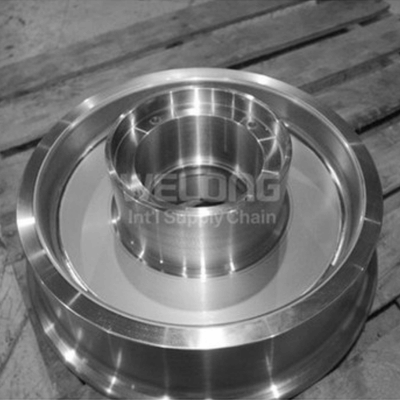

Hardness is a physical property that measures a material's ability to resist deformation, wear, or indentation. In materials science, hardness testing is an essential method for evaluating material performance. Common hardness testing methods include Rockwell hardness, Brinell hardness, and Vickers hardness, each with its unique principles and applications. Below is a detailed analysis of these three hardness testing methods, along with additional common hardness testing methods.
01 Rockwell Hardness (Rockwell Hardness)
Principle
The Rockwell hardness test measures the hardness of a material by pressing a diamond cone or a steel ball into its surface under a specific load. The test is conducted in two stages: an initial light load (pre-load) is applied, followed by a heavy l oad (major load). The hardness value is determined by the depth of the indentation. The smaller the indentation depth, the higher the hardness value.
Characteristics
Fast and simple: The Rockwell hardness test requires minimal preparation and is suitable for batch testing.
Suitable for hard materials: Especially useful for harder materials like hardened steel and carbide.
Multiple scales: Different Rockwell scales are used depending on the material's hardness range. For example:
HRA: Suitable for materials with very high hardness, such as carbide.
HRB: Suitable for materials with moderate hardness, such as annealed steel and cast iron.
HRC: Suitable for very hard materials, such as hardened steel.
Applications
Rockwell hardness is widely used for testing metals, especially hard materials like carbide, hardened steel, and cast iron.
02 Brinell Hardness (Brinell Hardness)
Principle
The Brinell hardness test uses a hard indenter (usually a steel or carbide ball) pressed into the material surface under a specified load. The hardness value is calculated based on the diameter of the resulting indentation, considering the load and the ball diameter. Brinell hardness values are typically denoted as HB, with different indenter types used: HBW (carbide ball) and HBS (steel ball).
Characteristics
Accurate results: Brinell hardness provides a more accurate reflection of material hardness due to the larger indentation.
Suitable for softer materials: Such as annealed steel, gray cast iron, and non-ferrous metals.
Large indentation: Not suitable for testing thin-walled or small parts.
Relatively slow: The testing process takes more time compared to other methods.
Applications
Brinell hardness is particularly suitable for softer metallic materials like annealed steel, pure metals, and aluminum alloys. It is commonly used for testing castings and rough surface materials.
03 Vickers Hardness (Vickers Hardness)
Principle
The Vickers hardness test uses a diamond pyramid indenter with a 136° angle, pressed into the material surface under a specified load. The hardness value is calculated from the length of the indentation's diagonal. Vickers hardness values are typically denoted as HV.
Characteristics
High precision: Due to the small indentation size, Vickers hardness provides very precise measurements.
Wide application range: Suitable for testing materials from very soft to very hard, including metals, ceramics, and glass.
Small indentation: Ideal for testing thin-walled or small components.
Longer testing time: More time is required for precise measurements.
Applications
Vickers hardness is suitable for various metallic materials, particularly hard alloys and hardened steels. It is also used for testing ceramics, glass, and other non-metallic materials.
04 Summary and Selection
Rockwell Hardness: Suitable for fast, high-volume hardness testing, especially for hard materials like hardened steel and carbide. The calculation method is simple, making it ideal for quality control in mass production.
Brinell Hardness: Suitable for testing softer materials like annealed steel and non-ferrous metals. It provides accurate results but is not suitable for small or thin parts due to the larger indentation size.
Vickers Hardness: Offers extremely high accuracy and is applicable to a wide range of materials, from soft to hard. It is ideal for testing small or thin-walled components and when precise hardness values are required.
Choosing the appropriate hardness testing method depends on the material's characteristics, testing objectives, and application scenarios. In practice, it is essential to select the most suitable method based on specific needs.
05 Other Common Hardness Testing Methods
In addition to Rockwell, Brinell, and Vickers hardness, there are several other common hardness testing methods, as outlined below:
Shore Hardness (Shore Hardness)
Shore hardness is mainly used for testing the hardness of rubber and plastics. It involves pressing a conical indenter into the material's surface and is primarily applied to soft materials.
Knoop Hardness (Knoop Hardness)
Similar to Vickers hardness, the Knoop test uses a diamond indenter with a rhombohedral shape. This test is particularly useful for thin layers or small parts, often applied to metallic films, coatings, and other precision tests.
Mohs Hardness (Mohs Hardness)
Primarily used for testing minerals, the Mohs hardness test determines hardness by comparing materials against a set of ten standard minerals. It is widely used in geology and mineralogy.
By understanding the principles, characteristics, and applications of different hardness testing methods, engineers and researchers can select the most appropriate method for their specific requirements, ensuring that the materials meet the necessary performance standards.