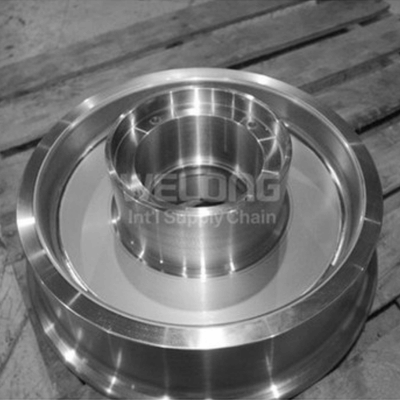

In the realm of green sand casting, the quality of the final casting is profoundly influenced by the additives used in the molding sand mixture. Among these, coal powder (often referred to as Foundry Coke Breeze or Seacoal) remains a critical additive, especially for producing cast iron in ferrous foundries. Its primary role is to ensure a smooth, defect-free casting surface by interacting with the molten metal at the mold interface. Understanding its specific characteristics and quality requirements is essential for achieving consistent casting quality and productivity.
1. The Primary Role of Coal Powder in Green Sand Molds
When molten iron (typically above 1350°C) comes into contact with the moist clay-bonded sand mold, coal powder performs several vital functions:
Creating a Reducing Atmosphere: Upon heating, coal powder volatilizes, releasing combustible gases (volatile matter). These gases form a protective reducing atmosphere at the mold-metal interface, preventing oxidation of the molten iron. Oxidation leads to common defects like slag inclusions and oxide scabs.
Producing a Lustrous Carbon Layer: This is the most critical function. The volatile matter cracks at high temperatures, depositing a thin, shiny film of pyrolytic carbon (lustrous carbon) on the mold cavity surface. This inert layer acts as a non-wetting barrier between the sand and the metal, preventing sand burn-on and metal penetration, resulting in an excellent surface finish.
Controlling Sand Expansion Defects: The layer of lustrous carbon is compressible, accommodating the expansion of silica sand at high temperatures, thereby helping to prevent veining defects.
2. Key Characteristics and Their Impact on Quality
Not all coal powders are suitable for foundry use. The quality is defined by several key parameters, typically analyzed through proximate analysis.
| Characteristic | Ideal/Desired Range | Why It Matters |
|---|---|---|
| Volatile Matter | High (typically 30-38%) | This is the "active" component that produces the gases for the reducing atmosphere and, crucially, the lustrous carbon. Low volatile content leads to insufficient gas generation and poor surface finish. |
| Fixed Carbon | Moderately High (approx. 55-65%) | After the volatiles are driven off, the fixed carbon remains as a structural char. It helps maintain mold stability and permeability. |
| Ash Content | Low (ideally <8%) | Ash is the inorganic residue left after combustion. High ash content increases the volume of inert material, which can lead to poorer surface finish, higher clay requirements, and reduced sand permeability. |
| Sulfur Content | Low (ideally <0.6%) | High sulfur can be transferred to the casting surface, making it hard and brittle (chill). It can also contribute to the formation of sulfur dioxide (SO₂), a pollutant, and cause pitting on the casting surface. |
| Moisture Content | Controlled (typically 2-4%) | Moisture must be stable and controlled. Fluctuations can affect the consistency of the sand mixture and the efficiency of the clay binder (bentonite). |
| Caking (Coking) Property | High | A good caking property indicates the coal's ability to form a strong, coherent char after volatilization. This solid char layer further helps prevent metal penetration. |
3. Additional Quality and Handling Considerations
Beyond chemical composition, other factors are critical for consistent performance in the foundry:
Consistency and Purity: The chemical and physical properties must be consistent from batch to batch. The coal should be free from contaminants like rocks, pyrites, and other foreign materials.
Particle Size (Granulometry): A fine, consistent grain size is essential. It is typically pulverized to a fineness where 90-95% passes through a 200-mesh (75μm) sieve. A fine particle size ensures a large surface area, promoting rapid gas evolution and uniform distribution throughout the sand mixture.
Gas Evolution Curve: The rate at which gases are released is as important as the total volume. Ideal foundry coal has a controlled gas evolution that peaks at the right temperature to protect the metal during pouring and solidification.
4. The Shift to Alternative Carbon Additives
While traditional coal powder is highly effective, environmental and regulatory pressures (related to Polycyclic Aromatic Hydrocarbons - PAHs and smoke emissions) have led to the development of substitutes. These include:
Synthetic Lustrous Carbon Additives: Engineered carbon materials designed to provide high lustrous carbon yield with lower emissions and more consistent performance.
Graphite: Natural or synthetic graphite can be used, primarily for its carbon content, though it does not generate a reducing gas atmosphere like coal.
Despite these alternatives, high-quality coal powder remains a cost-effective and efficient choice for many foundries worldwide.
Conclusion
The selection of coal powder is a precise science critical to the economics and quality of a foundry's operation. It is not merely an additive but a functional material that chemically engineers the mold-metal interface. By strictly controlling its key characteristics-especially high volatile matter, low ash and sulfur, and consistent granulometry-foundries can achieve the coveted combination of excellent casting surface finish, minimized cleaning and fettling costs, and high overall yield. A deep understanding of these requirements allows foundry engineers to optimize their sand systems for superior product quality.
Contact Us
For more information, please contact us at metal@welongpost.com.