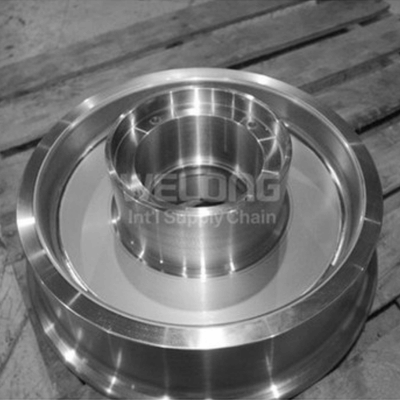

Choosing between centrifugal casting and static casting depends on your specific part requirements and production goals. Centrifugal casting excels in producing cylindrical components with superior density and mechanical properties through rotational force, while static casting offers versatility for complex shapes and geometries. Industries like aerospace, oil drilling, and automotive manufacturing benefit from centrifugal casting's enhanced material properties, whereas static casting suits intricate designs requiring detailed features. Understanding these fundamental differences helps procurement managers select the optimal manufacturing process for their applications.
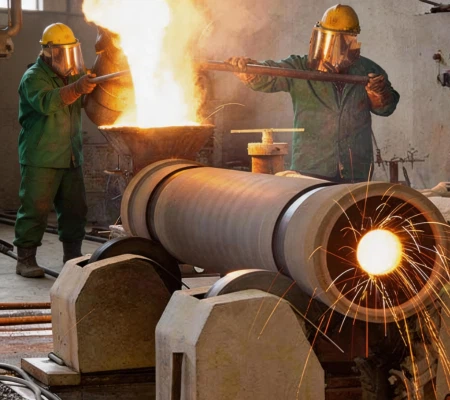
Understanding the Core Differences Between Centrifugal and Static Casting
The manufacturing world relies heavily on precision casting techniques to create reliable components. Two prominent methods dominate industrial production: centrifugal casting and traditional static casting processes.
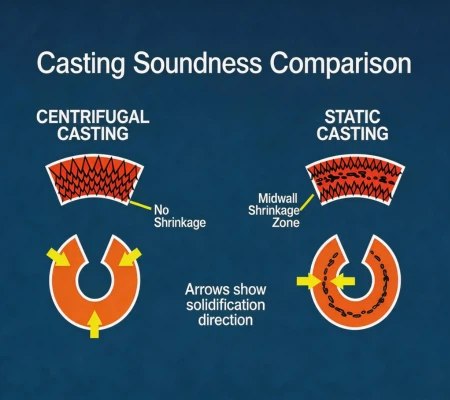
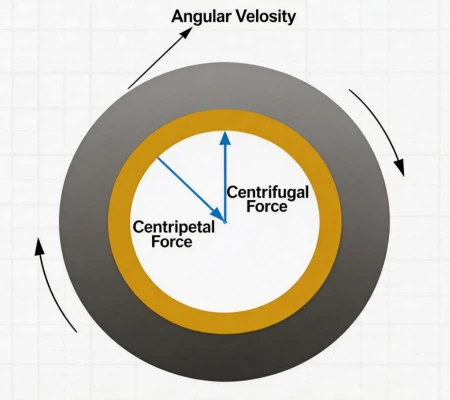
The centrifugal casting process utilizes rotational motion to distribute molten metal evenly within cylindrical molds. The centrifugal force generated during rotation pushes denser metal toward the outer walls while forcing impurities toward the inner surface. This phenomenon creates parts with exceptional material density and structural integrity.
Static casting, conversely, depends on gravity and atmospheric pressure to fill mold cavities. Molten metal flows naturally into stationary molds without external rotational forces. This approach accommodates various part geometries but may result in different material characteristics compared to centrifugal methods.
Three core differences emerge:
Force Application: Centrifugal casting employs rotational force, while static casting relies on gravitational flow
Part Geometry: Centrifugal casting produces primarily cylindrical shapes; static casting handles complex geometries
Material Distribution: Centrifugal force creates directional solidification patterns affecting mechanical properties
Manufacturing engineers recognize that these distinctions significantly impact final component performance and application suitability.
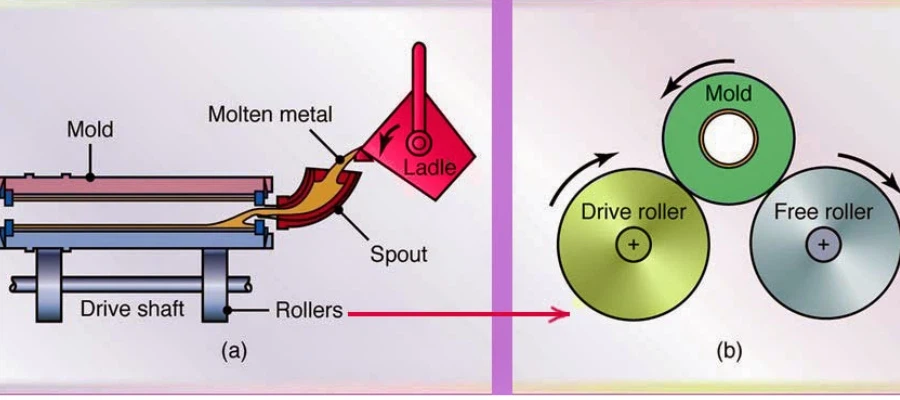
Centrifugal Casting Process: How Rotational Forces Create Superior Components?
The centrifugal casting machine operates through precise rotational mechanics that fundamentally alter how metal solidifies. Understanding this process reveals why many industrial applications favor this manufacturing technique.
Key operational parameters include:
Centrifugal casting speed: Typically ranges from 300-3000 RPM, depending on part diameter and material
Mold temperature control maintains optimal thermal gradients
Pour rate coordination ensures complete cavity filling
Centrifugal casting cooling sequences promoting uniform solidification
During operation, the centrifugal casting mold rotates around a horizontal or vertical axis. Molten metal pours into the spinning mold cavity where centrifugal force creates pressure gradients. These gradients push heavier, pure metal outward while segregating lighter impurities and gases toward the inner surfaces.
Centrifugal casting materials commonly include:
Steel alloys for high-stress applications
Cast iron for wear-resistant components
Non-ferrous metals like bronze and aluminum
Specialty alloys for aerospace and medical applications
The rotating motion generates forces 50-100 times greater than gravity. This intense pressure eliminates porosity and creates dense, homogeneous structures throughout the casting, centrifugal casting thickness.
If you need cylindrical components with exceptional strength-to-weight ratios, centrifugal casting delivers superior mechanical properties compared to static alternatives.
Static Casting: Traditional Methods for Complex Geometries
Static casting encompasses various techniques, including sand casting, investment casting, and die casting. These methods excel in producing intricate shapes that centrifugal processes cannot accommodate.
Primary static casting advantages:
Unlimited geometric complexity capabilities
Lower setup costs for prototype development
Flexibility in part size variations
Compatibility with multiple alloy systems
Reduced equipment investment requirements
Sand casting represents the most common static method, utilizing expendable molds created from sand mixtures. Investment casting produces highly detailed components with excellent surface finish characteristics. Die casting enables high-volume production with consistent dimensional accuracy.
Material flow characteristics differ significantly from centrifugal methods. Gravity-fed systems may create turbulence during mold filling, potentially introducing defects like gas porosity or oxide inclusions. However, advanced gating design and controlled pouring techniques minimize these concerns.
Static casting applications span diverse industries:
Automotive engine blocks requiring complex internal passages
Architectural hardware with decorative features
Pump housings with intricate internal geometries
Electronic enclosures needing precise mounting features
Temperature gradients in static casting create different solidification patterns compared to centrifugal methods. These patterns influence grain structure and mechanical properties throughout the component.
If you need parts with complex internal features or non-cylindrical shapes, static casting provides design flexibility that centrifugal methods cannot match.
Centrifugal Casting Advantages: Superior Material Properties and Performance
Centrifugal casting advantages extend beyond simple manufacturing convenience to deliver measurable performance improvements in critical applications. Industry testing demonstrates significant material property enhancements compared to static alternatives.
Mechanical Property Improvements:
Tensile strength increases of 15-25% over static cast equivalents
Fatigue resistance improvements up to 40% in cyclic loading conditions
Density increases of 2-5%, eliminating microporosity
Uniform grain structure reduces stress concentrations
Enhanced wear resistance through controlled metallurgy
Quality benefits emerge from the centrifugal casting technique's inherent characteristics. The rotational process naturally segregates inclusions and gas bubbles toward inner surfaces, where they can be machined away. This self-cleaning action produces superior centrifugal casting quality compared to gravity-fed processes. Dimensional accuracy improvements result from controlled solidification patterns. Centrifugal force maintains consistent metal pressure against mold walls throughout cooling, reducing shrinkage variations and improving surface finish quality.
Centrifugal casting applications particularly benefit high-stress industries:
Oil drilling equipment requires pressure resistance
Aerospace components demanding weight optimization
Automotive parts needing durability under thermal cycling
Medical devices requiring biocompatibility and precision
Test data from automotive brake drum production shows centrifugal cast components exhibit 30% longer service life compared to static cast alternatives. This performance advantage stems from the elimination of porosity and improved material homogeneity.
Centrifugal casting industry adoption continues to expand as manufacturers recognize that these tangible benefits translate directly into reduced warranty costs and enhanced product reputation. If you need components operating under extreme conditions or requiring extended service life, centrifugal casting delivers proven performance advantages that justify process selection.
Potential Centrifugal Casting Defects and Quality Control Measures
Understanding centrifugal casting defects enables proactive quality management and process optimization. While centrifugal methods generally produce superior components, specific defect types require attention during production planning.
Common defect categories include:
Segregation bands: Compositional variations creating strength inconsistencies
Hot tears: Cracking during solidification from thermal stress
Inclusions: Foreign particles trapped during pouring or mold preparation
Uneven wall thickness: Resulting from improper centrifugal casting parameters
Surface irregularities: Caused by mold condition or rotational instability
Prevention strategies address root causes through systematic process control:
Rotational parameter optimization ensures appropriate centrifugal casting speed for specific alloys and geometries. Insufficient rotation fails to generate adequate segregation forces, while excessive speeds may cause turbulence and defect formation.
Thermal management controls cooling rates, preventing thermal shock and residual stress development. Graduated cooling sequences accommodate different section thicknesses while maintaining structural integrity.
Mold condition monitoring prevents surface defects through regular inspection and maintenance protocols. Proper mold coatings and release agents ensure smooth demolding without surface damage.
Material preparation standards eliminate contamination sources before casting operations. Controlled melting practices and degassing procedures remove dissolved gases that could create porosity.
Quality control testing validates component integrity through:
Ultrasonic inspection detects internal flaws
Mechanical property verification confirming strength requirements
Dimensional measurement ensuring specification compliance
Surface finish evaluation meets aesthetic standards
Centrifugal casting automation reduces human variability while improving consistency. Automated systems maintain precise parameter control throughout production cycles, minimizing defect occurrence rates.
If you need consistent quality with minimal defect risks, implementing comprehensive quality control measures ensures centrifugal casting meets stringent industrial requirements.For reliable, defect-controlled centrifugal casting backed by strict quality management and experienced engineering support, partner with Welong to ensure consistent, high-performance results for your critical applications.
Cost Analysis: Centrifugal vs Static Casting Economics
Manufacturing cost analysis requires examining both direct production expenses and long-term value considerations. Centrifugal casting design decisions significantly impact overall project economics beyond initial tooling investments.
Initial setup costs favor static casting for low-volume applications:
Sand casting molds cost $500-2,000 per pattern
Centrifugal casting machine access requires a $50,000-500,000 investment
Tooling complexity affects both methods differently
Setup time variations impact production scheduling
Production volume economics shift dramatically at different quantity levels. Static casting maintains consistent per-piece costs regardless of volume, while centrifugal methods achieve economies of scale through equipment utilization.
Cost comparison data from automotive component production:
Centrifugal casting: $12-18 per kg for volumes above 1,000 pieces annually
Static casting: $15-25 per kg with consistent pricing across volumes
Material utilization efficiency favors centrifugal methods by 8-15%
Secondary machining requirements vary by geometry complexity
Lifecycle cost considerations extend beyond manufacturing expenses:
Enhanced durability reduces replacement frequency
Improved performance characteristics justify premium pricing
Quality consistency minimizes inspection and rework costs
Warranty exposure decreases with superior material properties
Hidden cost factors influence total project economics:
Transportation costs affected by weight optimization
Assembly time variations based on dimensional accuracy
Inventory carrying costs are influenced by service life predictions
Opportunity costs from production flexibility limitations
Return on investment calculations must account for application-specific benefits. High-stress applications maximize centrifugal casting value through extended component life and reduced failure risks.
If you need cost-effective production balancing, long-term value from initial investment, and expert guidance in selecting the optimal casting method for your application, please contact our engineers for professional support.
Industry Applications: Where Each Casting Method Excels?
Centrifugal casting applications dominate industries requiring superior material properties and cylindrical geometries. Understanding application-specific requirements guides appropriate process selection for optimal results.
Aerospace industry applications leverage centrifugal casting advantages for critical components:
Engine casings requiring high temperature resistance
Landing gear components needing fatigue durability
Structural elements demanding weight optimization
Hydraulic cylinders requiring pressure containment
Oil and gas drilling operations depend on centrifugal cast components for harsh environment performance:
Drill pipe connections withstand extreme pressures
Pump housings requiring corrosion resistance
Valve bodies needing dimensional stability
Wear rings demanding abrasion resistance
Automotive manufacturing utilizes both methods strategically:
Centrifugal casting for brake drums, cylinder liners, and drive shafts
Static casting for engine blocks, transmission cases, and decorative trim
Centrifugal casting product selection based on stress analysis requirements
Cost optimization through method-appropriate applications
Medical device production requires precision and biocompatibility:
Surgical instruments need corrosion resistance
Implant components requiring strength optimization
Imaging equipment demands dimensional accuracy
Prosthetic elements needing weight minimization
Static casting applications excel where geometric complexity outweighs material property requirements:
Complex pump housings with internal flow passages
Artistic architectural elements requiring detailed features
Electronic enclosures needing precise mounting geometries
Custom tooling requiring unique shapes
Application selection criteria include:
Geometry requirements: Cylindrical shapes favor centrifugal methods
Material properties: High-stress applications benefit from centrifugal casting
Production volume: Economic considerations influence method selection
Quality requirements: Critical applications may justify centrifugal advantages
Timeline constraints: Setup time differences affect project scheduling
If you need guidance in selecting the optimal casting method for your application, please contact our engineers to help you choose the best solution.
Conclusion
Selecting between centrifugal and static casting requires careful evaluation of component requirements, production volumes, and performance expectations. Centrifugal casting excels in producing cylindrical components with superior material properties, while static casting accommodates complex geometries with design flexibility. Understanding these fundamental differences enables informed decisions that optimize manufacturing outcomes and project economics for specific industrial applications.
Partner with Welong for Expert Centrifugal Casting Solutions
Welong stands as your trusted centrifugal casting manufacturer with over two decades of proven excellence in international supply chain management. Our comprehensive centrifugal casting capabilities serve global enterprises requiring precision components for aerospace, automotive, oil drilling, and medical applications.
Contact our engineering team at info@welongpost.com to discuss your specific requirements and discover how our ISO 9001:2015 certified processes deliver superior quality, cost-effectiveness, and reliable delivery performance. Let Welong's expertise in centrifugal casting technique optimization transform your sourcing strategy and enhance your competitive advantage.
References
1. Campbell, John. "Complete Casting Handbook: Metal Casting Processes, Metallurgy, Techniques and Design." Second Edition. Butterworth-Heinemann, 2015.
2. Beeley, Peter R. and Smart, Richard F. "Investment Casting." Institute of Materials, Communications Ltd, 1995.
3. Stefanescu, Doru M. "Science and Engineering of Casting Solidification." Third Edition. Springer International Publishing, 2015.
4. Brown, John R. "Foseco Ferrous Foundryman's Handbook." Eleventh Edition. Butterworth-Heinemann, 2000.
5. Ravi, B. "Casting Simulation and Optimization: Benefits, Bottlenecks, and Best Practices." Indian Foundry Journal, Volume 54, Issue 2, 2008.
6. Flemings, Merton C. "Solidification Processing." McGraw-Hill Series in Materials Science and Engineering, 1974.