


Stripes, ribs, scratches, and uneven zinc weight are all coating faults that cost galvanizing facilities time, money, and customer confidence. Many of these stem from the manner in which the strip behaves in and over the zinc bath. This is the task of the galvanizing line stabilizer rolls. This page discusses the role of these rolls in controlling the strip, what types of issues they prevent, the specifications that need special attention, and how routine maintenance guarantees the quality of the surface remains constant.
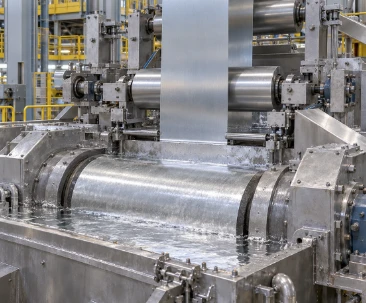
How Do Galvanizing Line Stabilizer Rolls Improve Strip Stability?
Controlling Strip Flutter at the Bath Exit
A fast line speed and thin gauge might cause the strip to flutter or bend as it exits the zinc pot. The galvanizing line stabilizer rolls only contact the strip and hold its course, so it goes into the air knives at a recognized spot. A firmer strip offers the knives a consistent distance to operate with, which makes a covering even.
Supporting Flatness and Pass-Line Alignment
The flatness and straightness of the strip determine the way in which zinc drains off the surface of the strip. When the galvanizing line stabilizer is in the proper position, it rolls the correct cross-bow and retains the strip in the center, so that both edges and center get the identical wiping action. The roll position may be adjusted to suit varying lengths, helping to preserve the contour of the pass line throughout a wide variety of items.
Enabling Higher Line Speeds with Consistent Quality
You have to be able to run fast, but not lose the surface quality to get the job done. Stabilizer rollers for the galvanizing line allow factories to run faster and maintain coating weight within acceptable limits. With this throughput and finish balance, producers can produce more in a shift and have a higher chance of impressing choosy vehicle and appliance purchasers.
Common Coating Defects Caused by Roll Wear, Vibration, and Dross Buildup
Coating Weight Variation from Strip Vibration
The distance between the strip and the air knife is constantly changing as the strip vibrates. Thus, the bands of zinc are alternately thick and thin. This vibration is eliminated at the source when galvanizing line stabilizer rolls are manufactured appropriately. If the factories pay attention to the condition of the rolls, they frequently receive a better coating weight distribution, and fewer coils to toss away.
Surface Marks from Worn Roll Faces
If the roll face is not smooth anymore, it might leave lines on the strip. To avoid markings, lines, and roughness, it is recommended to retain the surface of the galvanizing line stabilizer rolls as they were when they were created. Regular checks of roll faces allow maintenance crews to schedule repairs before they are degraded.
Dross-Related Defects and Surface Cleanliness
Dross may attach to rolls and be pressed into the soft zinc layer, leaving holes or lumps. Non-stick surface galvanizing line stabilizer rolls with excellent bath management help reduce this pick-up. When used with stable aluminum levels and frequent dross removal, they assist in achieving a clean, brilliant finish.
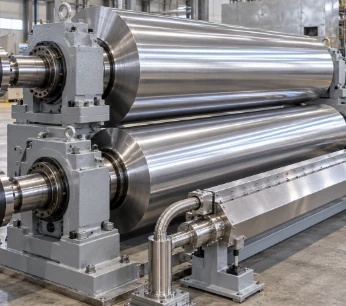
What Roll Specifications Matter Most for Uniform Zinc Coating Quality?
Base Material and Surface Hardness
The roll life in molten zinc depends on the substance it is constructed of. Galvanizing line stabilizer rolls are produced from heat- and corrosion-resistant alloys with hardened or coated faces able to preserve their form over lengthy campaigns. Buyers should inquire for material certifications and hardness data to ensure that each roll will satisfy the desired job.
Dimensional Accuracy, Balance and Surface Finish
The rough spinning is kept in check by rigorous specifications on diameter, roundness and concentricity. Galvanizing's line stabilizer rolls are carefully machined and balanced to minimize vibration and preserve bearings and sleeves. To get excellent clean strip contact and a nice-looking zinc layer, a smooth, fine surface is preferable.
Groove Design and Customization to Line Conditions
Strip control and metal loss are influenced by the shape and patterns of the faces. Galvanizing line stabilizer rolls designed for your strip width, speed, and pot arrangement operate better than generic parts. Supply your source blueprints or models and be certain that the resulting design will be a great match for your equipment.
Maintenance Strategies to Prevent Surface Scratches and Coating Variations
Scheduled Inspection and Roll Rotation Routines
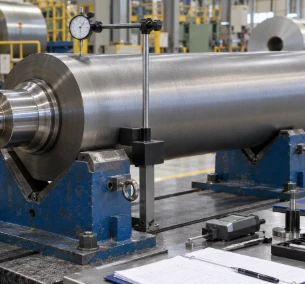
During scheduled shutdowns, frequent checks may identify early warning indicators of wear, such as changes in the roundness or roughness of the surface. Teams may monitor the hours each set of galvanizing line stabilizer rolls has been in operation to determine replacement time. Fixing outdated rolls. Putting additional sets to work on a regular basis keeps the line operating.
Bearing, Sleeve and Alignment Care
The machine must be properly aligned, and the bearings and collars must be in excellent condition for smooth spinning. Regular lubrication, calculating the distance, and ensuring the correct alignment of the galvanizing line stabilizer rollers will assist them to spin freely and uniformly. By maintaining these supporting pieces beforehand, the quality of the strip surface is maintained, and unexpected pauses are minimized.
Dross Management and Spare Roll Planning
Dross build-up is not considerable when the bath chemistry is steady, skimming is done often, and roll surfaces are cleaned lightly. Having spare galvanized line stabilizer rolls available to the same requirements means repair workers may swiftly and confidently change them out. Roll changes are scheduled spare-part program occurrences that are brief, routine, and not problematic.
Conclusion
Galvanizing line stabilizer rolls may greatly reduce coating faults by maintaining the strip in a stable position, providing uniform zinc wiping and avoiding surface blemishes. Quality depends on choosing the proper material, dimensional accuracy, groove design, and surface finish, along with disciplined inspection and dross control. For factories looking to reduce defects and maintain consistent coating quality, selecting the right rolls and maintaining them properly is essential. With experience in customized metal component sourcing and quality control, China WELONG supports buyers in sourcing stabilizer rolls tailored to their equipment specifications and operating requirements.
FAQ
1. Can stabilizer rolls really improve coating uniformity?
Yes. By reducing strip vibration and keeping the pass line steady, they help air knives wipe zinc evenly.
2. Which defects are most linked to stabilizer roll condition?
Coating weight variation, surface marks, and dross-related pits are the most common.
3. What specifications should I prioritize when ordering?
Focus on alloy quality, surface hardness, dimensional accuracy, balance, finish, and groove design.
4. How often should rolls be inspected?
Inspect them at every planned shutdown, and track operating hours to schedule refurbishment or replacement.
5. Can rolls be customized for my galvanizing line?
Yes. Experienced suppliers can manufacture rolls to your drawings or samples and adapt dimensions and grooves to your equipment.
Ready to Improve Your Coating Quality?
China Welong was founded in 2001 and provides supplier development, purchasing supervision, and quality control for leading enterprises in industrial manufacturing, oil drilling, aerospace, and high-end medical fields. Our ISO 9001:2015-certified services, engineering team using AutoCAD, Pro-Engineering, and SolidWorks, and 20 years of shipments to more than 100 customers worldwide mean your custom galvanizing line stabilizer rolls are handled with care. Send us your drawings or samples today. Contact us at metal@welongpost.com and let us help you source dependable components.
References
1. Maass, P., and Peißker, P. Handbook of Hot-Dip Galvanization. Wiley-VCH, 2011.
2. Marder, A.R. "The Metallurgy of Zinc-Coated Steel." Progress in Materials Science, 2000.
3. Tang, N.-Y. "Characteristics of Continuous-Galvanizing Baths." Metallurgical and Materials Transactions B, 1999.
4. Porter, F.C. Corrosion Resistance of Zinc and Zinc Alloys. Marcel Dekker, 1994.
5. Davis, J.R., ed. ASM Specialty Handbook: Heat-Resistant Materials. ASM International, 1997.
6. ASTM International. ASTM A653/A653M: Standard Specification for Steel Sheet, Zinc-Coated (Galvanized) or Zinc-Iron Alloy-Coated (Galvannealed) by the Hot-Dip Process.


